Iran has carried out multiple executions this week of people accused of participating in the January protests, including Mehdi Khaneki and two men hanged in Isfahan. Rights groups and dissidents allege torture, unfair trials and restrictions on funerals, while authorities say the defendants were involved in violent crimes. Human rights organizations also report detainees are routinely denied medical care, with at least one prisoner dying in custody. Tehran's judiciary has opened files on roughly 300 people accused of contacting diaspora media, signaling a wider crackdown on outside reporting.
Iran Executes January Protesters as Crackdown Intensifies; Rights Groups Report Torture and Denied Care
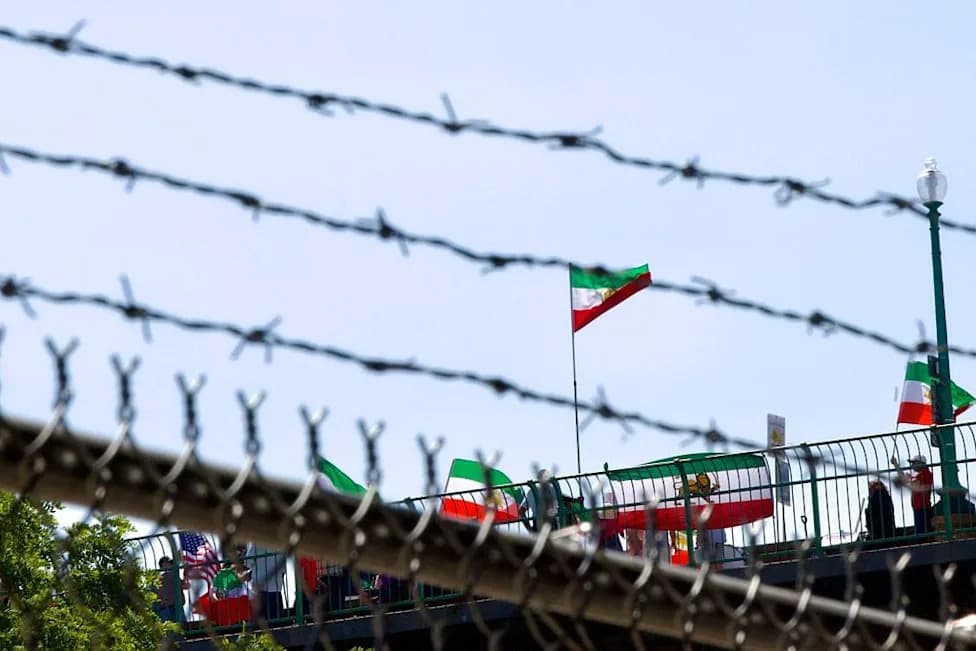
Illustrative: Demonstrators march across the Francis Scott Key Bridge during a rally in support of the Iranian people and to condemn the execution of political prisoners in Iran, in Washington, DC, on May 16, 2026. (photo credit: Amid FARAHI / AFP via Getty Images)
Iranian courts have continued to impose and carry out death sentences against people accused of participating in the January protests, with at least three executions reported in the past week by judiciary-affiliated outlets and human rights groups.
Executions Reported
On Wednesday, authorities executed Mehdi Khaneki, accusing him of "operational actions" that allegedly aided Israel, the United States and other "hostile" groups, and of crimes the judiciary says were committed during the January demonstrations. Officials also alleged Khaneki produced and collected weapons. The Paris-based National Council of Resistance of Iran (NCRI) said Khaneki — a 26-year-old law graduate — was targeted for his ties to the People's Mojahedin Organization and that he "had been subjected to months of physical and psychological torture."
Over the weekend, two more men were hanged at Isfahan Central Prison: 19-year-old Erfan Esfandiari and 24-year-old Afghan refugee Gol-Mohammad Mohammadi. The judiciary's Mizan News Agency said the pair were responsible for killing four security personnel and for arson and vandalism. Rights activists and independent sources contend the men were sheltering demonstrators from regime attacks; the two narratives remain sharply at odds.
Illustrative: Fans held a banner reading 'Stop Execution in Iran' before the FIFA World Cup 2026 Group G match between Belgium and IR Iran at Los Angeles Stadium on June 21, 2026 (credit: Jamie Squire/Getty Images).
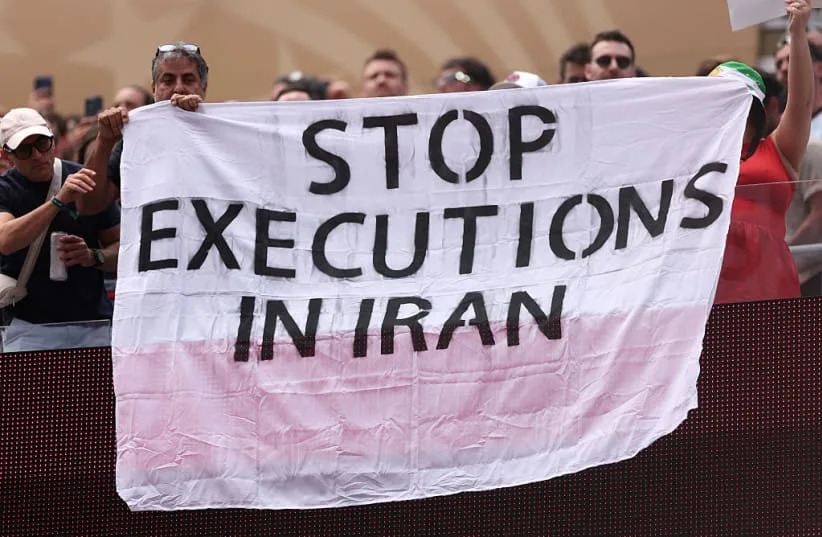
Illustrative: Fans holds the banner reading 'Stop Execution in Iran' before the FIFA World Cup 2026 Group G match between Belgium and IR Iran at Los Angeles Stadium on June 21, 2026 in Inglewood, California. (credit: Jamie Squire/Getty Images)
Other Death Sentences and Legal Concerns
Several other defendants have been sentenced to death in connection with the protests. Mojtaba Dehbandi, 23, and Kianoush Hamzehei Kazerouni, 27, were reportedly sentenced after authorities accused them of burning public buildings and Qurans, while claiming they had helped wounded protesters. Iranian rapper Mahnam Navab Safavi was sentenced to death by Branch 5 of Isfahan's Revolutionary Court on charges the legal network Dadbaan summarized as "destruction of public property, propaganda against the system, gathering and collusion, and encouraging people to kill each other."
Dadbaan also reported that Ahad Shekouhian, a 38-year-old who supports a disabled brother and elderly mother, received a triple death sentence from Branch 26 of the Tehran Revolutionary Court on multiple charges including alleged premeditated murder and acts against national security. The network said Shekouhian was denied access to a lawyer and that evidence submitted on appeal was not properly reviewed.
Religious Minorities and Prison Conditions
Religious minorities continue to face persecution. Shideh Tavakoli, a Baha'i resident of Tehran, was sentenced by Branch 15 of the Tehran Revolutionary Court to 11 years in prison for alleged membership in groups opposed to the regime and for proselytizing contrary to Sharia law; her personal property was reportedly seized.
Human rights organizations have repeatedly warned that detainees are being denied adequate medical care. The Hengaw Organization for Human Rights reported that former boxing champion Afshin Albandi died in Isfahan Prison after being deprived of necessary treatment, citing poor sanitary conditions and delays in receiving medical attention as contributing factors.
Crackdown on Diaspora Media and Whistleblowers
Beyond executions and prison deaths, Iran's judiciary said it has opened files on about 300 Iranians accused of communicating with diaspora media outlets Iran International and the Manoto Network or with individuals affiliated with them, underscoring an ongoing clampdown on whistleblowing and outside reporting.
Note: Allegations reported in this article include official claims by Iranian authorities as well as accounts from human rights groups, activists and diaspora organizations. These sources frequently disagree on motive and circumstances; where possible, this report distinguishes between official charges and rights groups' accounts.
Help us improve.