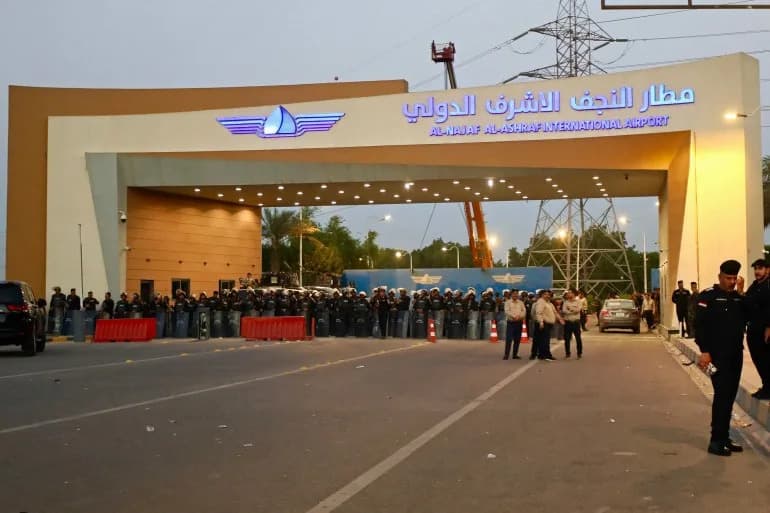
Ali al-Zaidi visited Washington and Tehran in quick succession as he seeks to rebalance Iraq’s ties with two rival powers. His US trip produced commercial agreements and a stated pivot toward economic cooperation, while Iraq’s deep energy, trade and religious links tie it closely to Iran. Al-Zaidi faces the acute challenge of managing Iran-aligned militias and Kurdish opposition groups in the north, all while trying to assert greater Iraqi independence.
Iraq’s New Prime Minister Visits Iran After Washington Trip — Can Baghdad Rebalance Between Tehran And Washington?
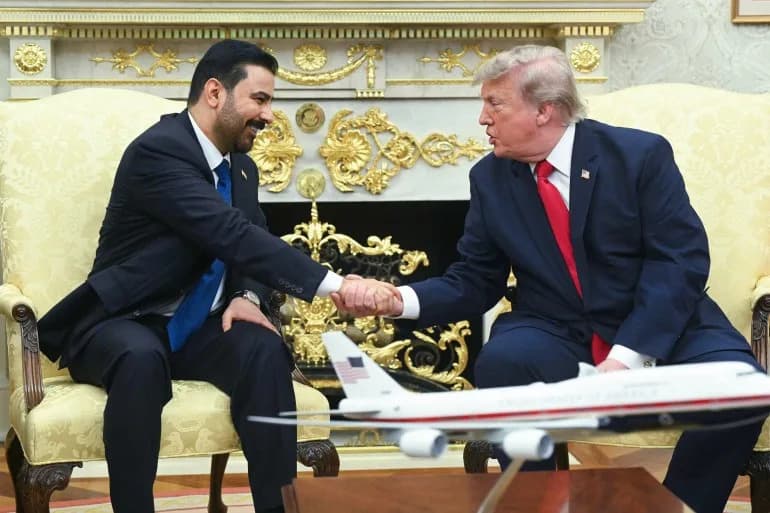
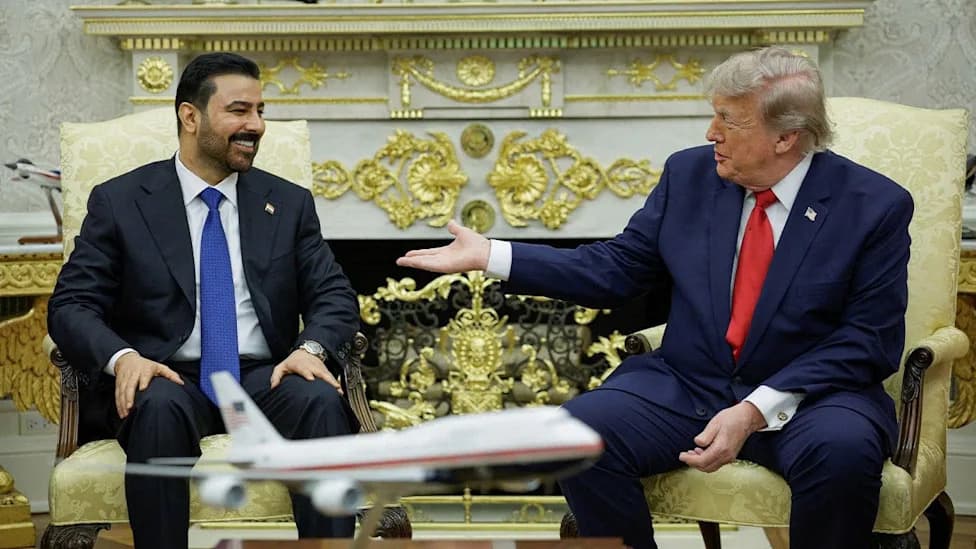
Trump shakes hands with al-Zaidi (L) at the White House, Washington, DC, on July 14, 2026 [Saul Loeb/AFP]
Just days after concluding his first official visit to the United States, Iraq's newly appointed prime minister, Ali al-Zaidi, arrived in Iran for a high-stakes diplomatic stop. His back-to-back visits to Washington and Tehran highlight Baghdad's central challenge: maintaining constructive ties with two regional powers that are at odds, without being drawn into their rivalry.
A New Diplomatic Balancing Act
Al-Zaidi, a multimillionaire businessman seen as a compromise candidate within the Shia political bloc, took office in May and has since launched a high-profile anticorruption campaign that has led to the detention of several senior figures on allegations of graft. His first foreign trips—to Washington in mid-July and then to Tehran—signal an effort to reposition Iraq as a pragmatic, independent actor in a volatile region.
Washington: Economic Pivot, Not Just Security
In Washington, al-Zaidi sought to shift Iraq’s relationship with the United States from one mainly focused on security cooperation toward deeper economic partnership. The visit generated publicity and a string of commercial agreements with US firms. President Donald Trump praised al-Zaidi as "a fantastic champion," and US officials welcomed plans such as proposals to rehabilitate an inactive Iraqi-Syrian oil pipeline and new business deals.
Tehran: Deep Economic, Religious And Security Ties
Iraq remains closely linked to Iran through energy dependence, culture and trade. The two countries register roughly $12 billion in annual bilateral trade, and Iraq relies significantly on Iranian natural gas and electricity. Millions of Iranian Shia pilgrims travel to Iraq’s holy cities each year, and religious processions and ceremonies between the countries underscore long-standing cultural ties.
Iran’s Leverage And The Militia Challenge
Tehran has cultivated strong relationships with influential Shia parties and armed groups that are embedded within Iraq’s security landscape, giving it leverage in Baghdad. Washington has repeatedly urged the Iraqi government to assert greater state control over Iran-aligned militias that operate on Iraqi soil. Those groups have been active amid recent regional conflicts, and while they play a significant role in Iraq’s security architecture, containing them without destabilising the country is one of al-Zaidi’s most difficult tasks.
Regional Dynamics And The Kurdish Question
Al-Zaidi has also worked to mend and strengthen ties with Gulf Arab states and Türkiye, positioning Iraq as a possible bridge between competing regional powers. A sensitive topic in Tehran will be the presence of Iranian Kurdish opposition groups in northern Iraq—areas where Baghdad’s authority is limited. Iran regards these groups as a security threat and has struck some of their positions across the border, accusing them of coordinating with foreign intelligence services to target Iranian territory.
What To Expect
While al-Zaidi’s visits carry symbolic weight, they are unlikely to produce dramatic, immediate shifts in Iraq’s foreign policy. Instead, they reinforce a long-standing reality: Baghdad cannot afford an outright choice between Washington and Tehran. The real test is whether Iraq’s new leadership can gradually recalibrate that balance—asserting greater independence while sustaining strategic partnerships with both powers and preserving internal stability.
Bottom line: Al-Zaidi’s twin visits reflect Iraq’s enduring diplomatic tightrope—seeking economic opportunities with the US while managing deep economic, religious and security ties with Iran.
Help us improve.