The U.S. Navy will stop publicly releasing sailors' service histories, citing security and harassment concerns, and will only confirm an individual's status when a request meets a vague "high public interest" threshold. The change expands a recent directive that removed public biographies of commanding officers and follows broader Pentagon moves to limit information, including proposals to expand Controlled Unclassified Information (CUI) exemptions. Critics, including First Amendment lawyer Floyd Abrams, say the policy undermines press freedom and will hinder reporting on service members.
Navy to Stop Releasing Sailors' Service Histories, Deepening Tensions Over Press Access
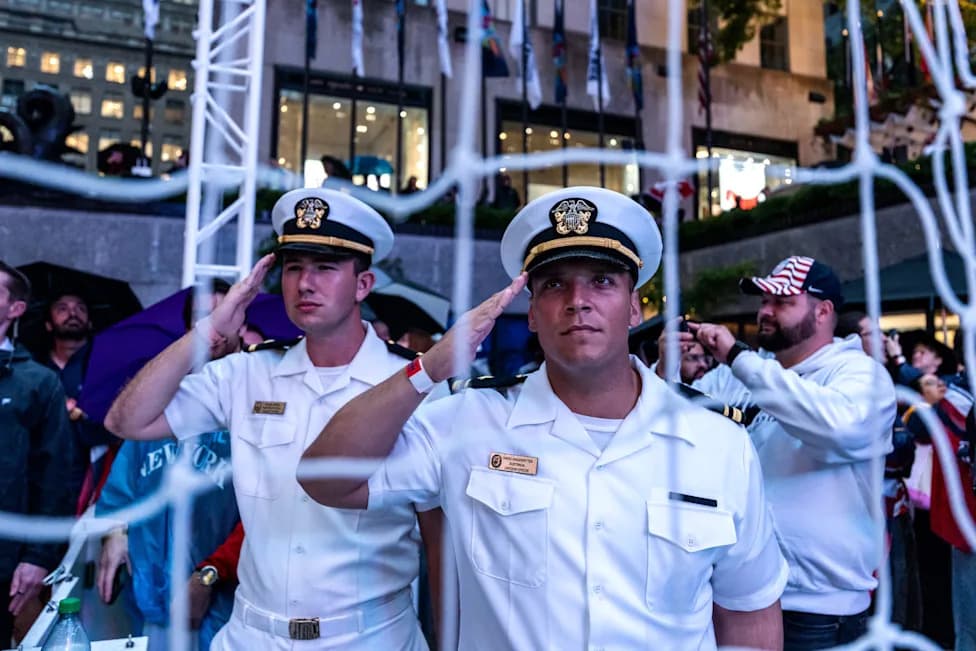
United States Navy personnel salute during the national anthem at a watch party in a fan village in New York's Rockefeller Center for a World Cup round of 16 soccer match between the United States and Belgium, Monday, July 6, 2026 in New York. (AP Photo/Adam Gray)(AP Photo/Adam Gray)
The U.S. Navy has announced it will no longer provide public details of sailors' service histories — a practice the service has followed for decades — citing increased security threats and concerns about harassment. Officials say the change expands a recent directive removing public biographies of commanding officers and is intended to ensure equal treatment for all sailors.
What the Policy Changes
Rear Adm. John Robinson issued an initial policy requiring the removal of public-facing biographies for commanding officers. The Office of the Chief of Naval Personnel, represented by Capt. Candice Thresh, then broadened that policy to withhold service-history information for all sailors. The Navy says it will still confirm whether someone is an active sailor in cases it judges to be of "high public interest," but will not release details such as unit assignments, awards, or duty history until the service determines any unspecified threats have subsided.
Why This Matters
Service-history details — such as rank, duty assignments, units served with and decorations awarded — have long helped journalists and the public add context when service members appear in news stories. The Department of Defense's privacy guidance previously categorized many of these items as "normally releasable," meaning they may be disclosed without posing a clearly unwarranted invasion of privacy. Critics say the Navy's move will make reporting on wounded or injured sailors, aviation mishaps, and other matters of public interest far more difficult.
"That effort at suppression of speech is flatly inconsistent with the First Amendment," said First Amendment attorney Floyd Abrams, arguing the change could limit scrutiny of public-policy decisions affecting service members.
Examples and Wider Context
The Navy invoked the new restriction after the AP requested the biography of a Blue Angels pilot following a controversial demonstration maneuver over a crowded beach. Rear Adm. Robinson's office declined to provide the biography even though the pilot's name, photograph and other details were publicly available on the official Blue Angels website; Capt. Thresh later supplied the biography after further inquiry.
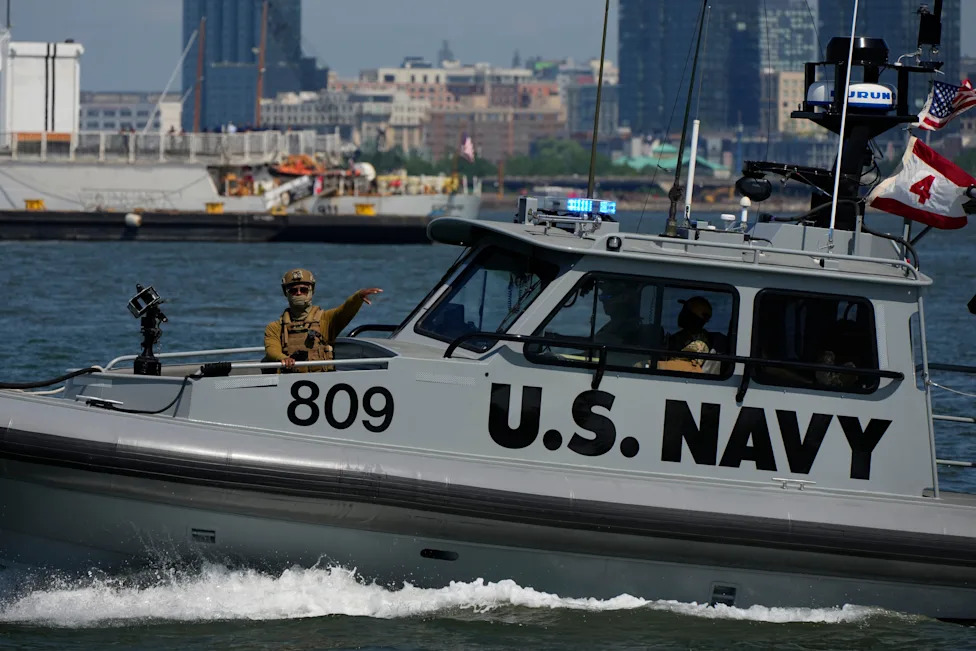
A U.S. Navy boat patrols the New York harbor during Sail250, a gathering of tall ships and military ships, Saturday, July 4, 2026, in New York. (AP Photo/Yuki Iwamura)(AP Photo/Yuki Iwamura)
The policy shift follows broader Pentagon efforts to curb information flow. The Defense Department recently asked Congress for authority to exempt certain types of unclassified records from disclosure by labeling them "Controlled Unclassified Information" (CUI), which critics and some transparency advocates say is often inconsistently applied and can be used to keep embarrassing or politically inconvenient information from public view.
Last year the Pentagon sought to impose stricter rules on journalists with in-Pentagon access, prompting many news organizations to surrender their credentials and withdraw rather than accept the new conditions; that policy is currently being litigated in federal court. This summer, the Pentagon also designated its press office a classified space, restricting reporters' physical access.
What Comes Next
The Navy's approach leaves room for internally defined exceptions — for example, when a sailor is deemed a public figure or when "extenuating circumstances exist" — but early signals indicate those exceptions may be applied narrowly. The policy raises legal and journalistic questions about transparency, the public's right to know, and how military privacy protections will be balanced against news reporting on matters of public concern.
Noveck reported from New York.
Help us improve.