Researchers have described a new colobus monkey, Colobus congoensis (the Likweli), after photos taken years apart prompted field investigations in east-central Democratic Republic of Congo. The small, glossy-black monkey with an orange-cream facial patch was confirmed through genetics, anatomical comparisons and vocal analyses. The team logged 114 sightings across about 1,700 km², but warns the species faces immediate threats from hunting and habitat loss and is urging IUCN protection.
Forgotten Photo Leads to Discovery of One of Africa’s Rarest Monkeys: The Likweli (Colobus congoensis)
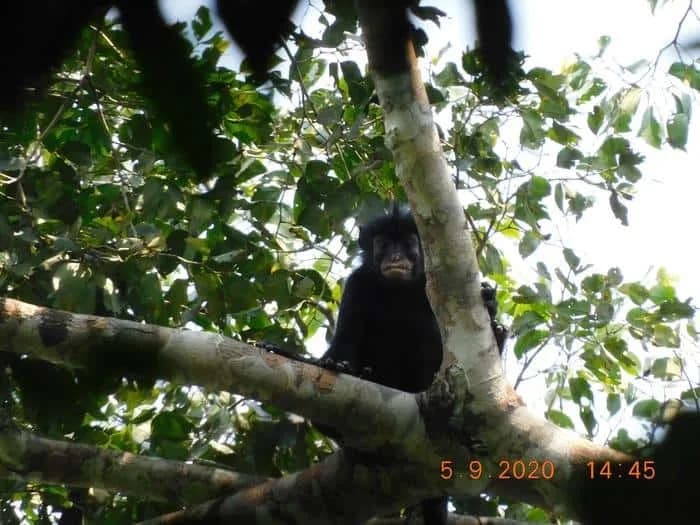
© Florida Atlantic University
Deep in the rainforests of the Democratic Republic of Congo (DRC), researchers have formally identified a previously undocumented colobus monkey after a chance photograph rekindled interest in an odd primate spotted in the canopy.
How the Discovery Began
An international team of scientists from Florida Atlantic University, Yale University, the City University of New York, the Lukuru Wildlife Research Foundation and Lomami National Park traveled to a remote region between the Lomami and Congo (Lualaba) Rivers after a park ranger’s unusual photo — combined with a shadowy image from 2008 — suggested the animal might be new to science. Fieldwork conducted from 2018 to 2022 produced 114 verified sightings across roughly 1,700 square kilometers (660 square miles).
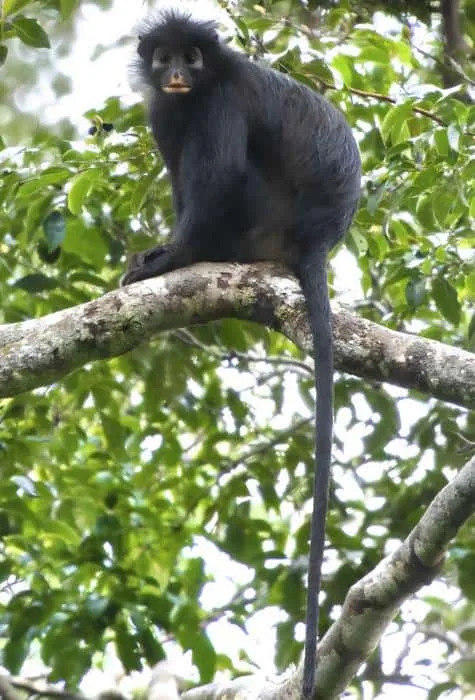
The newly discovered monkey species, called a Likweli, has a distinctive orange-cream color around its mouth.©Daniel Rosengren –Original/License
A Distinct New Species
The primate has been given the scientific name Colobus congoensis and the local common name Likweli, a word that means "branch shaker." The Likweli is small for a colobus (about 15 pounds), with glossy black fur, a long sweeping tail, long black facial hair, large folded ears, white rump markings and a striking orange-cream patch around its mouth and nose that helps distinguish it from other regional colobus species.
Multiple Lines of Evidence
Researchers used three independent lines of evidence to confirm the species: genetics, anatomy and vocalizations. Genetic analysis indicates Colobus congoensis diverged from its closest relative, the black colobus, about 4–5 million years ago — the deepest split reported so far among colobus monkeys. Detailed comparisons of body, skull and dental measurements demonstrated consistent anatomical differences, and distinct calls further separated the Likweli from neighboring primates.
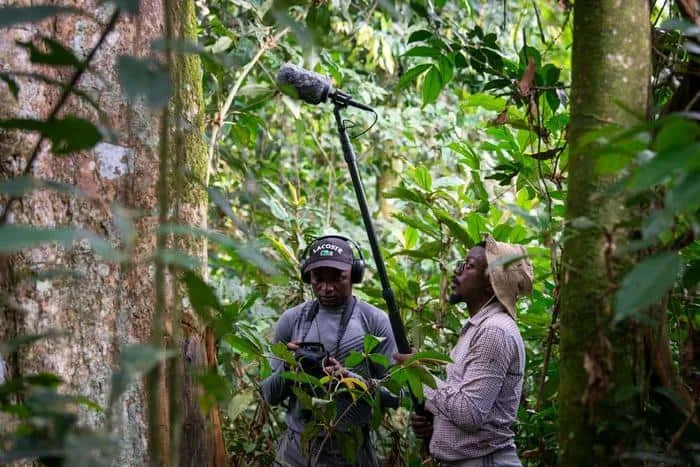
Junior Amboko (left) and Mardoché B. Koko, two members of the research team, working in the field in the Lomami National Park.©Florida Atlantic University –Original/License
"This discovery is both exciting and deeply personal, highlighting the extraordinary biodiversity of my homeland and how much remains undocumented," said Junior Amboko, co-corresponding author and Ph.D. student at Florida Atlantic University. He also noted the team believes this may be the first primate formally named after the Democratic Republic of Congo.
Conservation Concerns
Although the species was only recently described by science, it is already under threat. Its small population, increasing hunting pressure and accelerating habitat loss put the Likweli at risk of extinction. A survey of 52 nearby villages found that only eight recognized the animal, emphasizing how elusive the species remains even to local communities.
Most of the monkey's range falls within Lomami National Park, making protection of that landscape a priority. The research team is recommending that the International Union for Conservation of Nature (IUCN) consider listing Colobus congoensis on the Red List to help trigger conservation attention and resources.
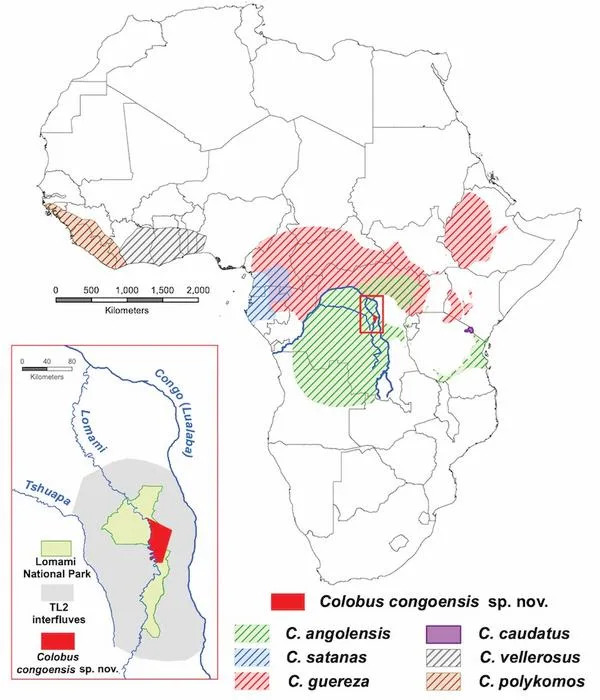
The region where the new species was identified.©Lukuru Wildlife Research Foundation –Original/License
"The discovery of Colobus congoensis is both a scientific triumph and a sobering reminder that some of Earth's rarest creatures may vanish before the world even knows they exist," said Detwiler, a member of the research team.
Why It Matters
Discoveries like the Likweli underscore how much remains to be documented in biodiversity-rich regions such as the Congo Basin. They also highlight the urgent need for conservation measures that combine local knowledge, long-term protection of habitat, and continued scientific study to prevent newly discovered species from disappearing.
Note: The discovery was published in PLOS One and involved collaborators from multiple universities and conservation organizations working in east-central DRC.
Help us improve.