On July 20, 1976, NASA’s Viking 1 landed on Mars and sent back the first photograph taken from the planet’s surface. The lander, intended to operate for 90 days, functioned for more than six years and worked in tandem with an orbiter. Earlier Soviet attempts, including Mars 3 in December 1971, briefly landed but lost contact. Viking 1’s image transformed Mars from science fiction into a subject of direct, data-driven study and launched decades of robotic exploration.
Viking 1’s First Photo: 50 Years Since Humanity’s First Close-Up of Mars
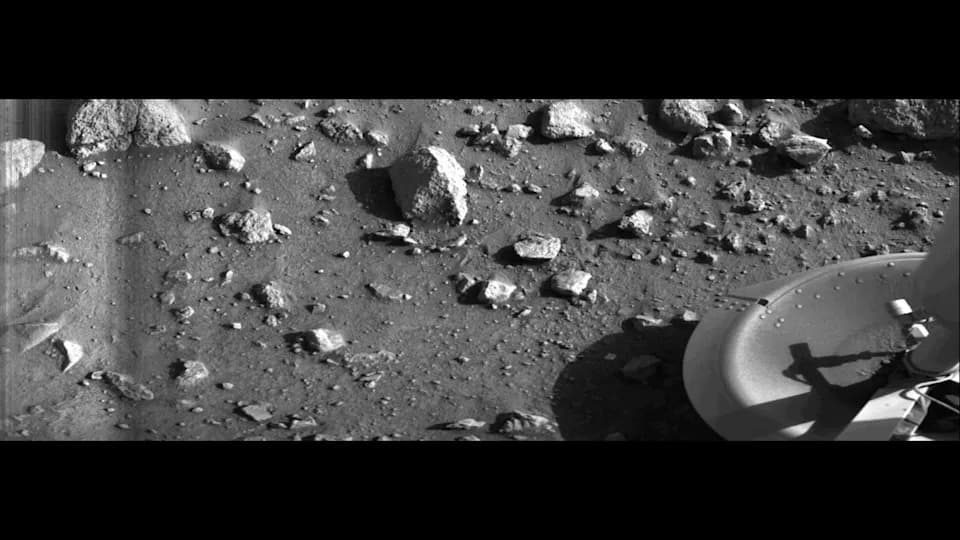
The first-ever photo captured on the surface of Mars, snapped on July 20, 1976 by NASA's Viking 1 lander. | Credit: NASA/JPL
Image: The very first photograph taken from the surface of Mars, captured on July 20, 1976, by NASA’s Viking 1 lander. Credit: NASA/JPL
This unassuming black-and-white frame — a scatter of rocks and dusty terrain — represents a historic shift: humanity’s first close-up glimpse of another planet. Early on July 20, 1976, Viking 1 touched down on the Martian surface and transmitted this image almost immediately, marking the first fully successful landing on Mars.
Previous attempts to reach Mars had included several Soviet efforts. The USSR’s Mars 3 lander did manage a brief soft landing in December 1971, but it lost contact shortly thereafter. Viking 1, by contrast, far exceeded expectations.
Although the lander’s prime mission was planned for 90 days, Viking 1 remained operational for more than six years, returning numerous scientific observations. The mission included both a lander and an orbiter; Viking 2 later joined the pair, expanding the scope of exploration.
Why This Image Matters
Before Viking 1, Mars existed largely in the realm of imagination and speculative fiction — from Ray Bradbury’s evocative tales to countless other portrayals. This first surface photograph replaced fanciful images with direct evidence, grounding future study and exploration in real data.
“That first picture didn’t just show rocks — it opened a door.”
Since Viking 1, NASA and other agencies have steadily advanced robotic technology. Beginning with the Pathfinder mission and the Sojourner rover in 1997, successive rovers and orbiters have built decades of surface and atmospheric data, transforming our understanding of Mars and paving the way for future missions.
Legacy: Fifty years on, Viking 1’s first photograph remains an iconic milestone in planetary exploration — a reminder of how a single image can change our view of the universe.
Help us improve.