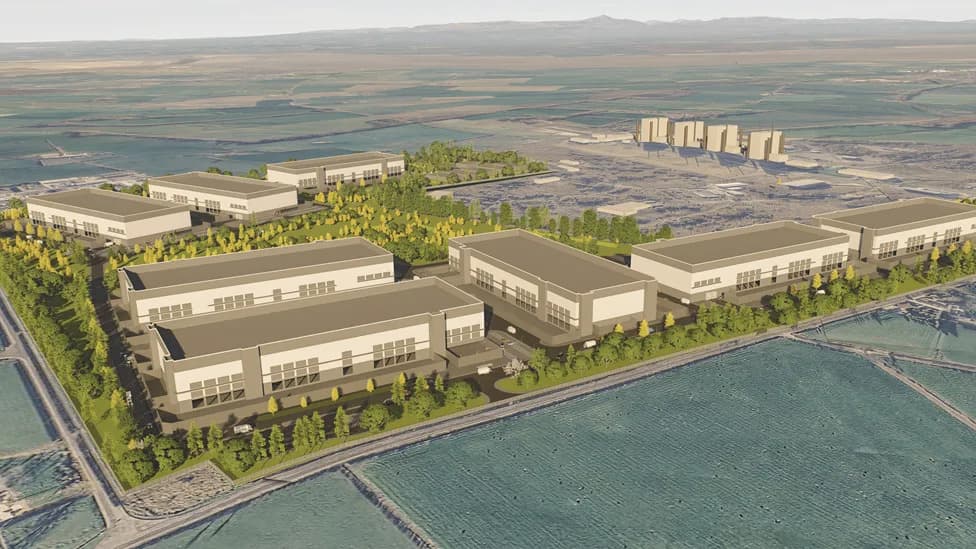
The Gateway Business Park near Jenkins in Letcher County, Kentucky, is being evaluated as a possible site for a data center, with officials noting an agreement tied to about 100 acres but stressing plans are in the very early stages. Planners are studying whether the site can generate on-site power to avoid adding strain to the regional grid. The City of Jenkins says it has not been involved in planning, and residents are split between concerns about water and local infrastructure and hopes for new jobs. Support for the project will hinge on assurances that water, wastewater and energy systems will not be overburdened.
Proposed Data Center at Gateway Business Park Divides Eastern Kentucky Over Jobs, Water and On‑Site Power

Photo Credit: iStock
A proposal to study building a data center at Gateway Business Park near Jenkins in Letcher County, Eastern Kentucky, has sparked a regional debate: can technology-led growth deliver jobs and tax revenue without adding stress to local water, wastewater and power systems?
One East Kentucky officials told WYMT that the Appalachian Industrial Development Authority has reached an agreement with Diversified Gas and Oil Corporation and Maverick Holdings related to a possible purchase of roughly 100 acres at the site. Colby Kirk, president and CEO of One East Kentucky, emphasized the plan is in its earliest stage and that key feasibility questions remain.
"Data centers are getting a lot of attention, just in general right now. It is important to note this project is very early in the process of where it's at," Kirk said.
Planners are currently evaluating whether the site could produce its own electricity to serve a computing facility that would have large energy and resource demands. Kirk said on-site power could make the project more attractive by creating additional jobs and by reducing stress on the regional grid and residential ratepayers.
"This approach of generating power on site, I think makes it more attractive because there would be more job creation that comes with having on-site power. It makes it more sustainable, from a grid standpoint, of not adding strain to the grid or adding cost to residential rate payers," he said.
The City of Jenkins has posted that it has not been involved in planning discussions. Residents who spoke with WYMT off camera expressed mixed views: some oppose siting a data center close to homes, citing potential impacts on water and quality of life, while others welcome the prospect of new jobs and investment in a region looking for economic opportunity.
Data centers are a high-profile component of the artificial intelligence expansion because AI services require massive computing power, which drives demand for electricity, cooling and, in many cases, significant water use. While advanced technologies can improve efficiency and help integrate clean-energy systems, they can also increase pressure on local infrastructure and raise concerns about higher utility bills, security, noise and potential health impacts.
The article notes past instances where large data center projects were associated with local water challenges, including reported drinking-water issues near a Meta site, underscoring why community resources are central to any decision.
At present, the plan remains preliminary. Kirk said a principal question is whether electricity can realistically be generated at the site and that support for the project would depend on ensuring it does not unduly strain water, wastewater or other community resources.
"But, at the end of the day, if I feel that a project could harm the community — if it strains water or wastewater resources to such an extent that it could harm the community — I would not be supportive of that," he said.
Officials say additional studies and community engagement will be needed before any final decision is made.
Help us improve.