The FCC has approved Reflect Orbital's Earendil 1, a test satellite that would use an 18×18 m mylar reflector to bounce sunlight onto a roughly 5 km-wide area of Earth's nightside from ~390 miles up. Astronomers warn of potential eye hazards and a dramatic rise in night-sky brightness if the idea is scaled to a proposed 50,000-satellite constellation. The FCC says physical impacts fall largely outside its spectrum authority; Reflect Orbital says it is commissioning independent studies and seeking coordination with federal science agencies. Observers call for stronger oversight before any large deployments proceed.
FCC Clears Test Satellite That Would Beam Sunlight at Night, Sparking Astronomers' 'Dismay'

Photo Credit: Reflect Orbital
U.S. regulators have granted California-based Reflect Orbital permission to fly a test satellite designed to reflect sunlight onto Earth's nightside, a decision that has drawn sharp criticism from astronomers and dark-sky advocates.
What Was Approved
The Federal Communications Commission (FCC) authorized Reflect Orbital's Earendil 1, a test craft described by Sky & Telescope as an 18-by-18 metre (59-by-59 foot) glossy mylar sheet. The company plans to place the satellite at roughly 390 miles (625 km) altitude and aim its reflected beam at a surface footprint of about 5 kilometres (3.1 miles) across. Earendil 1 is presented as an experimental mission; Reflect Orbital envisions a much larger deployment in the future, potentially a constellation of up to 50,000 reflectors.
Scientists' Concerns
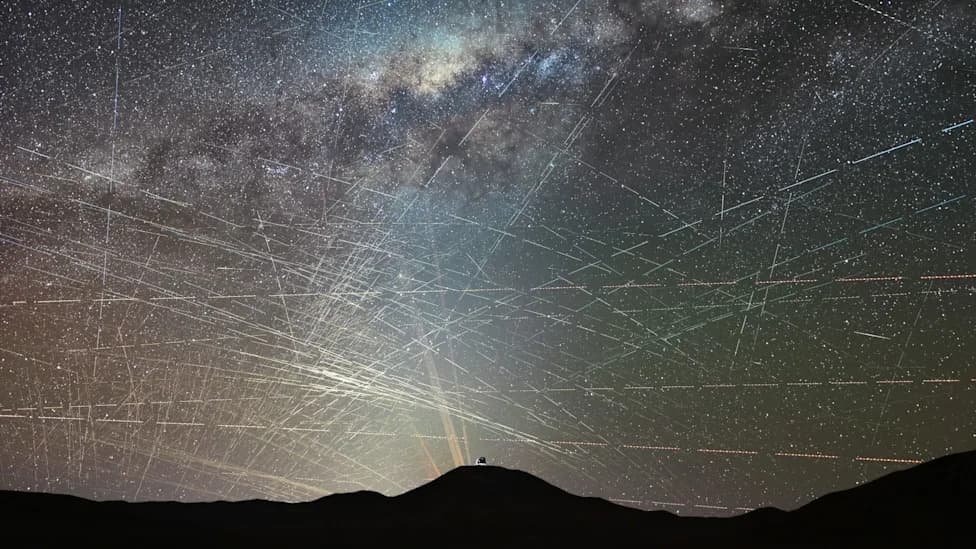
Professional astronomers and researchers have raised multiple concerns. In filings to the FCC, the American Astronomical Society (AAS) warned of a "potential for eye damage to amateur astronomers looking through reasonably sized telescopes," and cautioned that reflectors could substantially brighten night skies. Olivier Hainaut of the European Southern Observatory estimated that a full-scale constellation could increase sky brightness by a factor of two to three—enough to impair astronomical observations well beyond the illuminated zones.
"The AAS is also deeply concerned by the statement from the FCC that the deployment of a solar reflector is beyond the scope of the Commission's authority to regulate." — American Astronomical Society
Regulatory and Community Issues
The FCC said physical and ecological harms fall largely outside its spectrum-management remit and judged that significant harms from the reflector are unlikely. Because the authorization proceeded mainly via spectrum licensing, many communities likely to experience altered night skies had limited formal input.
Company Response and Next Steps
Reflect Orbital says it is commissioning independent third-party research on environmental, vision, and astronomical impacts and is seeking coordination with federal science agencies, including discussions with the National Science Foundation. CEO Ben Nowack has framed the technology as a way to extend solar energy generation into hours before sunrise and after sunset, increasing potential revenue for utilities.
Why It Matters
Beyond technical and safety questions, critics warn of cultural and educational losses: children and communities could lose the simple, shared experience of seeing a dark, star-filled sky. The proposal also joins broader debates about light pollution, the rapid growth of satellite fleets, and long-term stresses on the upper atmosphere and observational astronomy.
For now, the FCC approval applies only to a single test satellite. Astronomers and dark-sky advocates are pressing for broader oversight, independent study results, and clear regulatory responsibility before any larger-scale deployment proceeds.
Help us improve.