The 13‑second clip shared after July 2026 floods in Guangxi was a staged drowning‑prevention video originally posted on Douyin on May 30, not footage of disaster victims. The viral version had been cropped to remove a disclaimer labeling it an educational simulation. AFP located the original via reverse image search and contacted the uploader without response. Officials say the floods killed at least 39 people, and misleading content often spreads after natural disasters.
Staged 'Drowning' Video Misrepresented As Guangxi Flood Victims After Typhoon Maysak
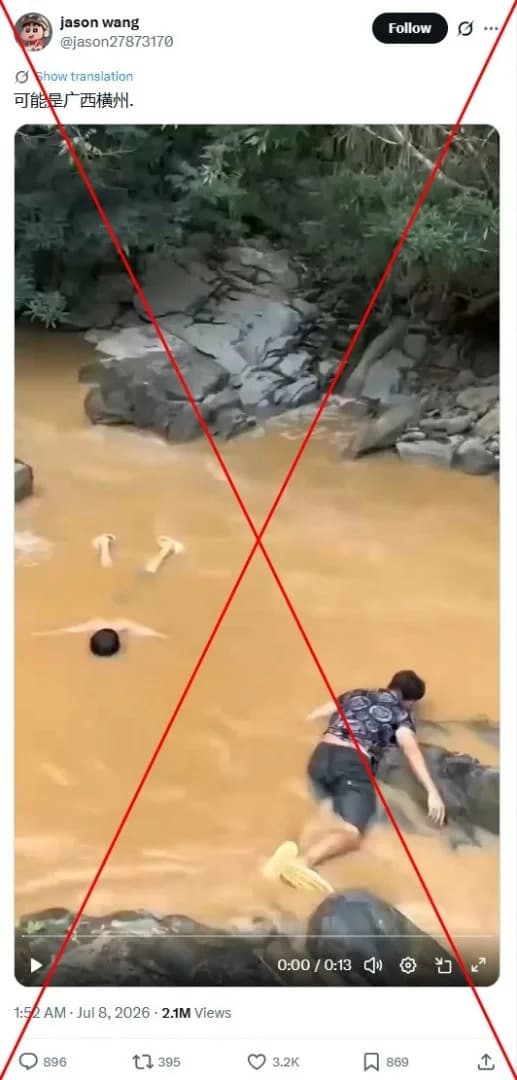
Screenshot of the false post captured on July 13, 2026, with a red X added by AFP
After deadly floods struck Guangxi in July 2026, a 13‑second clip circulated on social media falsely presented as footage of two people who drowned in the disaster. The short video was originally posted on Douyin in late May as a simulated drowning prevention exercise, but the version shared in July had been cropped to remove an on‑screen disclaimer identifying it as educational material.
What Happened
One X post, captioned in simplified Chinese as "Might have happened in Hengzhou, Guangxi," was published on July 8, 2026, by an account with more than 139,000 followers. The edited clip appears to show two people floating face‑down in muddy water, creating the misleading impression that it documented real victims of the Guangxi floods.
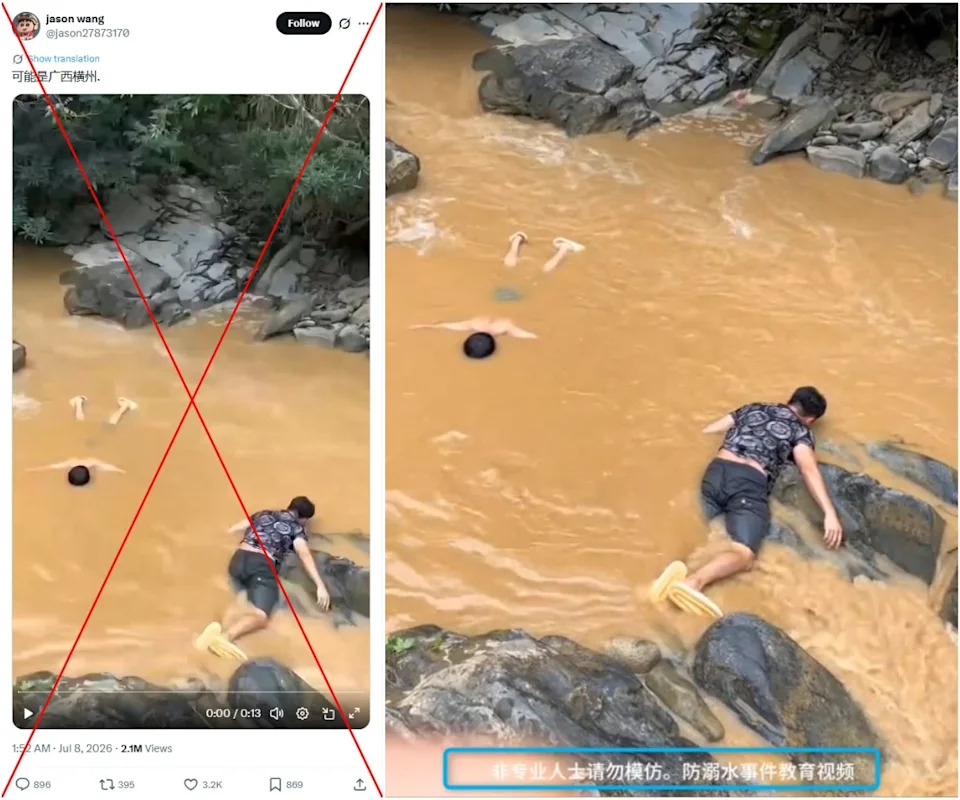
Screenshot comparison of the falsely shared video (L) and the May 30 Douyin video, with its disclaimer highlighted in blue by AFP
How It Was Verified
A reverse image search using keyframes from the viral clip located a higher‑quality version uploaded to Douyin on May 30. That original upload included visible text identifying the footage as an educational simulation. The superimposed message reads:
"Non‑professionals are advised not to imitate. This is a drowning prevention education video."
The warning had been cropped out of the version that spread on X. AFP contacted the Douyin account that posted the original clip but did not receive a reply. The same account has published several similar videos, tagging them with phrases such as "flood escape" and "exercise caution when swimming outdoors."
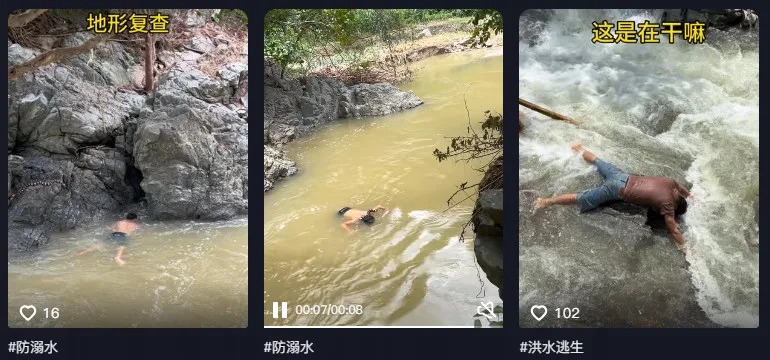
Screenshots of similar videos posted by the Douyin user
Context
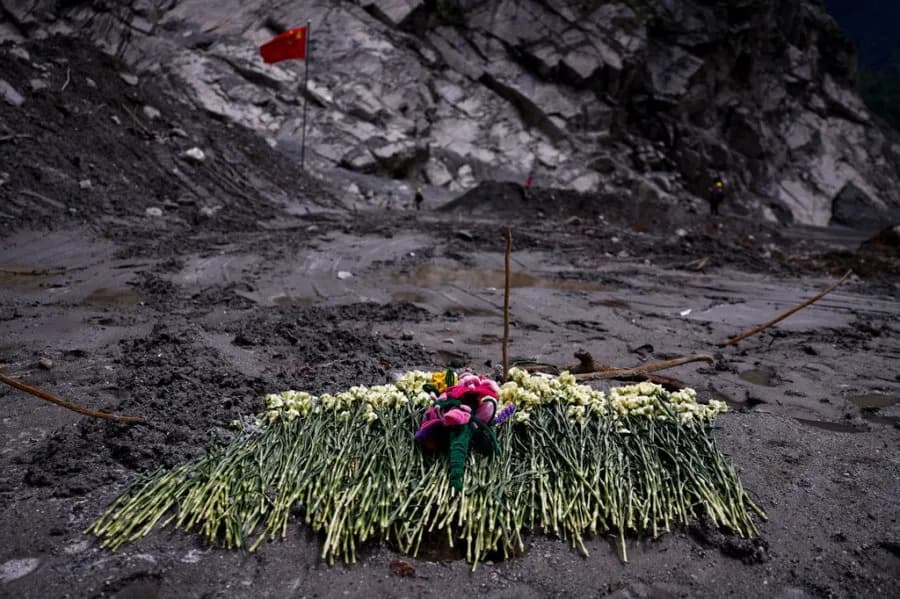
Torrential rain and severe flooding brought by Typhoon Maysak in July caused fast‑flowing muddy water that breached about 40 rivers and waterways across Guangxi; officials reported the floods killed at least 39 people. Natural disasters and extreme weather are common in China during summer. Scientists warn that climate change driven by fossil fuel emissions will increase the frequency and intensity of such events, and that misinformation often proliferates in their wake.
Bottom line: The 13‑second clip circulating after the Guangxi floods was a staged drowning‑prevention video posted in May, not authentic footage of victims from the July disaster.
Help us improve.