The Persian Gulf's extraordinary oil and gas wealth stems from an ideal geological combination: abundant organic-rich source rocks, sufficient heat and pressure to generate hydrocarbons, and vast structural traps in the form of folds and domes. The region contains more than 30 supergiant fields, wells that commonly outperform top wells elsewhere, and giants such as Ghawar and South Pars–North Dome. USGS estimates suggest substantial undiscovered volumes remain, and modern drilling techniques may increase recoverable resources.
Why the Persian Gulf Holds More Oil and Gas Than Anywhere Else on Earth
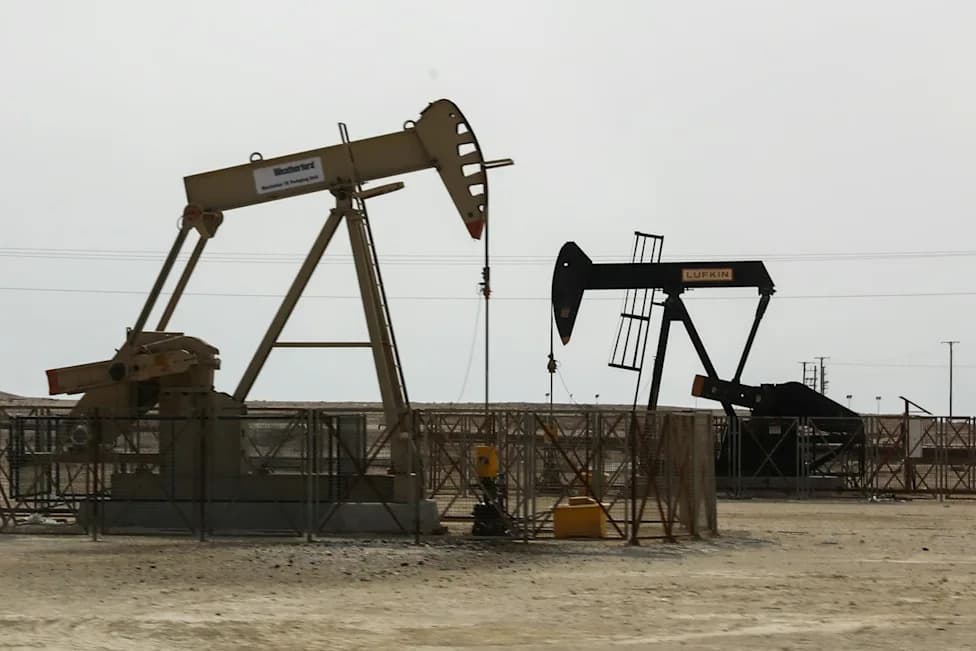
Oil wells in the Persian Gulf region are among the most productive in the world.Jakub Porzycki/NurPhoto via Getty Images
The Persian Gulf region combines an unusually favorable set of geological conditions — abundant organic-rich source rocks, the right levels of heat and pressure, and enormous structural traps — that together produced an oil and gas endowment unmatched anywhere on Earth. That combination helps explain why the region remains strategically vital and often geopolitically fraught.
Why the Region Is So Rich
Two tectonic plates meet here: the Arabian Plate to the southwest and the Eurasian Plate to the north and east. Their collision over roughly the past 35 million years folded, fractured and buried vast volumes of sedimentary rock, exposing organic-rich layers to the heat and pressure needed to generate hydrocarbons.
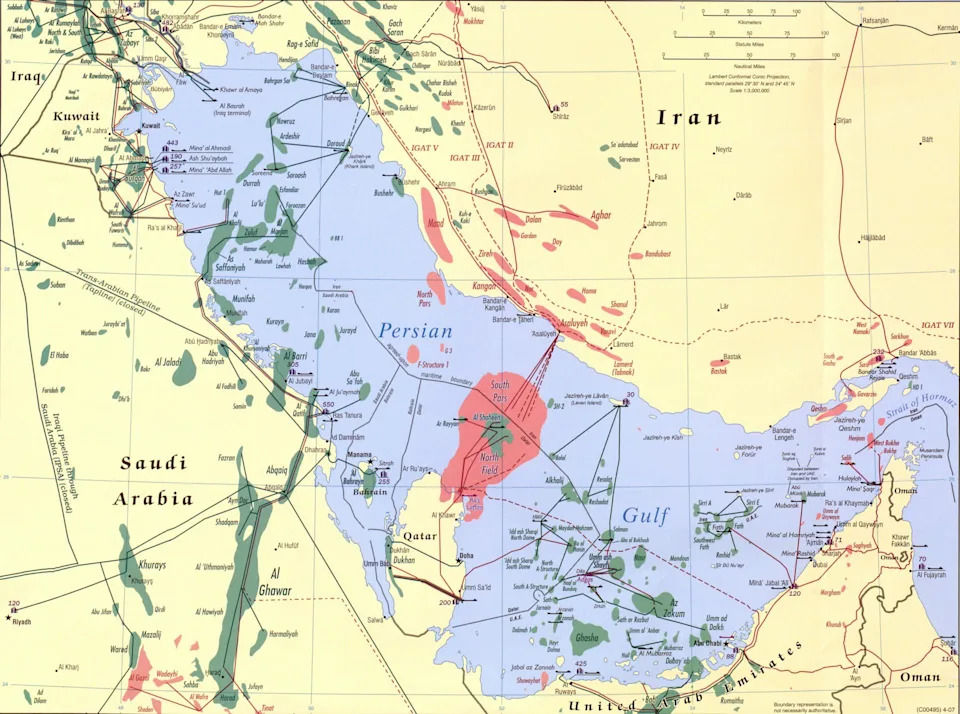
The Persian Gulf region is rich in oil fields, marked in green, and gas fields, marked in red.Central Intelligence Agency via Library of Congress
Source Rocks and Organic Content
The Gulf contains many thick, widespread source-rock intervals (shales and mud-rich limestones) with high organic content. Notable examples include the Jurassic Hanifa and Tuwaiq formations on the Arabian side and the Cretaceous Kazhdumi formation in Iran. Organic material in these rocks typically ranges from about 1% to more than 10% locally — well within the range that generates large volumes of oil and gas.
Structural Traps: Folds and Domes
Structural geometry is a major reason hydrocarbons concentrated where they did. On the Iranian side, the Zagros Mountains consist of intensely folded and faulted strata that form long, linear trap structures visible in satellite imagery. On the Arabian platform, compressive forces created very large dome-like anticlines — vast roof-shaped traps that host enormous fields.
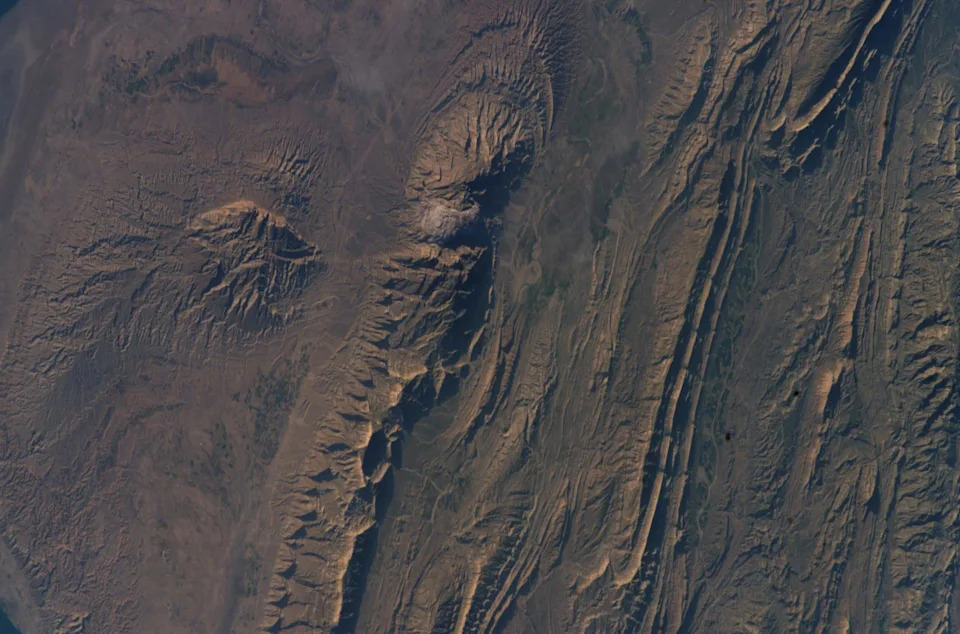
A satellite view of an area of the southwestern Zagros Mountains shows long ridges and valleys, evidence of tectonic plates colliding.NASA via Flickr
High-Quality Reservoirs and Easy Production
Reservoir rocks in the region are often limestone units with partial dissolution and extensive fracturing, giving them high permeability and storage capacity across hundreds to thousands of square kilometers. As a result, individual wells in the Persian Gulf commonly produce two to five times the daily output of even the best wells in the North Sea and parts of Russia.
World-Class Fields and Volumes
There are more than 30 supergiant fields (each with at least 5 billion barrels of oil) around the Gulf. Ghawar in Saudi Arabia is the largest onshore oil field and is thought to contain tens of billions of barrels of recoverable oil. The South Pars–North Dome gas field, shared by Qatar and Iran, holds an estimated 1,300 trillion cubic feet (about 46 billion cubic meters) of gas — an energy equivalent of hundreds of billions of barrels of oil.
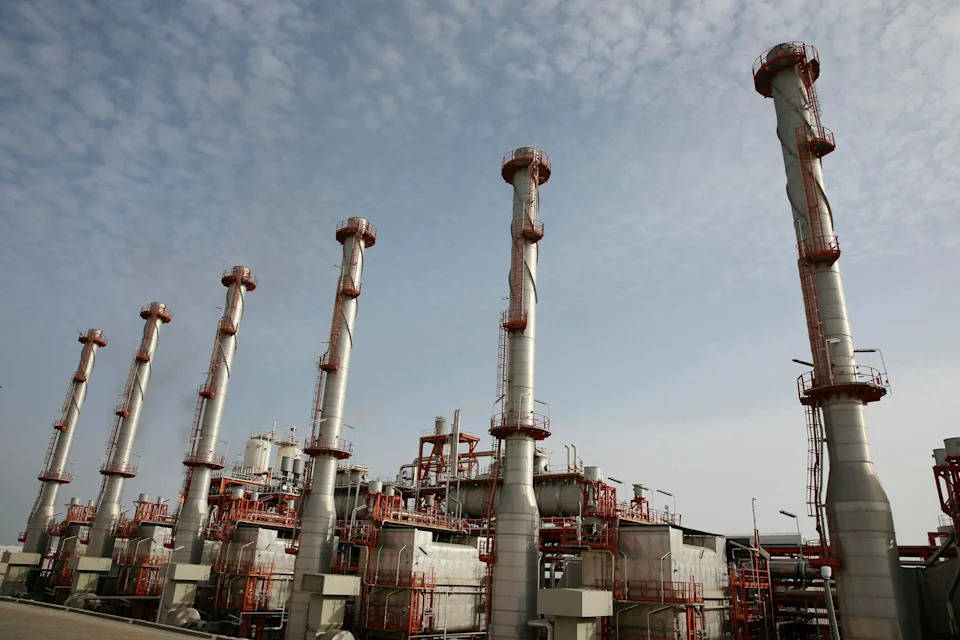
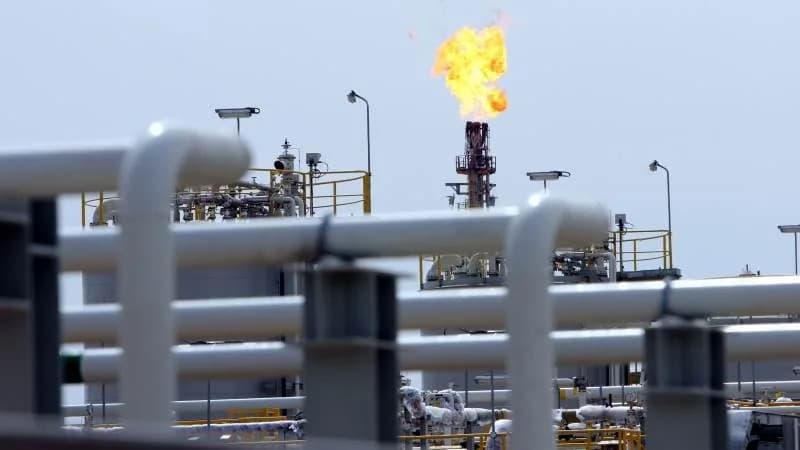
A natural gas refinery at the South Pars gas field on the northern coast of the Persian Gulf, in Asaluyeh, Iran.AP Photo/Vahid Salemi
Taken together, these geological advantages underlie the striking statistic that roughly half of the world's conventional oil and about 40% of its conventional gas lie beneath roughly 3% of the planet's land area.
Remaining Potential and Technologies
Even after more than a century of exploration, significant resources are likely still present. A U.S. Geological Survey assessment (2012) estimated up to about 86 billion barrels of undiscovered oil and 336 trillion cubic feet of undiscovered natural gas in the Arabian Peninsula and Zagros provinces, in addition to already discovered volumes.
Newer drilling technologies — horizontal drilling and hydraulic fracturing — pioneered in the U.S. have begun to be trialed in parts of Saudi Arabia and the UAE. These methods could raise recovery factors in certain reservoirs, though their ultimate success and economic impact remain to be fully demonstrated in the region's specific geology.
Why It Matters
The Persian Gulf's geology helps explain not only its enormous contribution to global energy supplies but also why the region has outsized geopolitical importance. The combination of very large accumulations, high well productivity and extensive existing infrastructure means changes in production there can quickly affect global energy markets.
Author: Scott L. Montgomery, University of Washington. This article is republished from The Conversation under a Creative Commons license.
Help us improve.