Genome sequencing shows Salvinia molesta is a diploid hybrid whose mismatched chromosome sets prevent normal meiosis, eliminating sexual reproduction. The fern spreads by vegetative fragmentation, producing nearly identical clones that form dense mats and harm freshwater ecosystems. Because invasive populations are genetically uniform, control measures that work in one place may be effective elsewhere, potentially reducing costs and speeding restoration.
Genome Study Explains Why Invasive Water Fern Clones Itself — And How That Could Help Control It
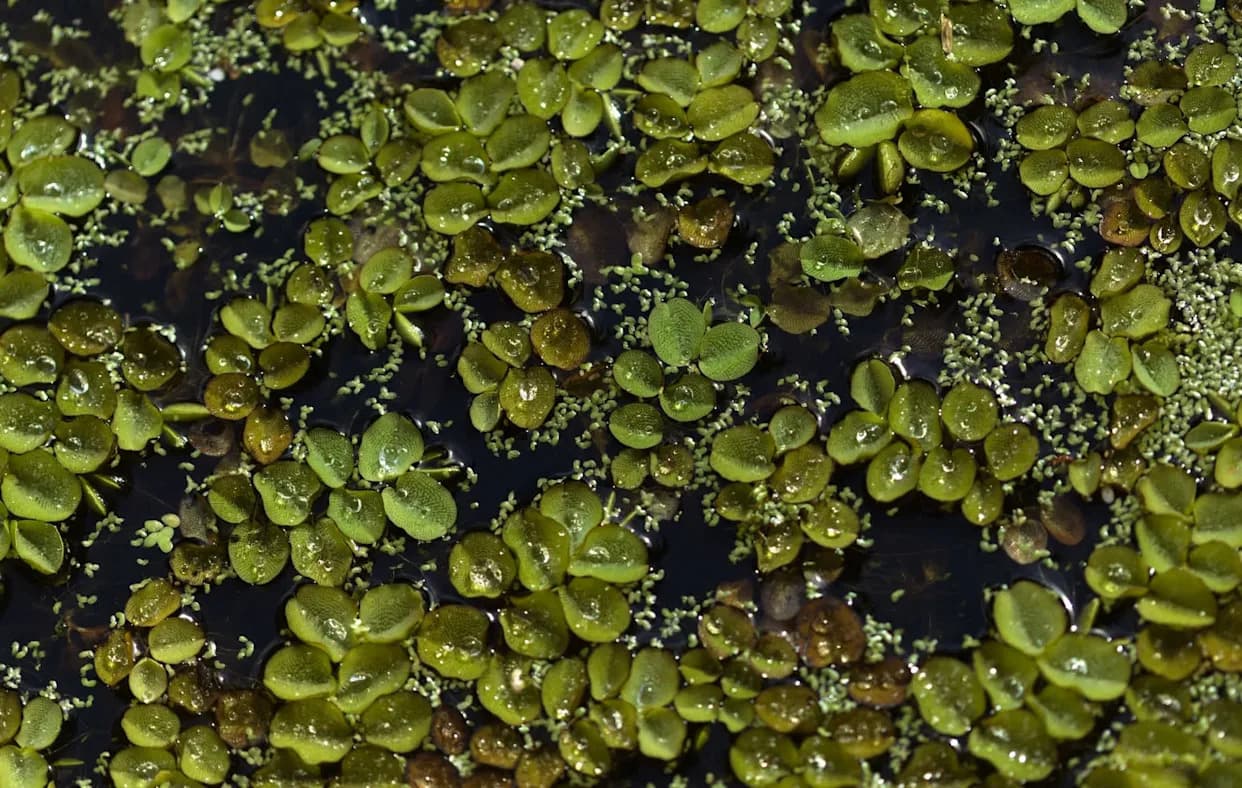
Photo Credit: iStock
Researchers have sequenced the genome of the invasive aquatic fern Salvinia molesta and uncovered why it reproduces by cloning rather than sex — a discovery that may make control efforts more predictable and effective.
The free‑floating fern Salvinia molesta is one of the world's most aggressive aquatic invaders. It can nearly double its biomass in as little as 36 hours and now occupies freshwater habitats in more than 60 countries, where dense mats can shade and deoxygenate water, harm wildlife, and disrupt recreation and water management.
What the Study Found
By sequencing and analyzing the fern's genome, researchers found that S. molesta is not the allopentaploid previously reported. Instead, it is a diploid hybrid: it carries two distinct sets of chromosomes, each inherited from a different parent species that have not yet been identified.
"When the plant tries to undergo meiosis, those differences prevent proper chromosome pairing. No viable spores form. The plant cannot reproduce sexually,"
said Yanã Rizzieri, the study's first author and a graduate student involved in the laboratory work.
Because the two chromosome sets fail to align correctly during meiosis, the fern does not produce viable spores and cannot complete sexual reproduction. Instead, it spreads vegetatively: fragments break off and each piece can grow into a genetically identical new plant.
Why This Matters For Control
The researchers found that invasive populations they sampled were nearly genetically identical due to this clonal spread. That genetic uniformity is a practical advantage for managers: control methods that are effective in one location are more likely to succeed elsewhere against similarly uniform populations, potentially reducing trial and error, time, and restoration costs.
As Erin Sigel of the University of New Hampshire noted, the fern's genome evolution appears unusually dynamic for a fern and more like what is seen in many flowering plants — a clue that could guide future research on vulnerabilities.
While no single solution will remove S. molesta everywhere, a clearer understanding of its biology helps water managers prioritize strategies and tailor interventions with greater confidence.
Implications
Improved genomic knowledge can inform targeted mechanical, chemical, or biological controls and support early detection and rapid response. Because invasive populations are often clonal, effective local treatments may scale to broader application, accelerating freshwater recovery in impacted lakes, ponds, and reservoirs.
Help us improve.