NASA is designing the Habitable Worlds Observatory (HWO) to be serviceable while operating near the Sun–Earth L2 point about one million miles from Earth. Because that distance makes astronaut servicing impractical, plans emphasize robotic maintenance, instrument swaps and possible in‑space assembly. HWO will also include gamma-ray detectors and could receive upgraded instruments over its lifetime; launch is targeted for the 2040s.
NASA’s Habitable Worlds Observatory Will Be Serviceable From Deep Space — Robotic Repairs, Upgrades and Gamma-Ray Detectors Planned
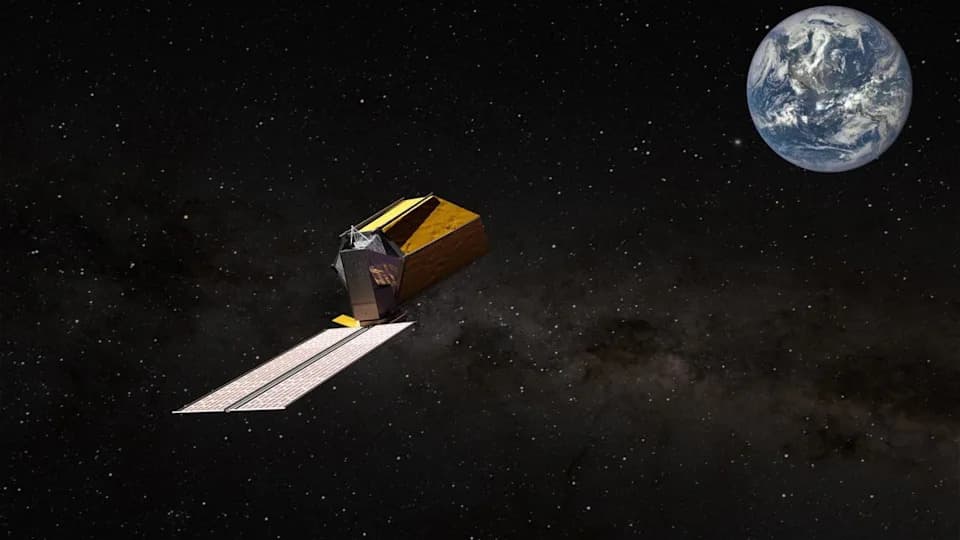
An artist's concept for the Habitable Worlds Observatory. . | Credit: NASA
Pasadena, California — NASA is designing its next flagship telescope, the Habitable Worlds Observatory (HWO), to be serviceable while operating near the Sun–Earth L2 point roughly one million miles (1.5 million kilometers) from Earth. Unlike Hubble, which was repaired by Space Shuttle crews in low-Earth orbit, HWO’s distance makes astronaut EVAs impractical with today’s technology, so servicing plans emphasize robotics, modularity and future upgrade paths.
Why Serviceability Matters
HWO’s primary mission is to search for and study rocky, Earth-like planets around Sun-like stars and to characterize their atmospheres. Making the observatory serviceable would extend its operational lifetime, allow new instruments to be installed as technology advances, and enable repairs that preserve science return — all without launching a completely new flagship telescope.
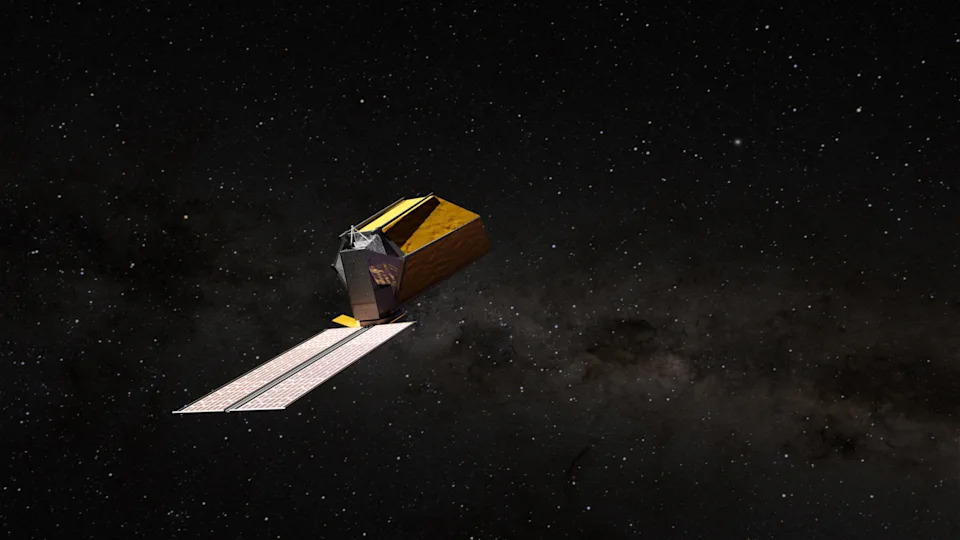
NASA's Goddard Space Flight Center Conceptual Image Lab
Robotic Servicing At L2
HWO will likely be based near the Sun–Earth Lagrange point 2 (L2), the same distant vantage point used by the James Webb Space Telescope (JWST). That location eases thermal and communications demands but puts the observatory about one million miles away, where astronaut missions are extremely difficult. "HWO will have to be serviceable to some extent," Shawn Domagal-Goldman, director of NASA's astrophysics division, said during a session at the American Astronomical Society meeting in Pasadena.
Because of the distance, NASA is planning for robotic servicing options: instrument swaps, routine maintenance, in-flight repairs, and possibly in-space assembly if the telescope is too large to launch fully assembled. Future robotic servicers could dock with HWO, exchange modular components, patch micrometeorite damage, or install upgraded detectors and spectrographs.
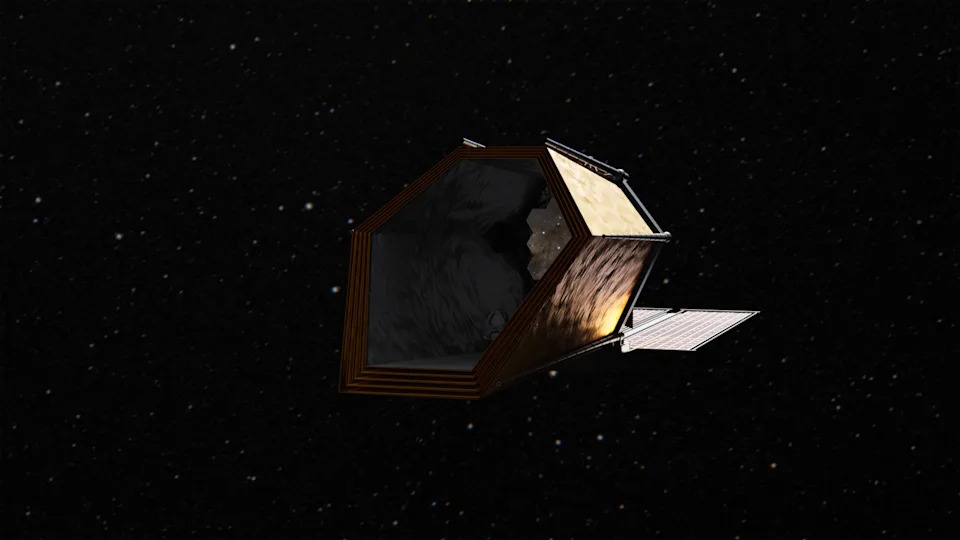
NASA's Goddard Space Flight Center Conceptual Image Lab
Lessons From Hubble And JWST
Hubble benefited from being designed for hands-on servicing during the Shuttle era: many avionics and subsystems were modular so astronauts could replace gyroscopes, computers and scientific instruments. John Grunsfeld, former astronaut and NASA chief scientist, noted that today’s challenge is to enable similar flexibility at far greater distance. He also warned that JWST taught engineers about micrometeorite risk: impacts are more frequent and larger than expected, and future observatories may need the ability to patch shields or other structures — tasks robotics could perform.
Technology Demonstrators And Future Upgrades
NASA is using near-term missions to mature technologies relevant to HWO. The Nancy Grace Roman Space Telescope will fly a Coronagraph Instrument as a technology demonstration to directly image exoplanets by blocking starlight — a capability HWO may adopt and improve. Because HWO is being designed for servicing, new coronagraphs, higher-resolution spectrographs, or novel detectors could be added years after launch as they become available.
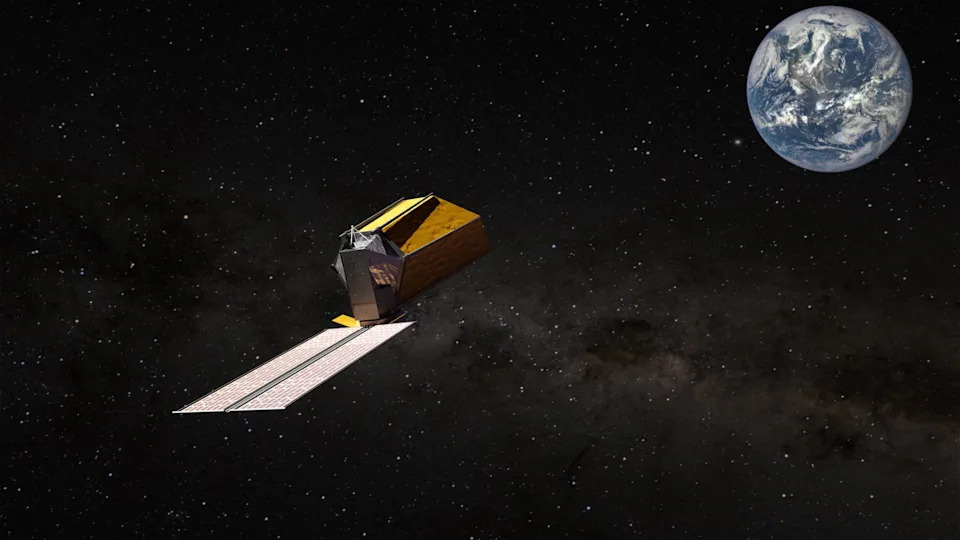
NASA
Gamma-Ray Detectors And Expanded Science
At the AAS meeting, Domagal-Goldman also revealed that HWO will include gamma-ray detectors. Details about their design and science goals are still under development, but making those detectors serviceable means they could be upgraded over time to pursue new high-energy astronomy objectives alongside the observatory’s exoplanet science.
Outlook
HWO remains in early development with a target launch in the 2040s. NASA is still defining the telescope’s final architecture, but prioritizing serviceability now — and planning for robotic servicing at L2 — will help ensure the observatory can evolve, recover from damage, and stay at the cutting edge of astronomy for decades.
Key voices: Shawn Domagal-Goldman (NASA Astrophysics Division) and John Grunsfeld (former astronaut and NASA chief scientist).
Help us improve.