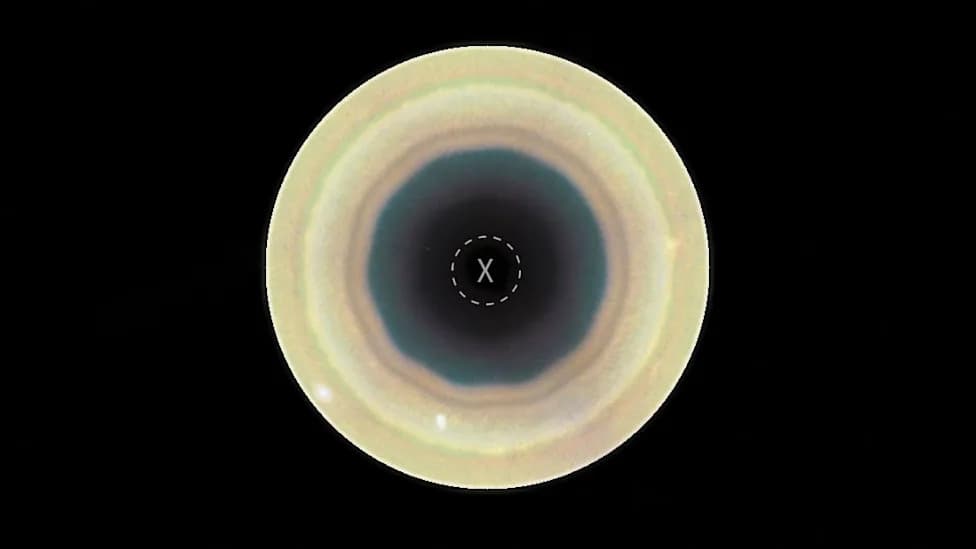
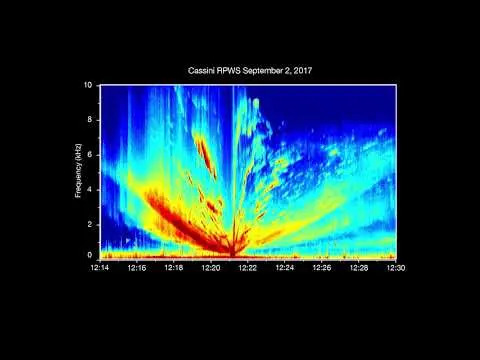
Cassini's RPWS instrument detected electrostatic plasma waves traveling along magnetic field lines between Saturn and Enceladus about two weeks before the probe's final plunge in 2017. Researchers converted the original 16-minute measurement into a 28.5-second audio clip, revealing an auroral "hiss" previously seen near Enceladus but now observed close to Saturn itself. Two 2018 papers in Geophysical Research Letters reported these planet–moon magnetic interactions, highlighting the strong coupling between Saturn and its geologically active moon.
Cassini 'Heard' Plasma Waves Traveling Between Saturn and Enceladus — Scientists Turn Them Into Eerie Audio
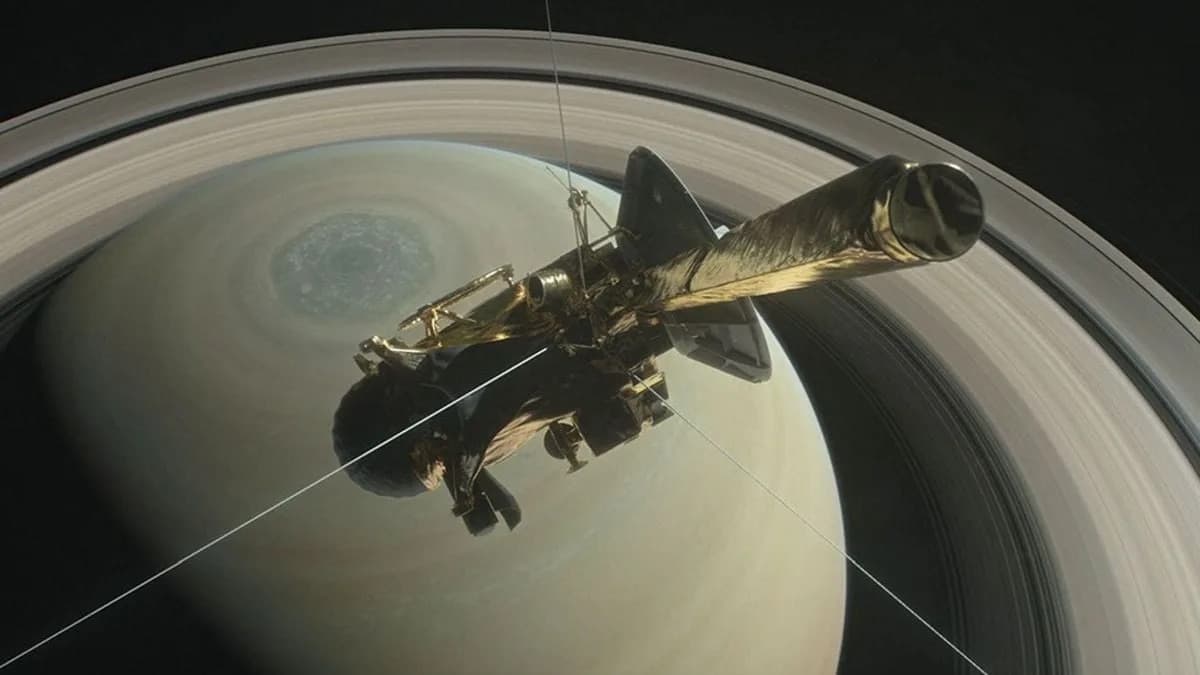
An artistic representation of Cassini as it prepares for its final dive. (NASA)
If the cosmos had a soundtrack, it would be strange and unsettling. Space is effectively a vacuum for sound as we know it, yet electromagnetic and plasma activity measured by spacecraft can be translated into audible frequencies. When converted, these signals produce eerie, otherworldly sounds that reveal dynamic processes in planetary environments.
YouTube Thumbnail
Saturn is one of the most sonically intriguing places in the Solar System. Its massive ring system, active moons and well-ordered magnetic field create complex plasma interactions that, when converted into sound, produce haunting signatures.
YouTube Thumbnail
In the final months of NASA's Cassini mission, as the probe made its dramatic Grand Finale dives toward Saturn in 2017, its Radio and Plasma Wave Science (RPWS) instrument recorded electrostatic plasma waves that scientists have now shown traveled along magnetic field lines connecting Saturn and the icy moon Enceladus. The observation occurred roughly two weeks before Cassini's final plunge into Saturn's atmosphere.
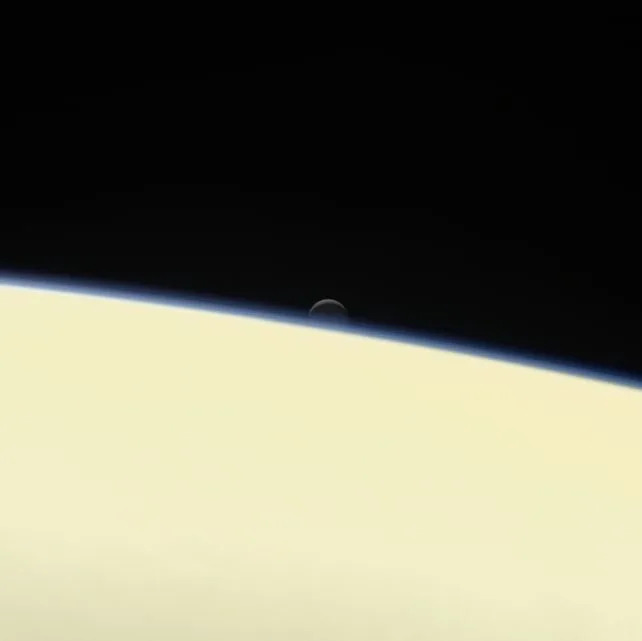
A picture of Enceladus over Saturn's haze taken on 13 September 2017, one of Cassini's final images. (NASA)
Two papers published in 2018 in Geophysical Research Letters described previously unknown interactions among Saturn, its rings and Enceladus. One of those studies provided the first direct evidence that plasma waves propagate between the planet and its moon along magnetic field lines — a clear demonstration of magnetic coupling across vast distances.
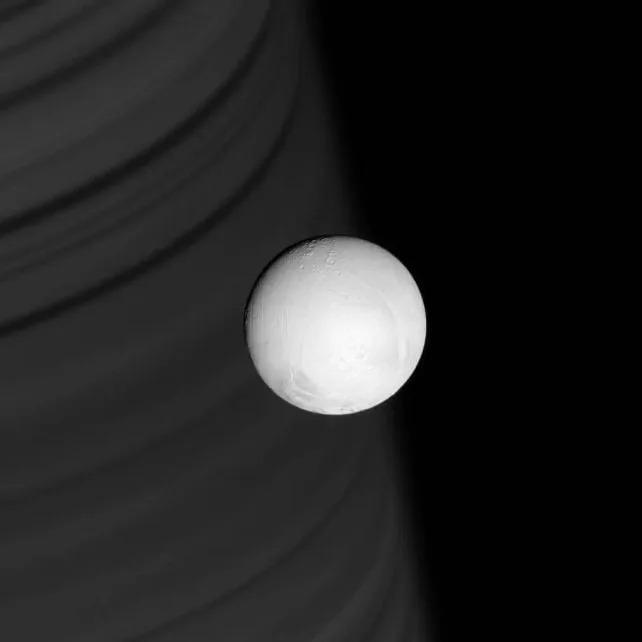
Cassini image of Enceladus captured in 2007. In the background, ring shadows stripe the atmosphere of Saturn. (NASA)
"Enceladus is this little generator going around Saturn, and we know it is a continuous source of energy," said planetary scientist Ali Sulaiman of the University of Iowa, a member of the RPWS team. "Now we find that Saturn responds by launching signals in the form of plasma waves, through the circuit of magnetic field lines connecting it to Enceladus hundreds of thousands of miles away."
It is important to stress that these are not acoustic sounds transmitted through air. The RPWS instrument measured electrostatic plasma waves — oscillations in the densities and electric fields of charged particles — which can propagate through space and often fall within the human audio frequency band. Because of this, researchers converted the original measurements into sound and accelerated the recording from 16 minutes to a 28.5-second clip so the wave structure is easier to perceive.

Subscribe to ScienceAlert's free fact-checked newsletter
The resulting audio is striking: a sequence of clicks, whistles and a rising-and-falling howl commonly associated with auroral activity, often described as an "auroral hiss." While similar hiss signatures had been recorded previously during close flybys of Enceladus, this detection was the first clear observation of that auroral-like signature so close to Saturn itself.
These findings also highlight important physical differences between the Saturn–Enceladus system and the Earth–Moon system. Enceladus is geologically active — its geysers eject water and other material into space, feeding one of Saturn's rings — and it orbits well inside Saturn's magnetosphere. By contrast, Earth’s Moon spends much of its orbit outside Earth’s magnetospheric influence.
Analysis of Cassini's Grand Finale data has therefore shed new light on the tight coupling between Saturn and its active satellite and illustrated how planetary magnetic fields and local plasma sources interact. Nearly a decade after the mission ended, scientists continue to mine Cassini's rich dataset for discoveries — and for unsettlingly beautiful recordings of the invisible forces around distant worlds.
Help us improve.