Two powerful earthquakes — magnitudes 7.2 and 7.5 — struck northern Venezuela overnight, leaving about 235 people dead and at least 4,300 injured, officials say. La Guaira, home to the country’s main airport, suffered heavy damage and many casualties, and the airport closure has complicated relief efforts. Neighbors and local volunteers led much of the initial rescue work while international teams and aid flights began arriving. Acting President Delcy Rodríguez declared a state of emergency and announced a $200 million reconstruction fund.
Twin 7.2 and 7.5 Quakes Devastate Northern Venezuela; Neighbors Lead Search-and-Rescue Efforts
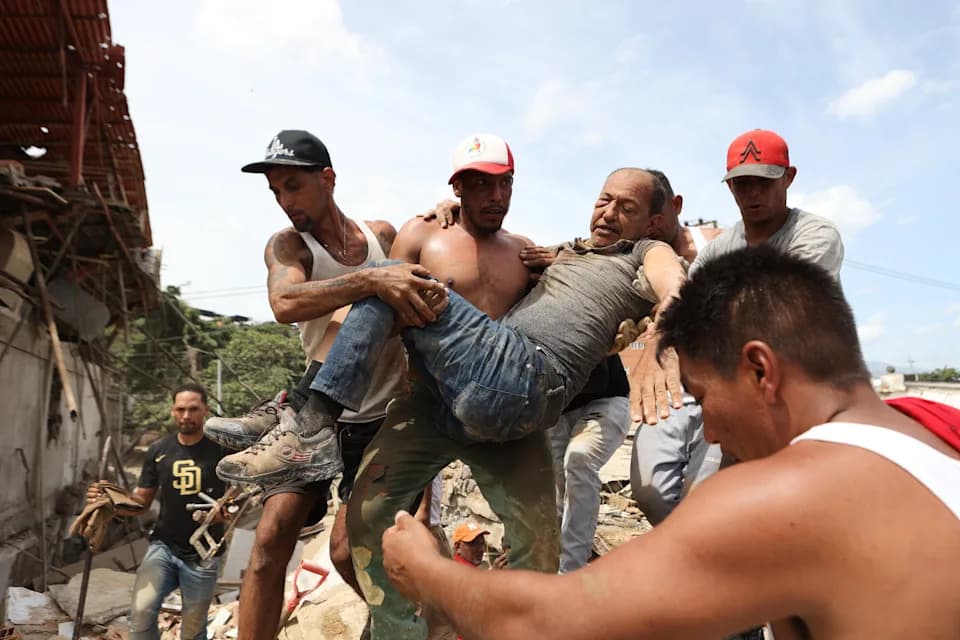
Neighbors carry a man rescued from the rubble of a collapsed building the day after earthquakes struck La Guaira, Venezuela, Thursday, June 25, 2026. (AP Photo/Pedro Mattey)(AP Photo/Pedro Mattey)
Across northern Venezuela, residents combed through rubble on Thursday searching for friends and family after two powerful earthquakes struck the night before, killing hundreds and injuring thousands.
Venezuela’s Health Minister, Carlos Alvarado, told state media late Thursday that the official death toll had risen to about 235 and that at least 4,300 people were injured. Authorities warned the casualties could climb further as thousands remained unaccounted for and rescue operations continued.
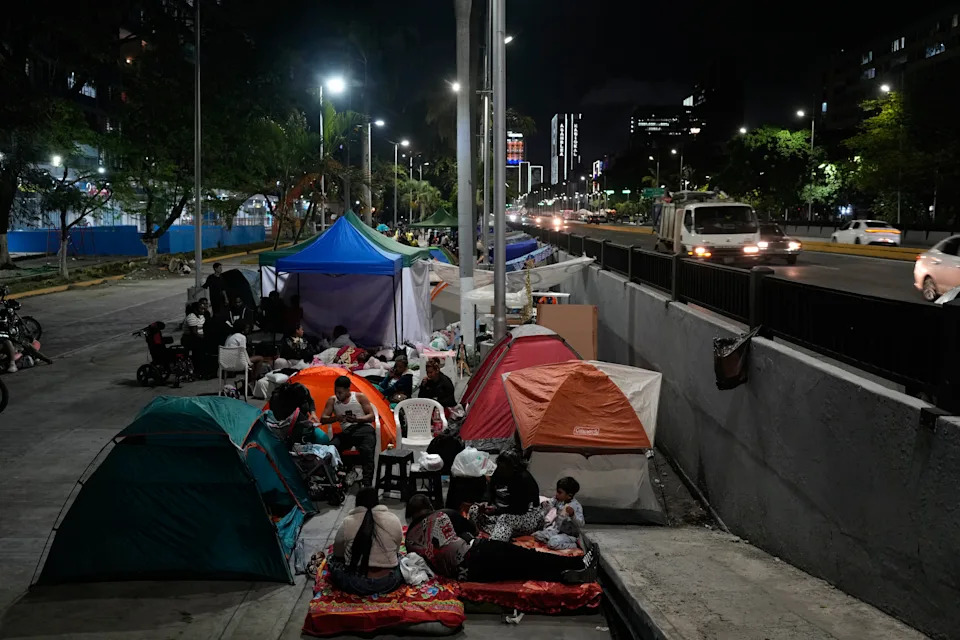
People camp in the street the night after the earthquake struck Caracas, Venezuela, Thursday, June 25, 2026. (AP Photo/Ariana Cubillos)(AP Photo/Ariana Cubillos)
Widespread Damage and Human Toll
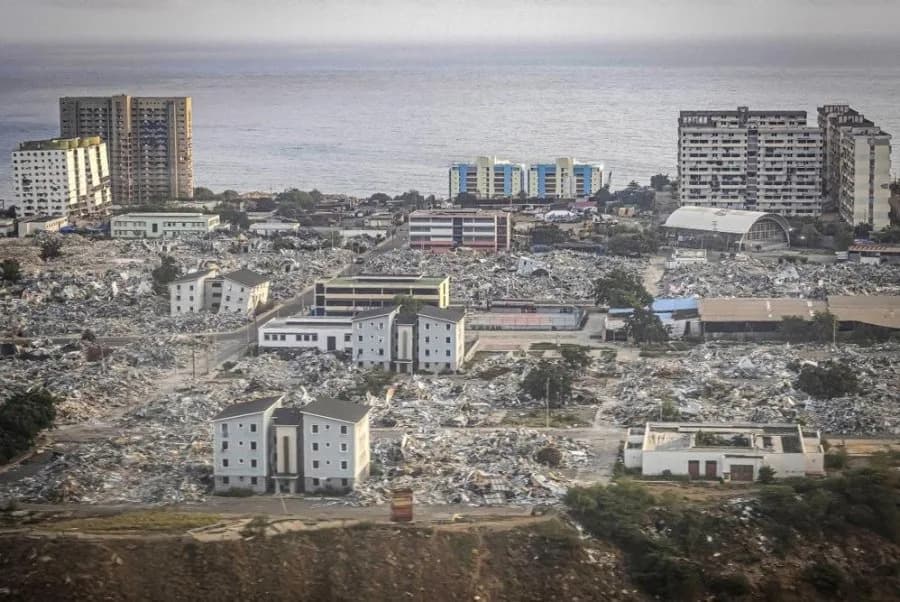
The back-to-back tremors — measured at magnitudes 7.2 and 7.5 — were among the strongest to hit Venezuela in more than a century and were felt across the region. Scenes from the hardest-hit areas showed buildings reduced to twisted frames, streets split open and residents pulling the injured from the rubble. State television broadcast gripping footage of a woman freed from beneath a concrete slab after rescuers slipped her out by hand.
The coastal state of La Guaira, north of the capital, suffered some of the worst destruction and the highest number of casualties. Venezuela’s main international airport, located in that region, sustained damage and was closed, complicating the delivery of aid and the arrival of international rescue teams.
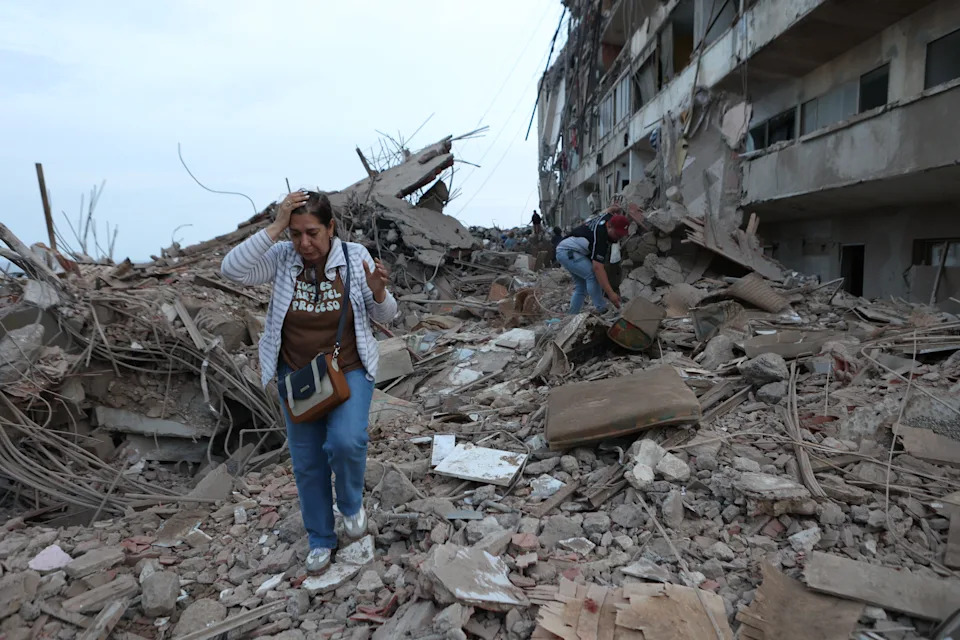
Residents walk among the rubble of building damaged in earthquakes the previous day in Catia La Mar, Venezuela, Thursday, June 25, 2026. (AP Photo/Pedro Mattey)(AP Photo/Pedro Mattey)
Neighbors Lead Initial Rescue Efforts
With heavy equipment and organized government teams initially scarce outside Caracas, neighbors and local volunteers led much of the immediate search-and-rescue work. Families posted missing-person flyers and handwritten lists, while hundreds camped outdoors in parks and parking lots for safety.
Personal accounts underscore the human cost: Dayana Delgado, a mother of three, said residents were doing the digging themselves and pleaded for information about her missing 8-year-old son. In another harrowing scene, a woman collapsed in grief as the bodies of her 3- and 10-year-old children were wrapped and carried away.
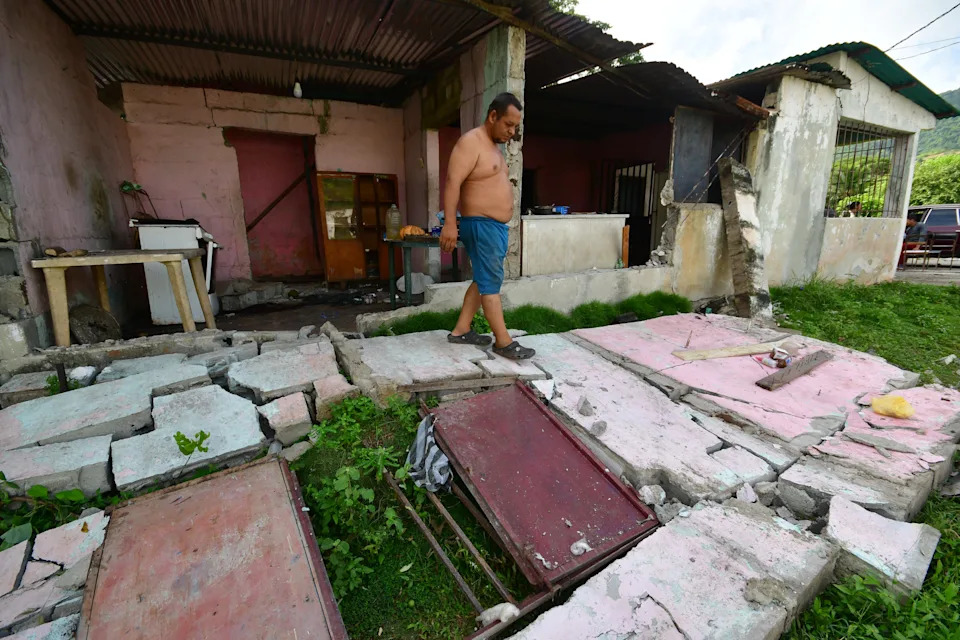
A man walks over the fallen walls of his home in Moron, near the epicenter of two earthquakes that struck Venezuela the day before, Thursday, June 25, 2026. (AP Photo/Jacinto Oliveros)(AP Photo/Jacinto Oliveros)
Government Response And Aid
Acting President Delcy Rodríguez declared a state of emergency late Wednesday and said the government would create a $200 million reconstruction fund for damaged hospitals and homes. She appealed to businesses to make heavy construction equipment available for rescue operations and said teams were being redirected to the hardest-hit areas.
U.S. Senator Marco Rubio, who spoke with Rodríguez after the quakes, said the United States was deploying assistance immediately but acknowledged logistical challenges due to airport closures. Rescue teams and aid flights from Mexico, El Salvador, the Dominican Republic and other countries were reported arriving to assist local efforts.
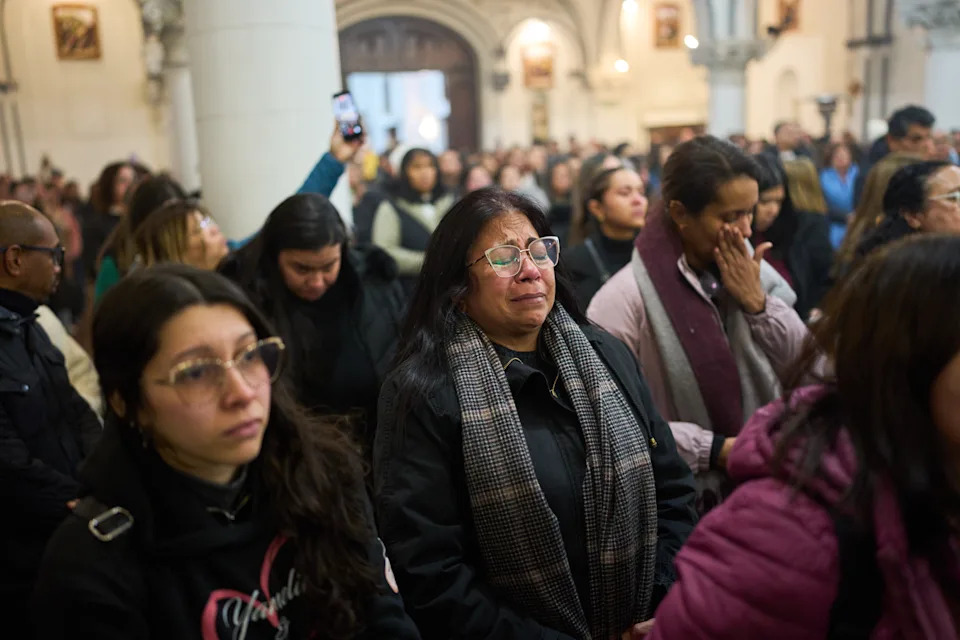
People attend a mass to honor the victims of the earthquakes in Venezuela, in Buenos Aires, Argentina, Thursday, June 25, 2026. (AP Photo/Rodrigo Abd)(AP Photo/Rodrigo Abd)
Seismic Details And Communications
The U.S. Geological Survey reported both earthquakes were centered near Morón on the Caribbean coast, about 170 kilometers (105 miles) west of Caracas. Marcos Ferreira, a geophysicist at the Geological Survey of Brazil, said the closely spaced, shallow tremors amplified the shaking and therefore the damage.
Shortly after United Nations officials urged the Venezuelan government to lift social media restrictions so residents could access potentially life-saving information, users regained access to the platform X, which had been blocked since August 2024. Disrupted phone service also hampered communications as families tried to reach loved ones.
Regional And Diaspora Support
Leaders from Mexico, Qatar, Brazil, Spain, Portugal and Canada pledged aid, and several shipments were already en route. Regional military and civilian rescue teams arrived on Thursday, and members of the Venezuelan diaspora in neighboring countries mobilized donations and support for survivors.
"We hope to rescue as many living people as possible," President Rodríguez said, urging coordinated national and international assistance.
The full extent of the disaster is still emerging as search-and-rescue operations continue and authorities work to restore communications and critical infrastructure.
Help us improve.