This study used base editing to disable the NANOG gene in developmentally normal human embryos and embryonic stem cells, revealing that NANOG is essential for directing epiblast cells into the embryo-forming lineage. Without NANOG, epiblast cells were redirected to form yolk sac or placental-like tissues, diverting resources away from embryo formation. The work used surplus or donor-derived embryos under the 14-day limit and emphasizes mechanistic insights rather than clinical readiness.
Single-Gene Loss Derails Early Human Embryo Development, Study Finds
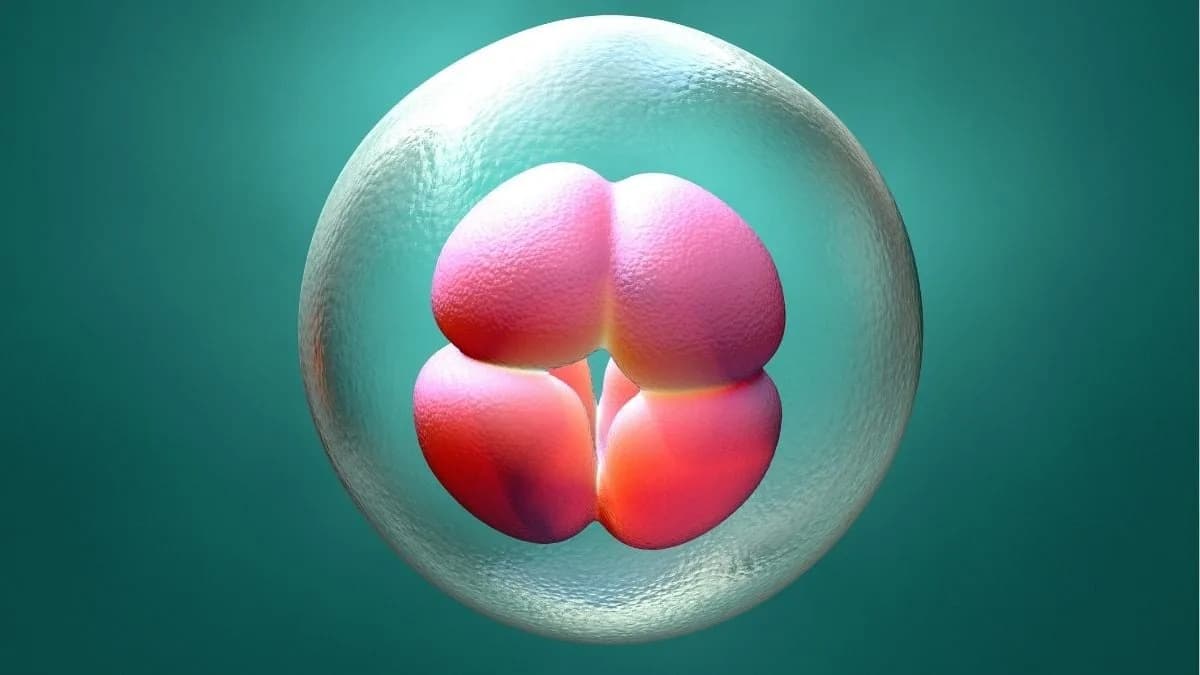
Illustration of an embryo in the early stages of development. (Design Cells/iStock/Getty Images)
The very first stages of human life are fragile and tightly orchestrated: one cell divides into two, then four, while a cascade of genetic signals directs which cells form the embryo and which form supporting tissues. A new international study shows that a single gene, NANOG, is essential for those earliest embryo-building decisions in humans — but it works differently than in mice.
What the researchers did
Led by developmental biologist Kathy Niakan at the University of Cambridge, the team used base editing to alter a single DNA base in the NANOG gene in developmentally normal human embryos and in human embryonic stem cells. Unlike CRISPR/Cas9, which makes double-strand cuts and can produce off-target rearrangements, base editing changes an individual DNA letter to disrupt a gene with fewer detectable collateral changes.
YouTube Thumbnail
Crucially, the embryos used were either surplus donations from assisted conception or were created from donor gametes; they were not tripronuclear (abnormal) embryos and were not allowed to develop beyond the internationally observed 14-day limit.
Key findings
When NANOG function was disrupted, the pluripotent epiblast cells — the population that normally becomes the embryo — failed to form the embryonic stem-cell–like lineage. Instead, those cells were redirected toward extraembryonic lineages such as yolk sac or placental-like cells. In plain terms, embryos without functional NANOG appeared to divert resources to support structures rather than building the embryo itself.

Subscribe to ScienceAlert's free fact-checked newsletter
Importantly, this behavior differs from observations in mice: while NANOG is also essential in mice, the human data suggest that NANOG is not strictly required for yolk sac formation in the same way as in rodent models. That highlights how animal models can point to mechanisms but do not always replicate human development.
Stem cell scientist Dusko Ilic (King’s College London), who was not involved in the study, emphasized that the work is mechanistic rather than clinical: base editing shows promise as a research tool, but these results do not demonstrate that embryo editing is safe for clinical use or that they directly explain infertility or pregnancy loss.
Implications and limitations
The study improves our fundamental understanding of the molecular controls that dictate early human development and could inform future research into implantation and developmental disorders. However, the authors and external experts urge caution: the findings are foundational biology, not a path to immediate therapies. Ethical, regulatory and safety questions remain before any clinical application of embryo editing could be considered.
The research is published in Nature.
Help us improve.