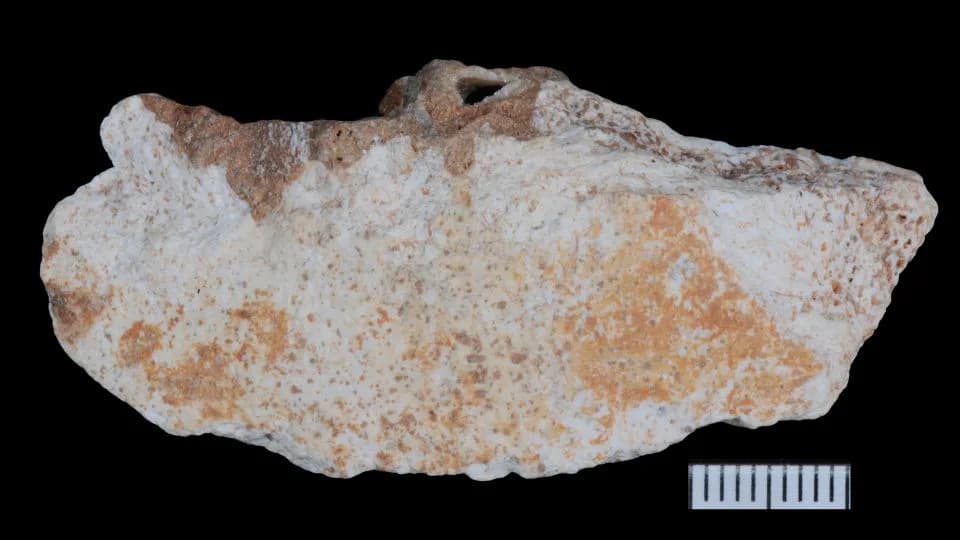
The Rising Star cave system’s Dinaledi Chamber has produced a surprising new result: paleoproteomic analysis of tooth enamel from 20 independent Homo naledi individuals found only female (no Y-linked AMELY) signals. The samples were dated to roughly 335,000–241,000 years ago and were checked by multiple labs. Explanations include sex-biased mortuary practices, deletion or mutation of the AMELY gene in males, demographic or behavioral patterns, or sampling/taphonomic bias. The findings, published in Cell, deepen debate and underscore the need for further testing and contextual study.
New Protein Evidence Finds Only Females Among Homo naledi Teeth, Deepening Rising Star Mystery
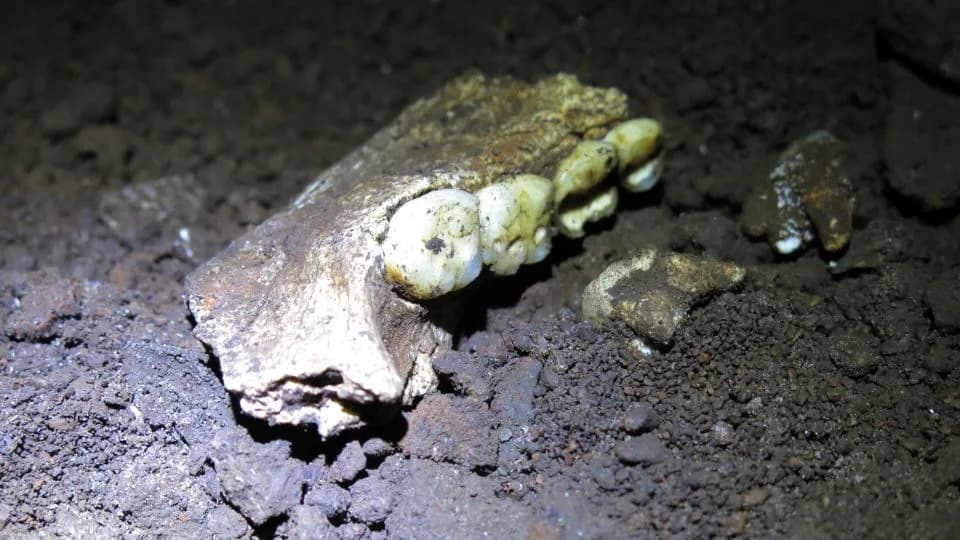
A fossilized Homo naledi jawbone, with teeth attached, was found during the excavations of the cave. - Mathew Berger/National Geographic
Excavations in South Africa’s Rising Star cave system have yielded some of the most provocative finds in recent paleoanthropology. A new paleoproteomics study analysing tooth enamel from the Dinaledi Chamber reports that all usable samples—representing 20 individuals—carry only female protein signals, a result that deepens debate about who Homo naledi were and how their remains came to rest in the cave.
Background: The Enigmatic Homo naledi
First described in 2015 from a rich assemblage in the Dinaledi Chamber, Homo naledi is a small-brained hominin with a mix of primitive and modern features. The original team proposed that the species may have deliberately deposited bodies deep in the cave and possibly even made simple engravings—behaviours that, if true, would push back the appearance of some complex social practices.
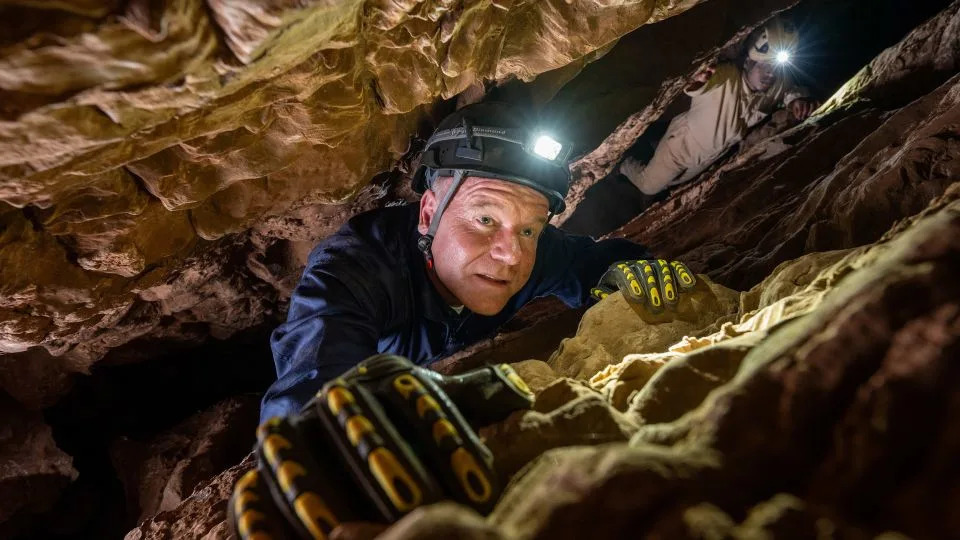
Paleoanthropologist Lee Berger makes the awkward climb on the main thoroughfare through Rising Star Cave. The labyrinthine system stretches for more than 2.5 miles (4 kilometers) and has a vertical depth of 328 feet (100 meters). - Robbie Shone/National Geographic
The New Study And Its Findings
Molecular scientist Palesa Madupe and colleagues used paleoproteomics to examine 23 tooth enamel samples recovered from the Dinaledi assemblage. Two samples produced no useful data and two were later identified as duplicates, leaving 20 independent teeth for analysis. The authors tested for the Y-linked form of the amelogenin protein (AMELY), a male-specific marker. The AMELY signal was absent in every usable sample.
The specimens are dated to roughly 335,000–241,000 years ago. The new results were checked by two laboratories and re-run to rule out internal error, according to coauthor Lee Berger.
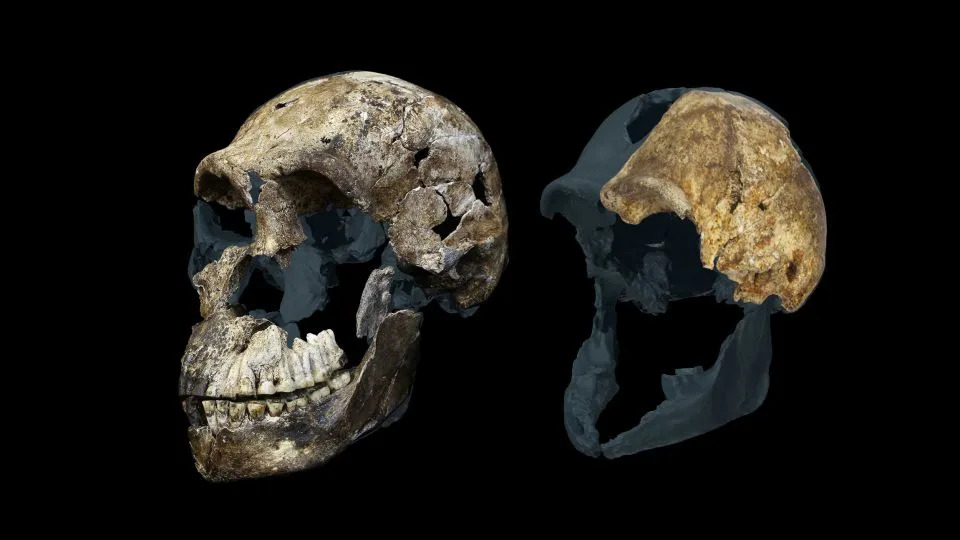
The brain size of Homo naledi was around one-third of the size of a modern human brain. - Rising Star Program/National Geographic
"When these results came out, there were a lot of quite nervous scientists. This was not what we expected," said Lee Berger, a leader of the Rising Star excavations.
Possible Explanations
The researchers and independent experts note several interpretations that could account for an apparently all-female sample:
- Sex-Biased Mortuary Behavior: Berger and others suggest Homo naledi may have practiced sex-specific disposal of bodies, placing females into the Dinaledi Chamber.
- Genetic Deletion or Mutation: The AMELY gene can be deleted or highly mutated in some males; such loss has been documented occasionally in modern humans and even in a Neanderthal. The authors argue it is unlikely that AMELY deletion would affect every male in the sample or the broader population, but it remains a possibility.
- Demographic or Behavioral Patterning: The assemblage might reflect natural social structure or behavior—such as female-biased foraging parties or shelter use seen in some primates—rather than intentional burial.
- Taphonomic and Sampling Biases: Preservation, recovery, or sampling limitations could skew the observed sex ratio.
Experts Weigh In
Some researchers welcome the proteomic results but caution against drawing strong behavioral conclusions. Michael Petraglia (Griffith University) and Ryan McRae (Smithsonian National Museum of Natural History) emphasize alternative ecological or demographic explanations and call for further data before confirming ritual burial or sex-segregated mortuary practices.
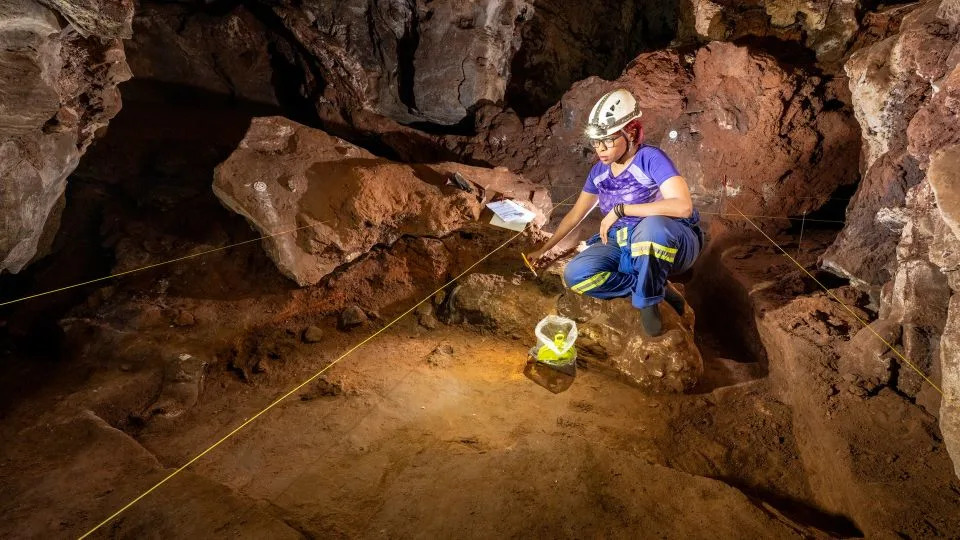
Most of the fossils were unearthed by a team of female researchers, including Keneiloe Molopyane pictured here. - Robbie Shone/National Geographic
Implications And Next Steps
This study, published in Cell and led by teams at the Globe Institute (University of Copenhagen) and the Max Planck Institute for Evolutionary Anthropology, raises provocative questions about Homo naledi’s biology and behavior. If the female-only signal reflects genuine sex-bias in deposition, it would suggest unexpectedly complex social practices in a small-brained hominin. If instead it reflects genetic or taphonomic factors, it highlights limits and opportunities for protein-based sexing methods. Additional sampling, independent replication, and complementary lines of evidence (ancient DNA where available, broader proteomic surveys, and renewed excavation/contextual analysis) will be needed to resolve the puzzle.
Bottom line: The Rising Star assemblage remains one of human evolution’s most puzzling sites. The new protein evidence adds an unexpected twist—one that prompts fresh hypotheses, vigorous debate, and a clear need for more data.
Help us improve.