Overview: President Trump said Iran had "fully and completely" agreed to high-level IAEA inspections, a claim Tehran denied, saying no inspections of war-damaged sites are currently planned. Negotiations in Switzerland ended their technical phase and will spawn four working groups, but disagreements remain over sequencing, inspections and frozen assets. Regional flashpoints — the Strait of Hormuz and fighting in southern Lebanon — along with a symbolic Senate war-powers vote in Washington complicate the path ahead.
Trump Says Iran Agreed To Nuclear Inspections — Tehran Denies Plans; Strait Tensions, Lebanon Violence Complicate Talks
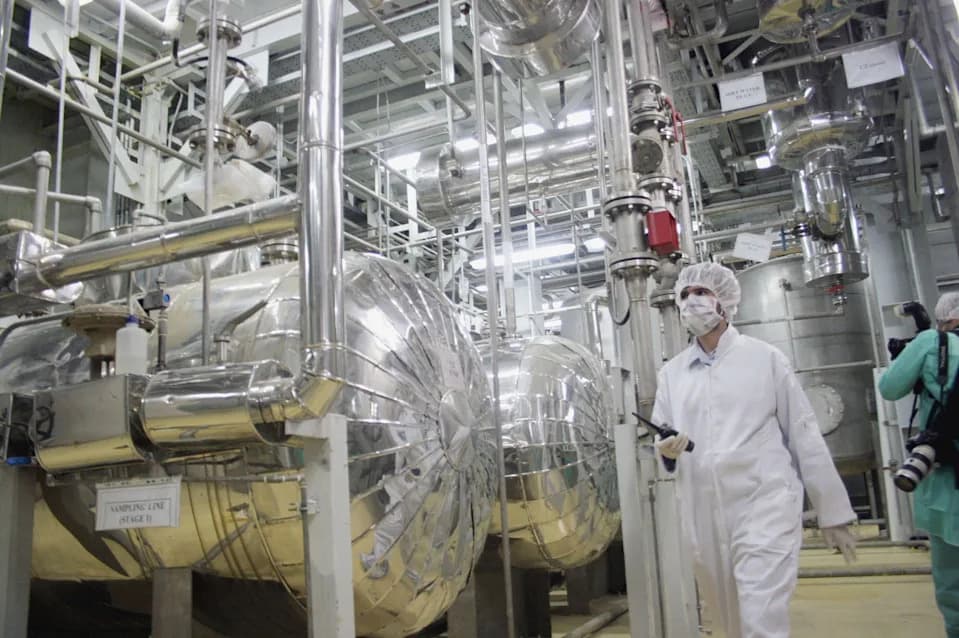
A March 30, 2005 file photo shows a worker inside Iran's Isfahan uranium enrichment facility, south of the capital Tehran, more than 20 years before the site was hit in a wave of U.S. and Israeli airstrikes on Iran's nuclear facilities. / Credit: Getty
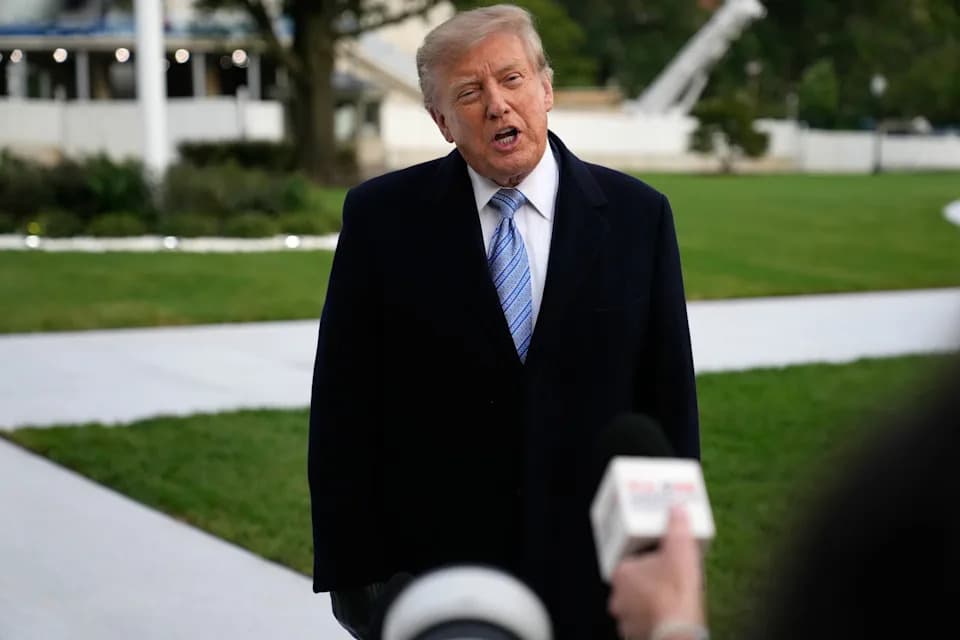
President Trump on Tuesday reiterated that Iran has "fully and completely" agreed to allow high-level nuclear inspections, a claim Tehran promptly disputed, saying there are currently "no plans" for International Atomic Energy Agency (IAEA) teams to return to sites damaged by last year’s strikes.
Key Claims And Contradictions
Vice President J.D. Vance said on Monday that IAEA inspectors could return "as soon as this week," while Mr. Trump told reporters there was "no rush" on inspections. Iranian Foreign Ministry spokesman Esmaeil Baqaei said no meeting has taken place with the IAEA director-general and that the most sensitive facilities hit by U.S. and Israeli strikes are not currently scheduled for inspection.
Strait Of Hormuz And Regional Tensions
Iran’s chief negotiator, Mohammad Bagher Qalibaf, told state media the Strait of Hormuz "will never return to its pre-war conditions" and said Iran intends to administer the waterway in line with its interpretation of international law. Maritime tracker Kpler recorded 35 commercial transits through the strait on Monday — the busiest day since the war began, but still roughly one-third of typical pre-war daily traffic.
Iran and Oman issued a joint statement saying they are studying joint administration and the "services" that would be provided to vessels, and that such services would carry "costs associated". U.S. officials, including Secretary of State Marco Rubio on a regional visit, insist the strait is an international waterway and reject any tolls or fees.
Fighting In Lebanon And Evacuations
Lebanese health authorities report at least 4,192 killed and more than 12,000 wounded since fighting with Hezbollah intensified on March 2; about 1.2 million people have been displaced. On the Israel-Lebanon front, the Israel Defense Forces said they engaged alleged Hezbollah fighters near the security zone; Lebanon reported civilian casualties in separate incidents.
The U.N. International Maritime Organization said it will begin evacuating more than 11,000 sailors stranded in the Persian Gulf due to the conflict, coordinating with regional governments, maritime authorities and the shipping industry.
U.S. Politics And The Memorandum Of Understanding
The Senate on Tuesday approved a largely symbolic House-passed war powers concurrent resolution 50-48 that directs the president to remove U.S. forces from hostilities against Iran unless Congress explicitly authorizes force. Mr. Trump criticized the vote on social media as "poorly timed and meaningless." Several Republican senators joined Democrats to pass the measure; however, as a concurrent resolution it does not carry the force of law.
Mr. Trump and administration officials say a memorandum of understanding with Iran — negotiated in part during talks in Switzerland — lays out steps to halt hostilities and open technical negotiations on nuclear issues and sanctions. The administration and Iranian officials disagree on sequencing: Tehran says talks on nuclear inspections are conditional on implementation of other clauses in the memorandum, including a halt to military operations on all fronts.
Technical Talks And Working Groups
Officials reported the technical phase of talks in Switzerland has concluded, and negotiators agreed to establish four working groups on: Sanctions Termination, Nuclear Affairs, Reconstruction and Economic Development, and Monitoring and Implementation, according to Iran’s IRNA state news agency.
Money, Assets And Trade Disputes
Tensions persist over how any released Iranian assets would be used. Vice President Vance suggested the U.S. and Qatar would have a role in ensuring funds are not used for terrorism and could be tied to purchases of U.S. goods; Iran’s U.N. ambassador and foreign ministry rejected that idea, saying Tehran will decide how to spend its funds. Mr. Trump claimed released funds would be used "exclusively" to buy U.S. food and medical supplies — a claim Tehran called inaccurate.
What Comes Next
Negotiators say significant technical and political work remains. Key near-term questions include whether and when IAEA inspectors will be permitted to visit damaged nuclear sites (notably Isfahan, where highly enriched material is believed to be buried), how the Strait of Hormuz will be managed, and whether the memorandum’s security provisions will hold amid continued fighting in Lebanon.
Bottom line: The U.S. and Iran report progress on negotiating frameworks, but major disagreements remain about inspection timelines, asset controls, maritime administration and the cessation of hostilities. Implementation, sequencing and verification will determine whether the talks lead to a durable de-escalation.
Help us improve.