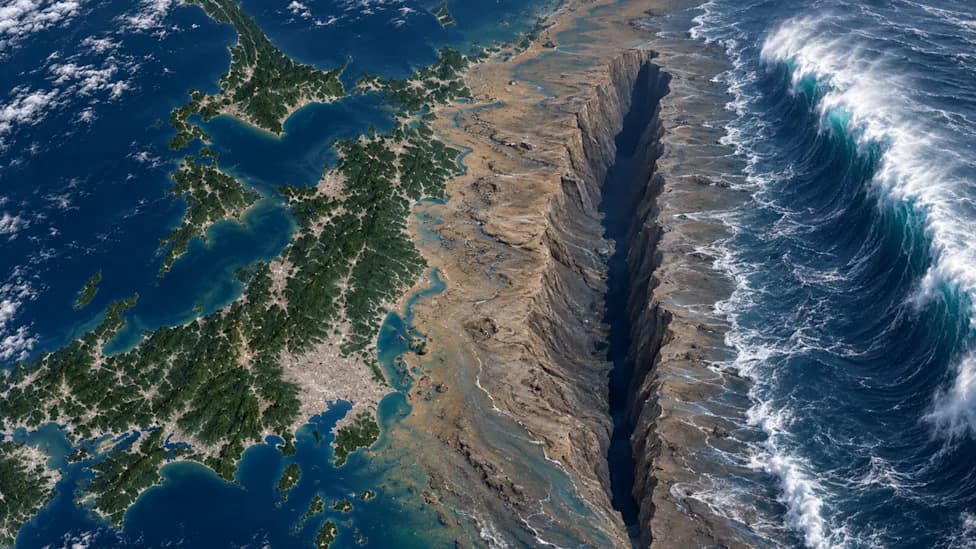
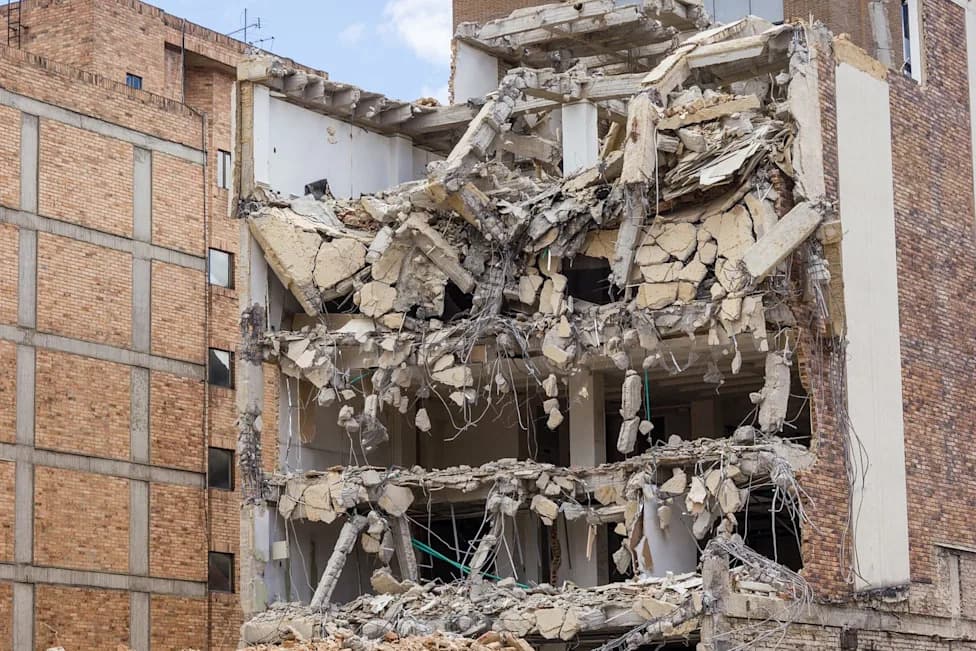
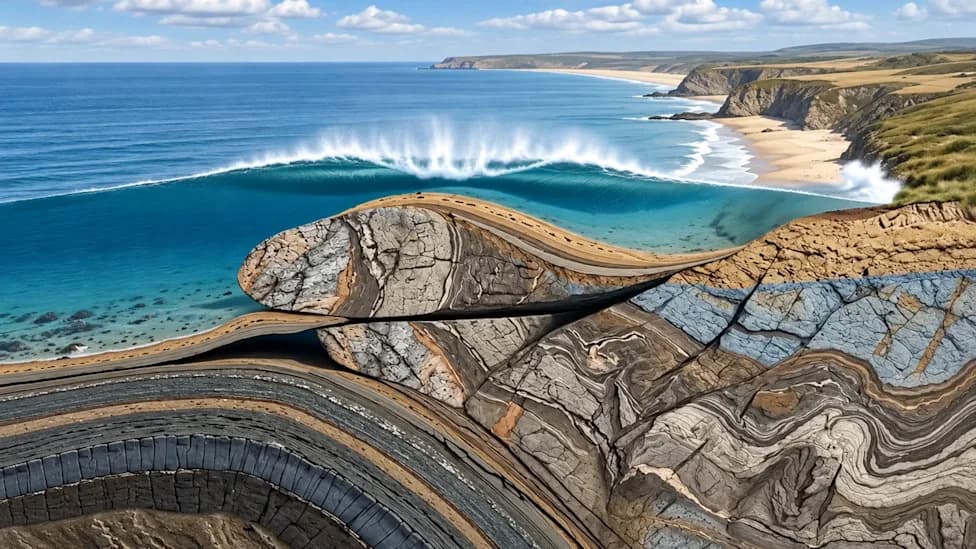
The March 11, 2011 M9.0 Tohoku earthquake produced a subtle but permanent eastward shift of almost the entire Japanese archipelago about 15 minutes after the main rupture. GPS data show a near-uniform 5–6 mm displacement from Hokkaido to Kyushu that researchers attribute to seismic waves traveling to Earth’s liquid outer core and returning to the crust. The returning wave released energy comparable to a magnitude-7.5 event but was spread so widely that local shaking and damage were limited. Scientists say the mechanism is new, may occur elsewhere undetected, and should inform seismic hazard assessments.
Scientists Identify Deep-Core Seismic Wave That Shifted All Of Japan After the 2011 M9.0 Quake
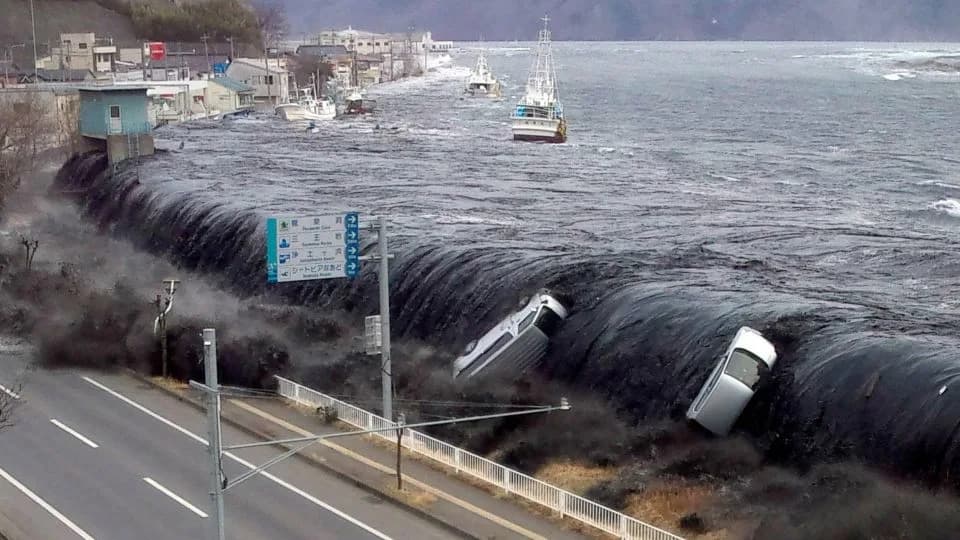
The powerful earthquake that shook Japan in 2011 triggered a tsunami, pictured here breeching an embankment and flowing into the city of Miyako, northern Japan. - Jiji Press/AFP/Getty Images
When the magnitude-9.0 Tohoku earthquake struck Japan on March 11, 2011, it produced more than the devastating shaking and tsunami that made global headlines. About 15 minutes after the main rupture began at 2:46 p.m. local time, GPS stations across Japan recorded a uniform, permanent eastward shift of about 5–6 millimeters (0.20–0.24 inches) that extended from Hokkaido to Kyushu — roughly 1,800 miles (3,000 km).
What Researchers Found
Initially treated as a data anomaly, these subtle displacements were re-examined by a team led by University of Chicago geophysicist Sunyoung Park. After years of analyzing GPS and seismic records, the team concluded that seismic waves from the main shock travelled deep into Earth, reflected off the liquid outer core, and returned to the crust. That core-reflected wave appears to have produced a broad, nearly uniform movement that affected intersections of the Pacific, Okhotsk, Philippine Sea and Eurasian plates.
"What was unusual about this movement is basically the whole of Japan was moving nearly uniformly at the same time," said Park.
How It Differs From Typical Aftershocks
Seismologists have long known that powerful earthquakes send waves through the planet that can reach and reflect from the core. The prevailing view, however, held that most of that deep-traveling energy dissipates and does not cause coherent crustal motion on return. Park's team argues this event is different: a deep-diving wave returned after a roughly 3,600-mile round trip (≈5,800 km) in about 15 minutes and produced a countrywide displacement. Although its total released energy is comparable to a magnitude-7.5 earthquake, that energy was distributed so broadly that local shaking and damage would have been much weaker than for a conventional, concentrated M7.5 event.
Context And Confirmation
The main 2011 rupture — with an epicenter about 231 miles (372 km) northeast of Tokyo — moved the two faulted plates beneath Japan by roughly 10 meters and shifted Honshu about 20 centimeters to the east. The core-reflected wave’s 5–6 mm shift was far smaller but remarkable for spanning the entire country. Japan’s dense network of seismic and GPS stations made detecting this subtle, widespread signal possible; researchers warn similar phenomena may occur elsewhere but go unnoticed in poorly instrumented regions.
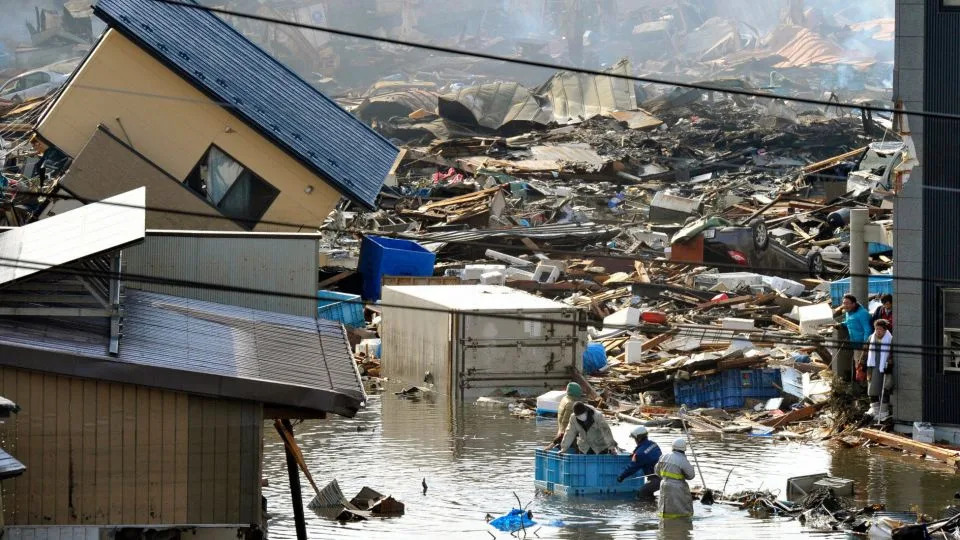
People in a floating container are rescued from a building following the earthquake and tsunami in Miyagi Prefecture, northeastern Japan. - Kyodo/Reuters
Experts unaffiliated with the study — including Columbia University’s Goran Ekström, University of Maryland’s Vedran Lekić, and UC Davis’s Amanda Thomas — described the finding as novel and significant. The team considered alternative explanations, such as an undersea landslide, but concluded those would produce far more localized effects than those observed.
Implications
Park and colleagues say the discovery should prompt seismologists and policymakers to consider this previously undocumented mechanism when assessing seismic hazard. Unlike unpredictable aftershocks, the travel time for a seismic wave to reach the core and return is roughly known, which means, in principle, this type of arriving wave could be anticipated minutes after a major rupture. Whether anticipation could materially improve preparedness remains an open question, given the dispersed nature of the returned energy.
"Large earthquakes may continue influencing fault systems in unexpected ways for many minutes after the main rupture," said Amanda Thomas. "This observation gives us another piece of the puzzle in understanding fault behavior."
Study Lead: Sunyoung Park, University of Chicago. Other Notes: Event detected thanks to Japan’s extensive seismic and GPS networks; estimated energy release similar to M7.5 but with broadly distributed effects.
Help us improve.