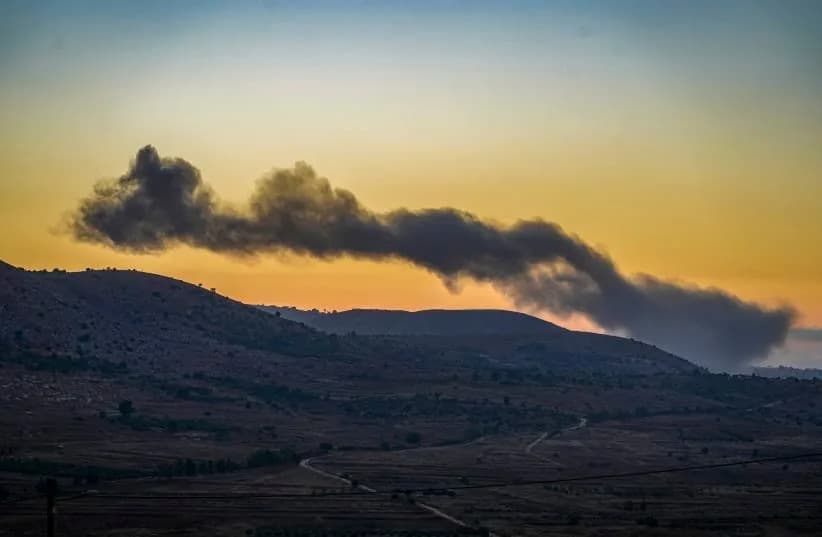
Fiber-optic FPV drones deployed by Hezbollah have reshaped fighting in southern Lebanon, delivering precision strikes while remaining largely immune to jamming. First public footage of a tank strike appeared in late March 2026. The drones are reportedly low-cost and often locally assembled, but require trained operators — a gap closed in part by simulation tools and gaming experience. Countermeasures exist but are limited and may disrupt friendly systems, leaving these drones a destabilizing tactical factor for now.
Fiber-Optic 'Killer' Drones Give Hezbollah a Battlefield Edge in Southern Lebanon
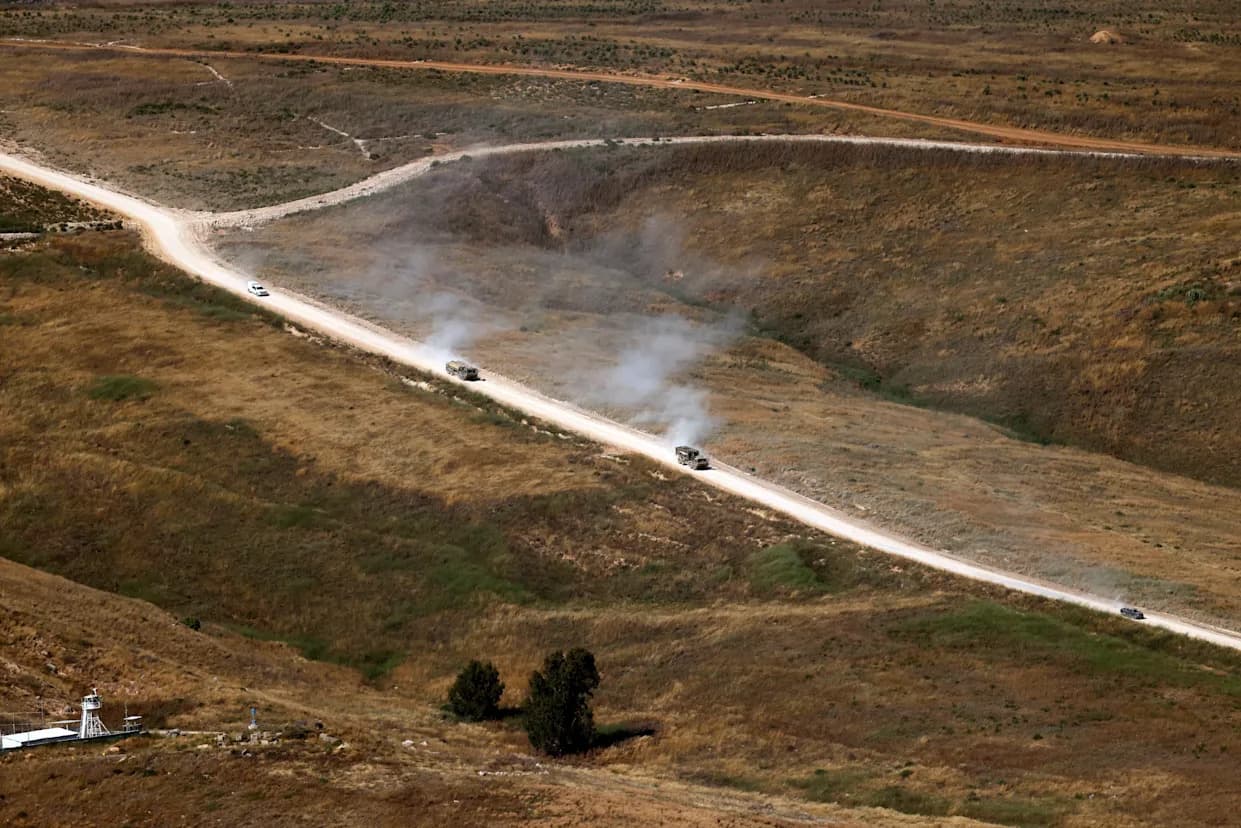
This picture taken from a position in the Upper Galilee region in northern Israel, shows Israeli military vehicles driving along a road in southern Lebanon on June 22, 2026. (Jalaa Marey / AFP via Getty Images)(JALAA MAREY)
BEIRUT — Fiber-optic First-Person-View (FPV) drones deployed by the Iran-backed armed group Hezbollah have significantly altered fighting in southern Lebanon, inflicting losses on Israeli units and complicating operations in contested areas.
These tethered drones use a reel of fiber-optic cable to provide a direct, hardwired connection between pilot and aircraft, making them largely immune to conventional jamming and many electronic-warfare countermeasures. The systems — seen widely in the Ukraine conflict — appeared in southern Lebanon soon after Hezbollah launched an attack on Israel on March 2, following an escalatory U.S.-Israeli campaign against Iran days earlier.
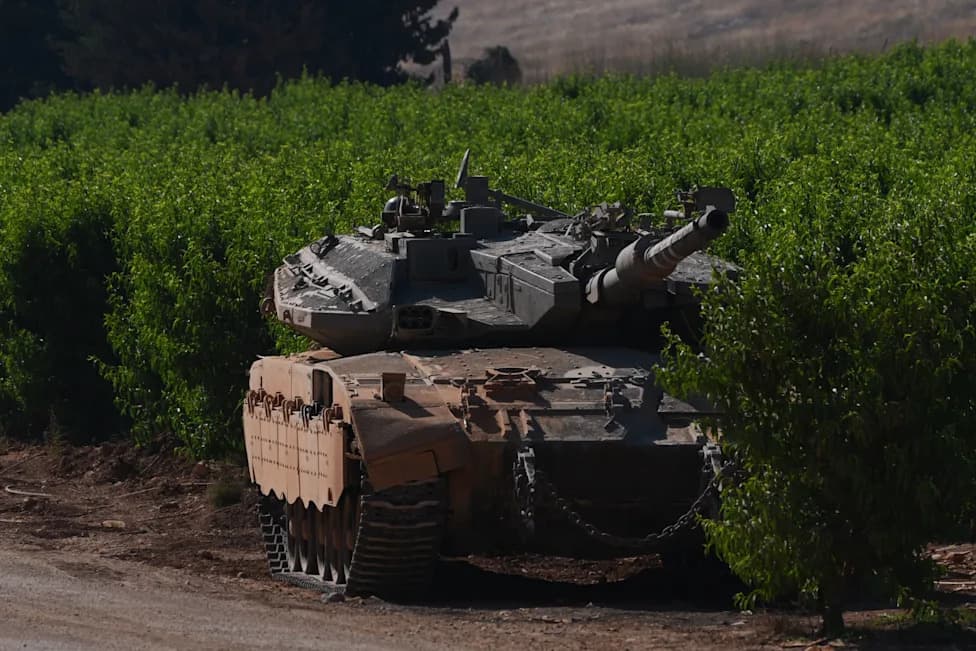
Hezbollah published video footage in late March 2026 reportedly showing a fiber-optic FPV drone striking an Israeli tank, drawing attention to the new capability and its operational impact.
Low Cost, Locally Built, High Impact. Analysts and sources close to Hezbollah say individual craft may cost roughly $300–$400 and appear to be assembled locally with 3D-printed parts and off-the-shelf electronics. That low cost, combined with simple launch requirements and the ability to operate without runways or specialized infrastructure, has helped accelerate adoption.
Skill, Simulation and the Gamification of Warfare. While the systems are relatively inexpensive, they demand practiced operators: mishandling can sever the delicate fiber-optic tether. Observers note that generational familiarity with gaming hardware and the availability of simulation tools shorten the learning curve, enabling groups to field night-vision-capable FPV systems and train across many scenarios.
“Hezbollah is one of the most sophisticated non-state actors in the world. But when it comes to FPV drones, they’re learning themselves,” said Samuel Bendett, a military analyst at the Center for Naval Analyses.
Information Asymmetry and Tactical Advantage. Because the drones remain physically tethered, locating launch positions or pinpointing an operator is more difficult than tracking conventional UAVs. In southern Lebanon, that asymmetry — combined with Hezbollah’s deep local knowledge and familiarity with the terrain — has given the group a tactical edge and complicated Israeli responses.
Experts say knowledge transfer on tactics and technology travels through multiple channels: observation of other battlefields, open-source footage, and direct or indirect training exchanges. Some of the expertise may have flowed between actors involved in the Russia–Ukraine conflict, Iran, and allied non-state groups.
Countermeasures and Limits. Proposed defenses include physical nets, acoustic sensors, spinning-cable traps, and electromagnetic or directed-energy systems intended to disrupt electronics. However, these solutions can be blunt, operationally risky or limited in effectiveness — and some measures risk interfering with friendly systems in the same area. Analysts say robust, scalable countermeasures remain elusive even for larger conventional forces.
Wider Implications. The rapid diffusion of low-cost unmanned systems highlights a broader trend: innovations first prominent in one theater (Ukraine) are quickly adopted elsewhere, from the Middle East to Africa and beyond. Until reliable, low-risk countermeasures are developed and deployed, tethered fiber-optic FPV drones are likely to remain a destabilizing factor in modern battlefield environments.
Sources: On-the-ground footage released by Hezbollah, statements from analysts including Samuel Bendett and Hamzé Attar, and comments from Ali Jazini, a military expert close to Hezbollah.
Help us improve.