Deed fraud — where criminals forge signatures to record fake property transfers — has left vulnerable Detroit homeowners at risk of losing their houses. Because county recorders generally perform administrative, not investigative, reviews, forged deeds can be accepted into the public record and block rightful owners from selling, refinancing or getting assistance. Clearing title usually requires costly, time-consuming quiet-title litigation. Advocates recommend empowering recorders, streamlining quiet-title courts, fraud alerts and technological screening to reduce harm.
Deed Fraud Is Stripping Vulnerable Detroiters of Their Homes — Why It’s So Hard To Stop
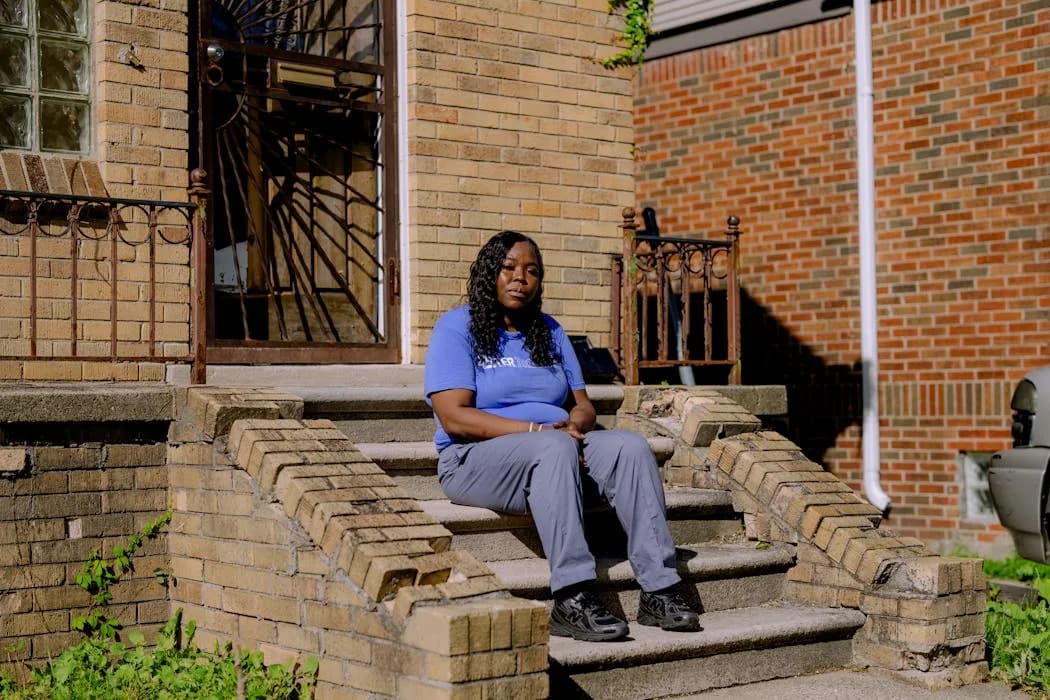
Deed fraud victim Kim Page sits on her front steps in Detroit on June 12, 2026.Nic Antaya/The Conversation,CC BY-ND
Buying her first home on Detroit’s far east side in 2021 felt like a long-awaited victory for Kim Page. She saved $15,000, paid $3,800 in cash and poured years of work and roughly $27,000 into repairs. But after storms and mold forced her to temporarily leave the house in 2024, she returned to find the locks changed — and later learned a fraudulent deed had been recorded claiming ownership of her property.
How Deed Fraud Works
A deed is the legal document that records who owns a house. Deed fraud occurs when criminals forge a homeowner’s signature or otherwise falsify a transfer and record a new deed with the county register of deeds. Because most recording offices perform an administrative, not investigative, review, a document that meets technical formatting rules will usually be accepted and indexed — even if it is fraudulent.
“I just was in shock. I can’t believe somebody really did this to me.” — Kim Page
Why Fraudsters Target Vulnerable Properties
Fraudsters target properties and owners they judge unlikely to fight back: elderly residents, families handling inherited homes, owners of vacant or distressed houses, and homes burdened by tax delinquency. In some cases, criminals use public tax-foreclosure lists to find vulnerable parcels, pay outstanding taxes to halt foreclosure, then attempt to sell or mortgage the house under a forged deed.

In 2011, residents flooded downtown Detroit, demanding an end to home foreclosures and evictions.Jim West/UCG/Universal Images Group via Getty Images
The Local and National Scope
Detroit’s housing market increases exposure to deed fraud. The city is roughly 73% Black, with a median household income near $39,000 and a poverty rate above 30%. Black neighborhoods nationwide are often undervalued and Black borrowers face higher barriers to conventional mortgages. Lower-priced homes and unequal access to lending mean many transactions are cash sales — about 4 in 10 of Detroit sales in February 2024 — removing some of the checks lenders or title companies would normally provide.
Nationally, precise totals are hard to measure because the FBI groups deed fraud into a broader real-estate crime category. From 2019–2023 the FBI recorded 58,141 victims and $1.3 billion in losses tied to real-estate crime, though experts believe this undercounts the true scale.
Consequences for Homeowners
A fraudulent deed in the public record can block a homeowner from selling, refinancing or accessing assistance. Clearing title typically requires a quiet-title lawsuit — a formal, often expensive court action that can take months or years. Fraudsters frequently use fake names and addresses, complicating service and notification. Filing fees, service costs and attorney expenses can quickly mount; some victims report spending tens of thousands of dollars to reclaim clear title.
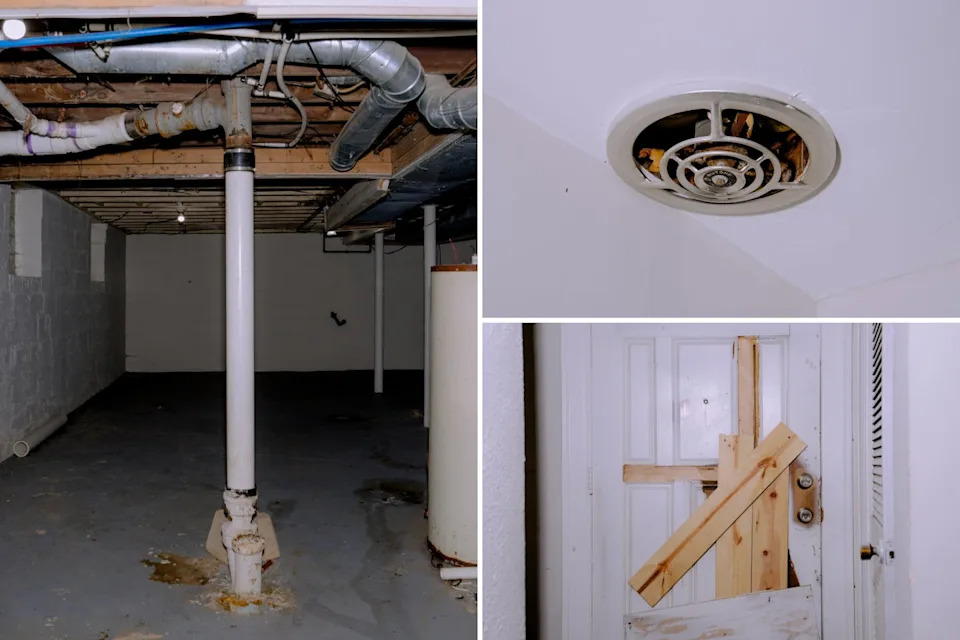
Repairs that still need to be completed at Kim Page’s home in Detroit.Nic Antaya/The Conversation,CC BY-ND
In one case the fraudsters used a forged deed to evict a rightful homeowner who lacked internet and phone access to join virtual hearings. A bailiff forced entry, the man’s belongings were discarded, and it took months and multiple lawsuits for him to return — only to find the perpetrator was never found.
What’s Being Done — And What Could Help
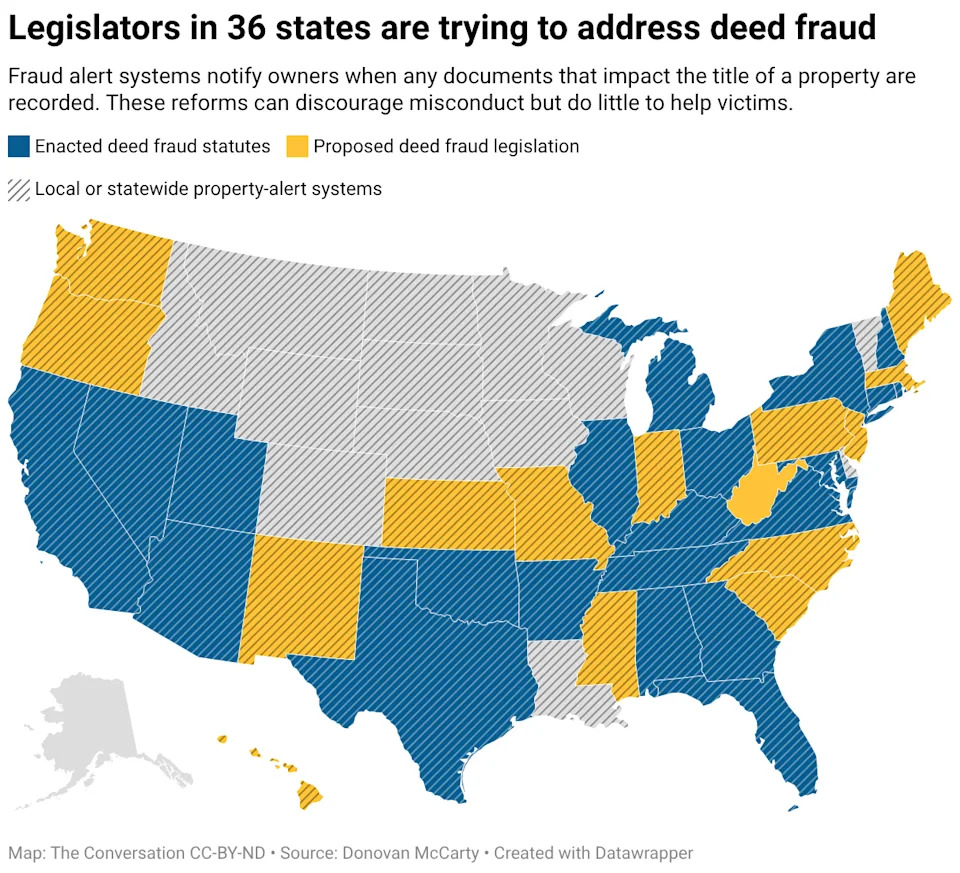
Wayne County’s Mortgage and Deed Fraud Unit has logged more than 13,000 inquiries and opened over 2,300 cases since 2005. Across the U.S., 21 states have enacted deed-fraud laws and another 15 have proposed measures. Common responses include fraud-alert systems that notify owners when documents affecting title are recorded, stronger notarial requirements and tougher criminal penalties.
However, these steps often do little to ease the immediate burden on victims who already have a fraudulent deed on their property. Meaningful reforms recommended by advocates and some jurisdictions include:
- Giving registers of deeds limited authority to flag or temporarily halt suspicious filings for review.
- Streamlining quiet-title proceedings with standardized forms, reduced fees and faster timelines (models exist in states such as Texas and Florida).
- Expanding civil remedies so victims can recover costs to clear title and recover damages.
- Exploring technology — including AI tools — to detect suspicious patterns and flag potentially fraudulent filings in public records.
Back To Kim Page
Page, 42, who works as a transporter at Sinai-Grace Hospital and lives with a serious heart condition, has spent two years fighting the legal battle. Although she was eventually able to return to her home, the ownership dispute remains unresolved. The company that recorded the fraudulent deed has countersued, seeking $50,000 for alleged repairs and for taxes and utilities it says it paid. A county investigation is open but inconclusive, and the identity of the person or people who orchestrated the scheme is still unknown.
“Give me my house back,” Page said — a plea shared by many homeowners whose lives and finances are upended by a crime that records make look, at first glance, legitimate.
Author Note
Donovan McCarty is a housing attorney, assistant professor at Michigan State University College of Law and director of the Housing Justice Clinic. Detroit editor Eleanore Catolico contributed reporting. The author reports no conflicts of interest related to this article.
Help us improve.