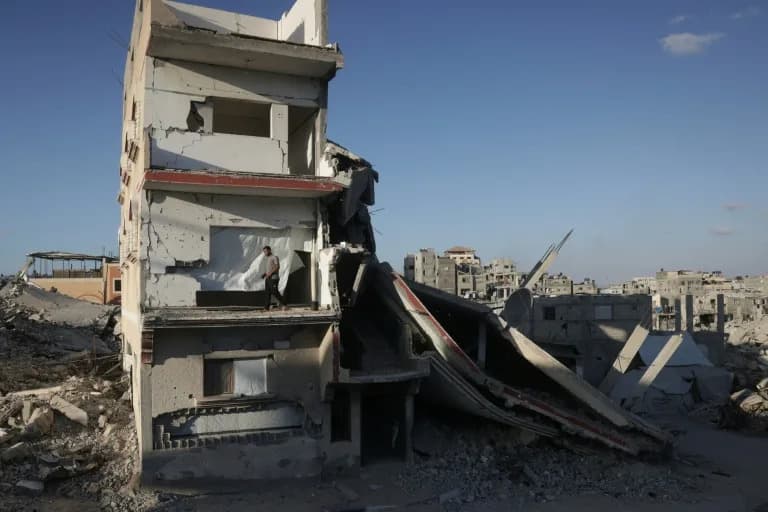
The Norwegian Refugee Council reports that nearly one million people in Gaza are living in tents as summer 2026 begins, leaving them exposed to dangerous heat. The NRC says about 170,000 households are in tents, 5,000 sleep outdoors and 52,000 are in overcrowded shelters, while 850,000 people lack emergency shelter items. Simple measures like shade, ventilation and repair supplies could reduce risks but remain blocked or limited. The report places the crisis against the backdrop of the US- and UN-backed 20-point plan and ongoing international relief efforts.
Nearly One Million Gazans Living In Tents As Extreme Summer Heat Returns, NRC Warns
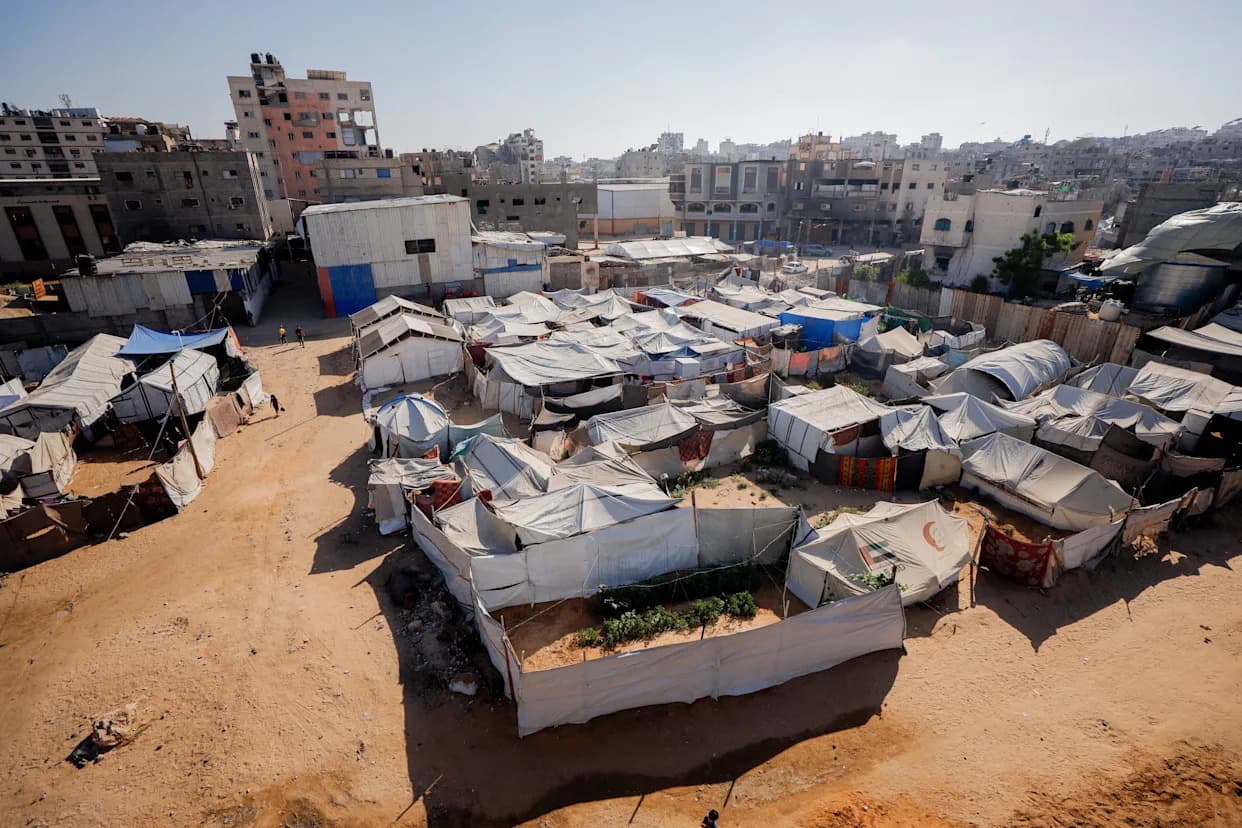
A wide view shows tents and shelters set up in Gaza on June 10, 2026. (photo credit: Ahmed Al Arini / Middle East Images / AFP via Getty Images)
The Norwegian Refugee Council (NRC) warns that as summer 2026 begins nearly one million people in Gaza remain confined to tents and makeshift shelters, exposing them to dangerously high temperatures and severe health risks. The NRC, which leads the Shelter Cluster in Palestine coordinating humanitarian shelter actors in Gaza and the West Bank, published its findings on 18 June.
The report estimates roughly 170,000 households — about one million people — are sheltering in tents. Another 5,000 households are sleeping outdoors and 52,000 households are staying in overcrowded collective shelters. Some 850,000 people still lack basic emergency shelter items such as plastic sheeting, plywood and rope. The NRC says these shortages are the result of widespread destruction, displacement and restricted relief access, not weather alone.
After 987 days of conflict, displaced Gazans face the prospect of another summer in flimsy, unventilated shelters. The report warns daytime temperatures will reach around 34.5 °C in the warmest month and that the number of days at or above 35 °C is expected to increase — conditions that can be deadly for people sleeping in thin fabric tents without shade or airflow.
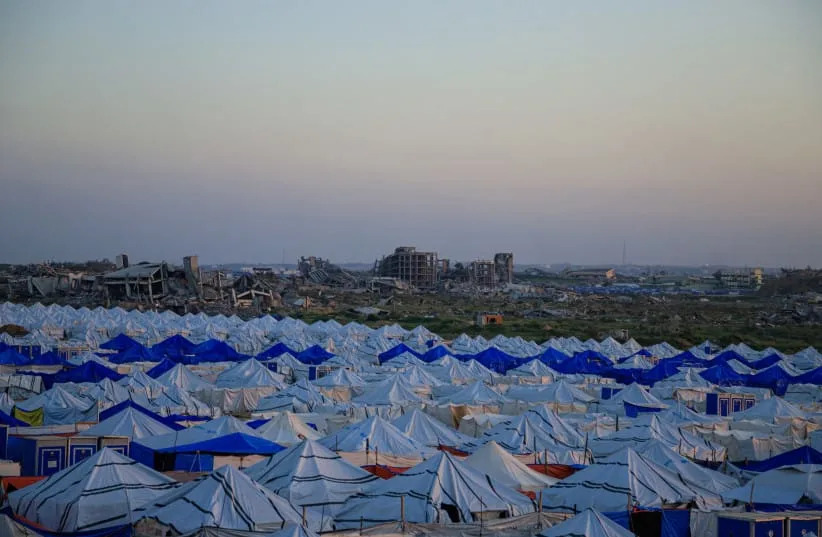
A view of destroyed buildings behind rows of tents at a camp in the Netzarim area, south of Gaza City, on February 21, 2026. (credit: Mohammed M Skaik / Middle East Images / AFP via Getty Images)
"Simple measures such as shading, ventilation, and basic shelter improvements can significantly reduce risks and improve living conditions, but this is currently not available inside of Gaza and deliberately not being allowed to enter," said Jehan Salim, a Shelter Cluster Coordinator, in testimony to the NRC.
"It is an outrage that families in Gaza, after months of displacement and loss, now face summer heat in makeshift tents because Israel continues to restrict shelter materials," added Jan Egeland, Secretary General of the Norwegian Refugee Council.
What Shelter Materials Are Needed
The NRC highlights urgent, low-cost items that could substantially reduce heat- and disease-related risks: shade nets, improved tents, plastic sheeting, plywood, basic repair supplies and materials to improve ventilation and privacy. While these items will not rebuild Gaza, the report stresses they can transform a tent that traps heat, smoke, dust and disease into a shelter that provides shade, airflow and a measure of protection.
Humanitarian And Government Responses
UN agencies and Israeli authorities report ongoing relief efforts. Israel’s Coordinator of Government Activities in the Territories (COGAT) said it works with UN partners to facilitate aid entry, and pointed to recent UN deliveries such as clothing for more than 30,000 children and medical supplies. COGAT also cited data from aid organizations that more than 1.7 million meals are served daily, over 3.6 million pitas are baked each day, and 181 community kitchens are operating across the Gaza Strip. UNDP has published visuals showing agricultural activity in Gaza City’s Al-Zeitoun neighbourhood.
Political Context
The NRC situates the humanitarian crisis within the broader political framework of the US- and UN-backed 20-point plan for Gaza, initiated in September 2025. The ceasefire took effect in October 2025, US Central Command helped establish a coordination centre, and early stabilisation steps — including a logistics centre and an International Stabilization Force — are underway. Former US Secretary of State Hillary Clinton published an op-ed in the Financial Times backing the plan and urging international support; the Board of Peace, set up under the plan, reiterated that call.
The NRC report concludes that urgent, sustained access to basic shelter materials and improvements must be prioritised to prevent heat-related illness and death this summer, even as larger political and reconstruction efforts continue to unfold.
Help us improve.