The Lost City Hydrothermal Field, discovered in 2000 about 700 meters below the Atlantic surface, features towering carbonate chimneys — including a 60-meter monolith — fueled by mantle-seawater reactions that produce abundant hydrogen and methane. These abiotic hydrocarbons sustain oxygen-free microbial communities and diverse invertebrates, suggesting life can thrive independent of sunlight. A 1,268-meter mantle core recovered in 2024 may offer clues to life’s origins, while nearby deep-sea mining rights awarded in 2018 pose a serious threat to the fragile ecosystem. Scientists are urging protective measures such as World Heritage status.
The Lost City: An Alien-Like Hydrothermal World Deep Beneath the Atlantic
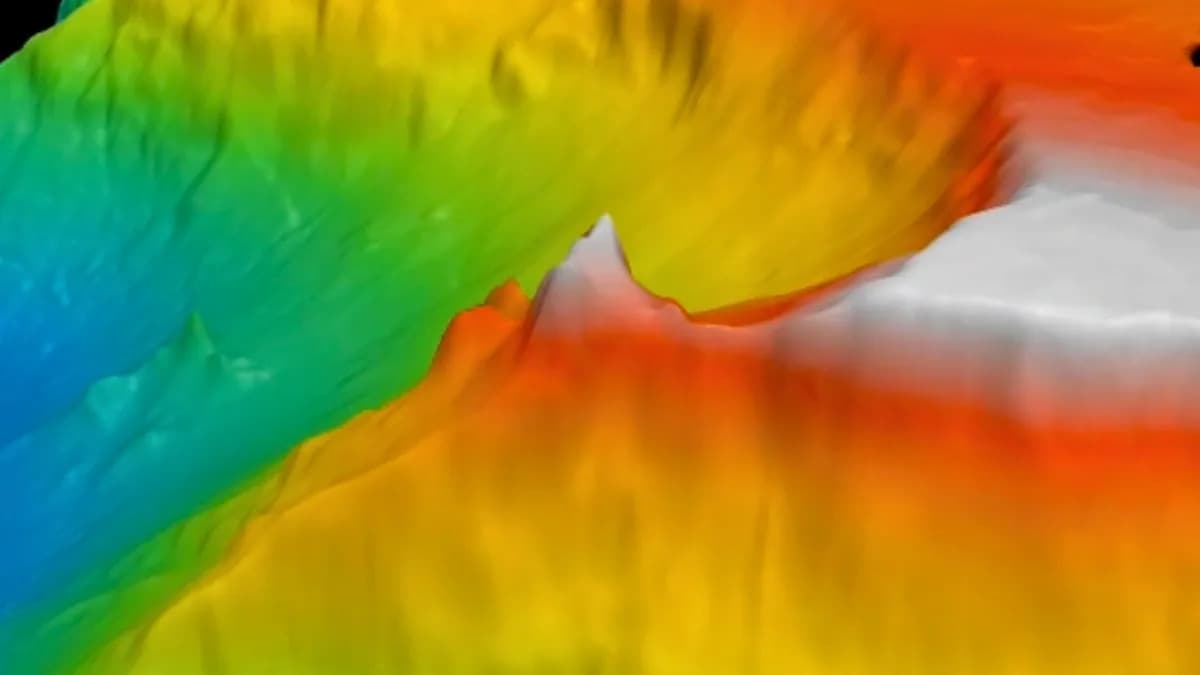
Underwater terrain of the Lost City Hydrothermal Fields. (Lost City Research/University of Washington)
Near the summit of an underwater mountain west of the Mid-Atlantic Ridge, a serrated landscape of towering carbonate structures rises out of the deep gloom. Known as the Lost City Hydrothermal Field, this extraordinary seafloor ecosystem looks more like an alien metropolis than a typical ocean floor — and it may hold clues to how life began on Earth.
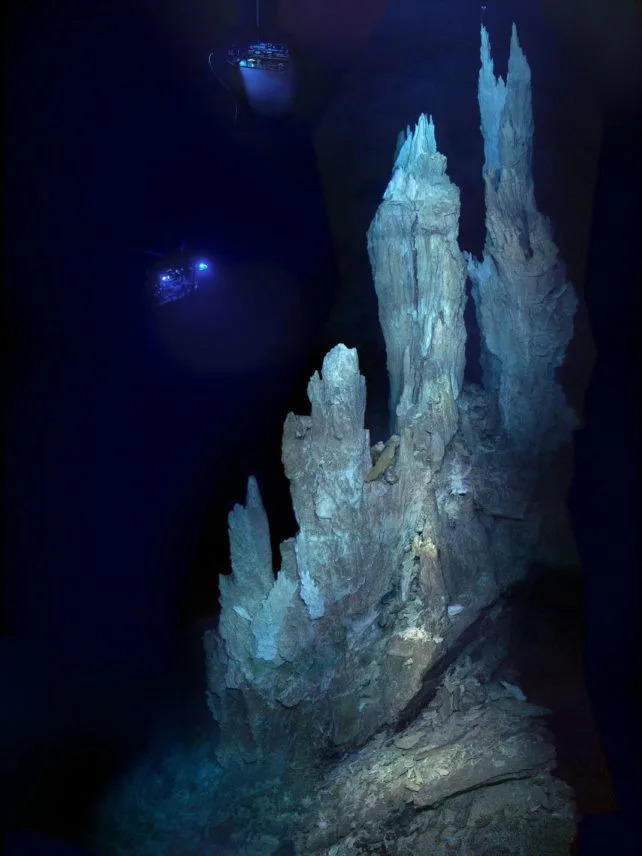
A remotely operated vehicle shines a light on the spires of the Lost City. (D. Kelley/UW/URI-IAO/NOAA).
A Living, Long-Lived Vent Field
Discovered in 2000 at roughly 700 meters (about 2,300 feet) depth, the Lost City is the longest-lived hydrothermal system yet documented. Its creamy calcite chimneys and columns range from tiny toadstool-like stacks to the enormous monolith named Poseidon, which rises more than 60 meters above the seafloor. Chimney fluids reach temperatures around 40 °C (104 °F), and the field has likely been active for at least 120,000 years — perhaps much longer.
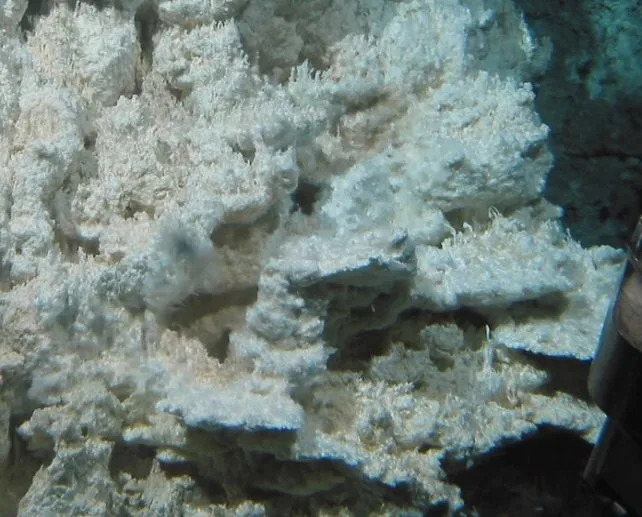
Strands of bacteria living on a calcite vent in the Lost City. (University of Washington/CC BY 3.0).
Chemistry That Fuels Life Without Sunlight
Here, upward-thrusting mantle rocks react with seawater in a process called serpentinization, generating abundant hydrogen, methane and other reduced gases. These hydrocarbons are abiotic (not produced by photosynthesis or atmospheric CO2) and seep into vents and fissures, sustaining unusual, oxygen-free microbial communities. The Lost City produces far more hydrogen and methane than volcanic black-smoker vents — by some estimates up to 100 times more — and its carbonate chimneys are much larger and longer-lived than typical sulfide chimneys.
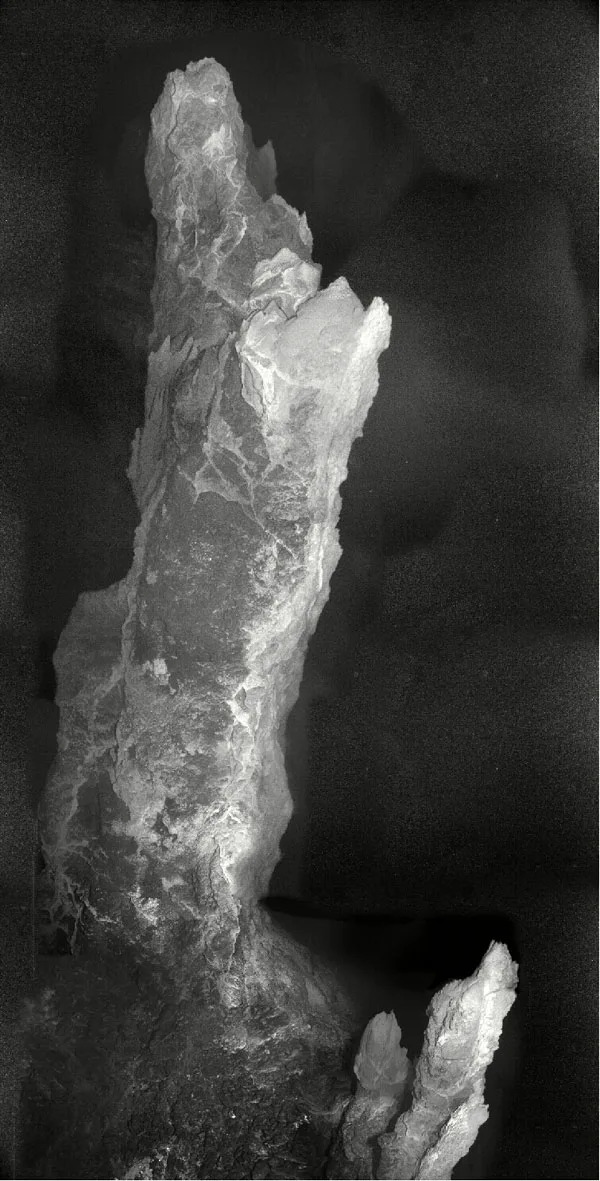
Nine-meter-high chimney in the Lost City. (University of Washington/Woods Hole Oceanographic Institution).
“This is an example of a type of ecosystem that could be active on Enceladus or Europa right this second,” said microbiologist William Brazelton when speaking to The Smithsonian in 2018. “And maybe on Mars in the past.”
Life in an Extreme Habitat
Despite its extreme chemistry, the Lost City teems with life: abundant snails and crustaceans crowd chimneys, while crabs, shrimp, sea urchins and occasional eels appear less commonly. Microbial communities metabolize hydrogen and methane, demonstrating that complex ecosystems can thrive independent of sunlight.

Subscribe to ScienceAlert's free fact-checked newsletter
New Mantle Core and Scientific Opportunity
In 2024 researchers recovered a record-breaking 1,268-meter mantle core from the region around the Lost City. Scientists hope this long core will preserve mineral and chemical records that illuminate early-Earth conditions and possible pathways for the origin of life.
Threats and Calls for Protection
Although the hydrothermal field itself does not appear to contain valuable ores, in 2018 Poland won rights to mine parts of the surrounding seafloor. Researchers warn that deep-sea mining nearby could create sediment plumes or chemical discharges that drift into and damage the Lost City habitat. Because of its scientific importance and ecological uniqueness, experts have urged protective measures — including proposals to list the site as a World Heritage area.
The Lost City stands as a powerful example of resilience and of ecosystems shaped by geology rather than sunlight. Protecting it would preserve not only a remarkable natural wonder but also a living laboratory for understanding life on Earth and potentially beyond.
An earlier version of this article was published in August 2022.
Help us improve.