Archaeologists excavating beneath Boston’s Bunker Hill Monument uncovered musket balls, English and French gun flints and the remains of a square earthen redoubt from the 1775 Battle of Bunker Hill. The finds — including ramrod-marked balls and structural traces — confirm the location and shape of the colonial defenses depicted on Henry Pelham’s post-battle map. The excavation, which concluded amid local commemorative events, offers visitors and researchers a tangible connection to one of the Revolutionary War’s earliest major battles.
Archaeologists Unearth Musket Balls, Flint and Fortifications from 1775 Bunker Hill Battle
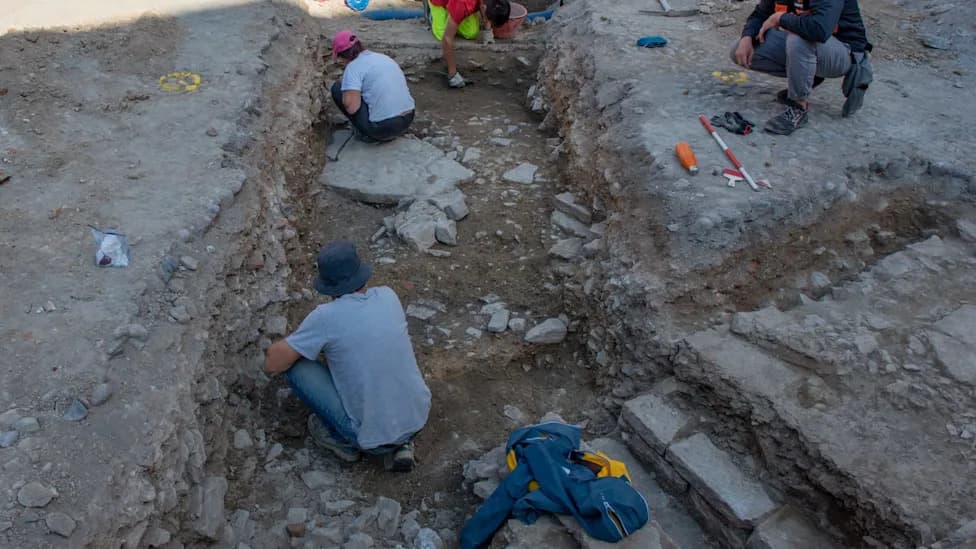
Boston, MA - June 2: An archeological excavation at the Bunker Hill Monument on June 2, 2026. (Photo by David L. Ryan/The Boston Globe via Getty Images)
Archaeologists digging beneath the grassy grounds around Boston’s Bunker Hill Monument have recovered musket balls, English and French gun flints and the remains of an 18th-century earthen redoubt — confirming the location and layout of colonial defenses built just before the 1775 Battle of Bunker Hill.
Finds Provide Tangible Link to a Pivotal Clash
The excavation uncovered multiple spherical lead musket balls roughly the size of marbles, two distinct gun flints (one identified as English, the other French) and structural traces that align with contemporary maps and accounts of the hastily constructed fortifications. Together, the artifacts and earthworks give researchers and visitors a physical connection to one of the earliest large engagements of the American Revolution.
What the Dig Revealed
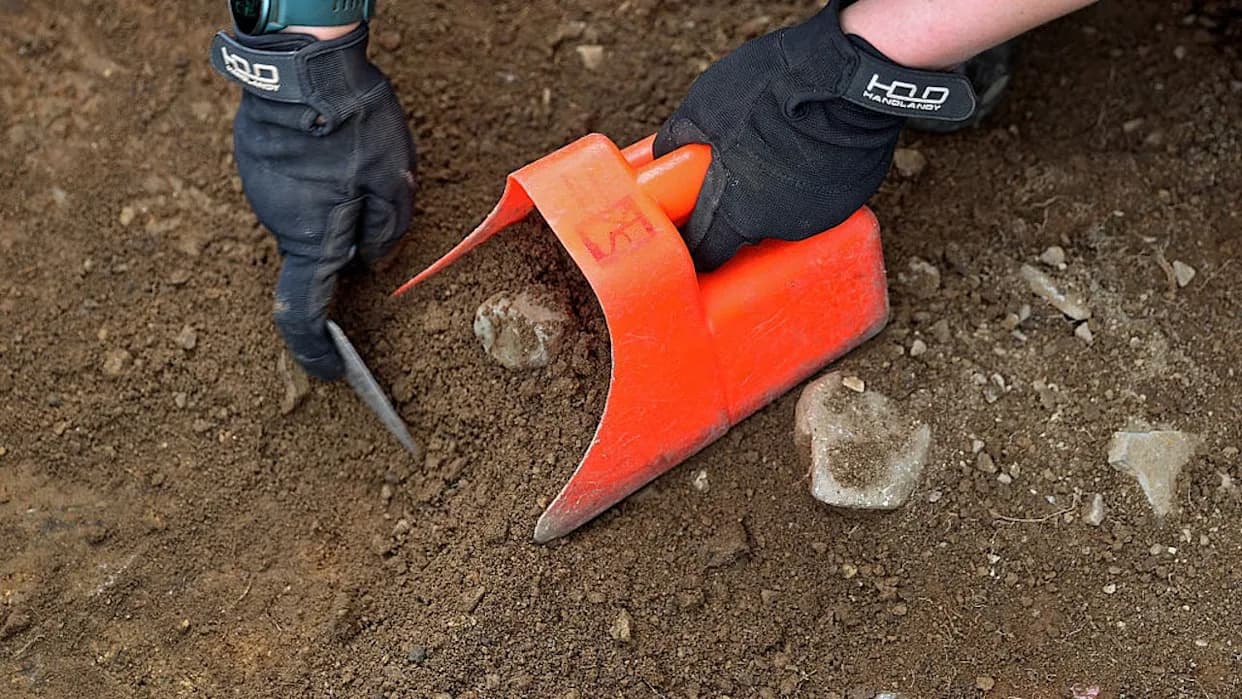
Volunteers and archaeologists identified at least eight musket balls from both sides of the conflict. Some balls show ramrod marks where they were packed down the barrel; others show edge marks indicating they were fired but did not strike a target, because a hit would have deformed them. Gun flints recovered at the site illustrate how flint striking steel produced the sparks that ignited musket powder.
Excavation teams also exposed the footprint of a square redoubt and associated defensive works consistent with a map drawn by Henry Pelham two months after the battle. The dig revealed a defensive ditch roughly 3 feet (1 meter) deep and over 6 feet (2 meters) wide, with the excavated soil forming a parapet about 6 feet high that stretched roughly 150 feet (46 meters) on each side of the redoubt.
"You can see the ramrod mark from when the soldier rammed it down. You can see the little ring on the top where it was pushed down," said Joel Bohy, a battlefield archaeologist who specializes in Revolutionary War weaponry. "Marks on the edge of some balls show they were fired but didn't strike anyone."
Context and Commemoration
Although colonial forces originally planned to fortify the 110-foot (34-meter) rise known as Bunker Hill, they instead occupied the lower, more exposed Breed's Hill, where most of the fighting occurred. The battle ended with colonial forces withdrawing, but not before inflicting more than 1,000 casualties on British troops — a costly engagement that helped galvanize colonial resistance.
The excavation concluded Wednesday alongside remembrance events in Charlestown, including a church service, a procession to the Bunker Hill Monument and a ceremony featuring wreath-laying, a moment of silence and a musket-firing demonstration. The site drew onlookers and history enthusiasts from around the country, many moved by the opportunity to see and sometimes hold artifacts directly connected to the battle.
Reporting: The story is based primarily on interviews and observations from the active archaeological project at Boston’s Bunker Hill Monument. The Associated Press contributed reporting to this article.
Help us improve.