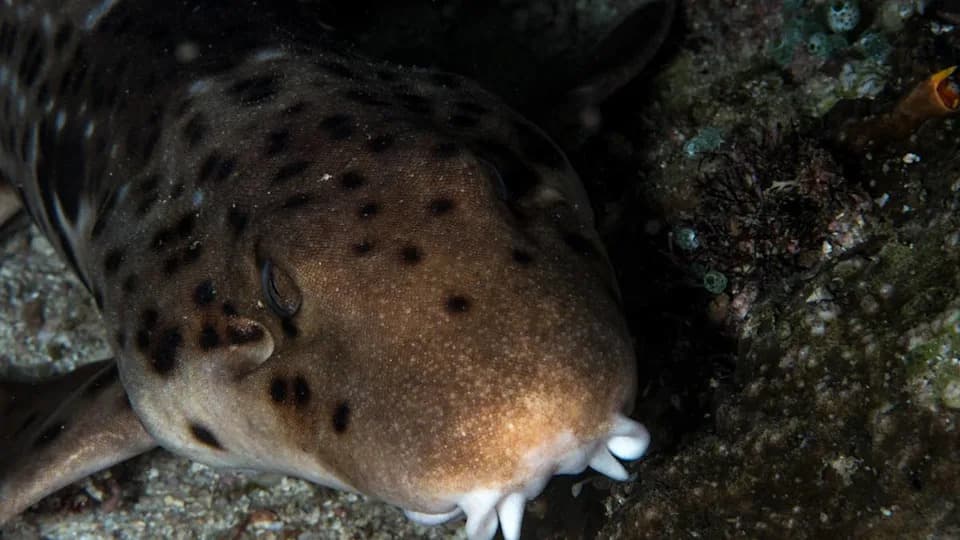
Dr. Christine Dudgeon captured a roughly one‑meter walking shark during a nighttime survey; researchers confirmed it as a new species named Hemiscyllium dudgeonae in the Journal of the Ocean Science Foundation. These nocturnal sharks 'walk' across shallow reef flats using all four fins and feed on seafloor invertebrates. The species appears to be limited to a small reef area off southeastern Papua New Guinea, raising conservation concerns. Further fieldwork is planned to provide data for a potential IUCN Red List assessment.
Researcher Catches Meter-Long 'Walking Shark' — It's a New Species, Hemiscyllium dudgeonae
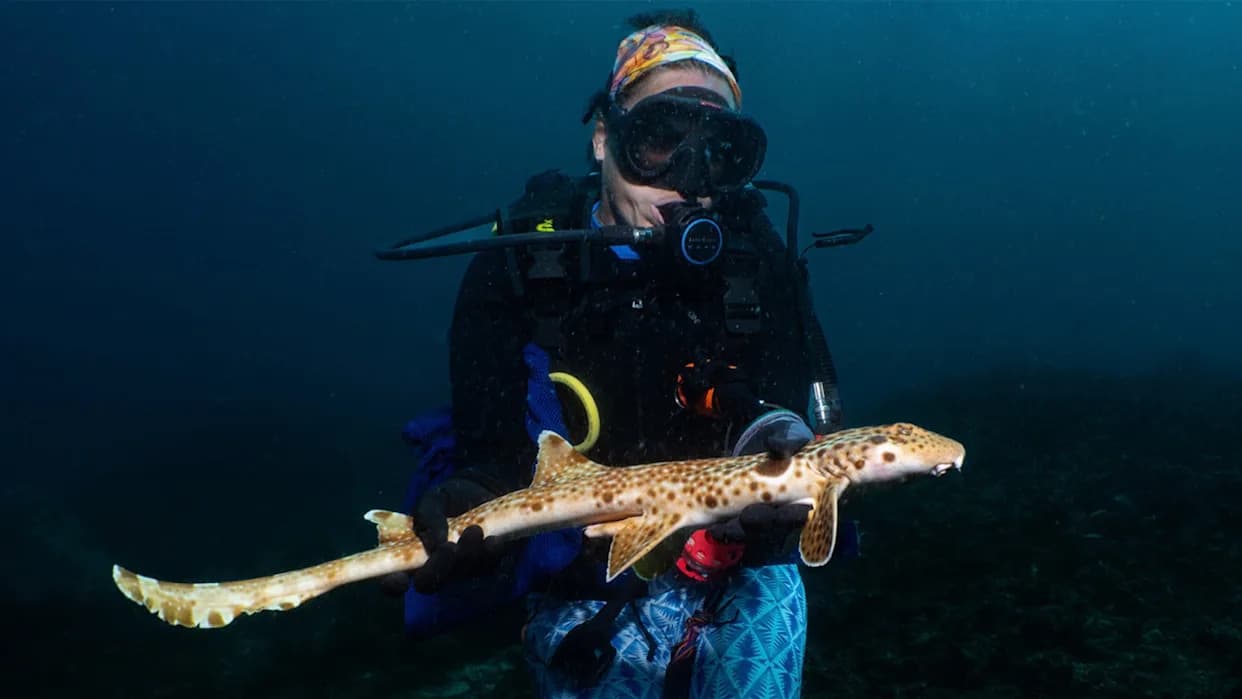
Photo Credit: University of the Sunshine Coast
During a nighttime field study, University of the Sunshine Coast researcher Dr. Christine Dudgeon caught a roughly one‑meter shark that turned out to be previously undescribed by science. Subsequent analysis confirmed the animal as a new species, now named Hemiscyllium dudgeonae — Dudgeon's Walking Shark — in a collaborative paper published in the Journal of the Ocean Science Foundation.
How the Discovery Happened
Dudgeon encountered the shark during a nocturnal survey of so‑called walking sharks, a group known for using all four fins almost like limbs to move across shallow reef flats at low tide. She caught the animal by hand and carefully brought it back to the boat for examination. Lead author Jess Blakeway noted that the specimen's colour pattern and other features immediately appeared different from known species.
"New shark species don't come along that often, and it's most definitely the first one named after me," Dr. Christine Dudgeon said in the research release.
Biology and Behavior
Walking sharks (genus Hemiscyllium) are nocturnal predators that forage on the seafloor, feeding primarily on invertebrates. They are not considered dangerous to people. Like other members of their genus, these sharks use coordinated fin movements to clamber across shallow reef flats and between coral heads when the tide drops.
Range and Conservation Concerns
Researchers currently believe Hemiscyllium dudgeonae may be restricted to a small area off southeastern Papua New Guinea. Species with such narrow distributions are often vulnerable to local threats — including warming seas, reef degradation, pollution, and fishing pressure — because they have limited options for relocation or adaptation.
Formally describing this species is an important first step: without a scientific name and description, conservationists and policymakers cannot reliably monitor, assess, or protect it. The authors plan additional fieldwork in October to collect population and ecological data that will support an assessment by the International Union for Conservation of Nature (IUCN) Red List.
Why This Matters
Discovering a new shark species is rare, especially among a group as familiar as sharks, and this is the first new species described for the genus since 2013. The find highlights how much remains undocumented on remote reefs and underscores the importance of targeted marine research and habitat protection before species decline or vanish unnoticed.
Next steps: Further surveys will aim to determine the species' distribution, population size, breeding habits, and specific threats so conservation status can be evaluated and appropriate protections considered.
Help us improve.