HMS Jersey was converted into a prison ship in Wallabout Bay after the British captured New York. Overcrowding, disease, contaminated water and inadequate rations killed many American prisoners; successive groups were loaded as earlier prisoners died. Robert Watson documents how the Jersey became a propaganda tool and a symbol of cruelty, yet prisoners still staged acts of patriotism—most famously a July 4, 1782 celebration that ended in bloodshed. Survivors later memorialized the dead while George Washington’s appeals for better treatment went unanswered.
Ghost Ship of Brooklyn: The HMS Jersey and a Forgotten Revolutionary War Tragedy
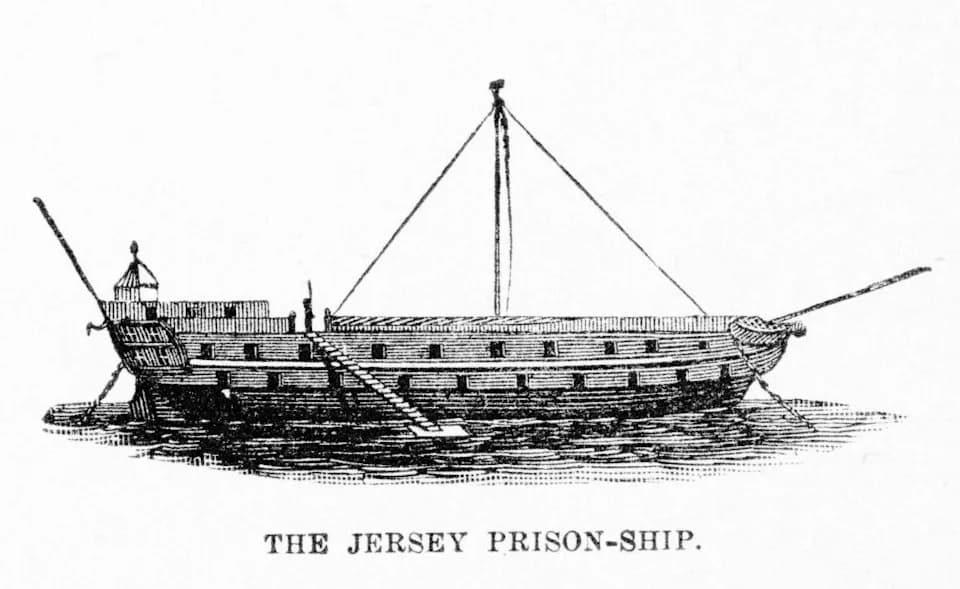
An illustration from the 1905 edition of Harper’s Encyclopaedia of United States History, Volume V, depicts the HMS Jersey, a 60-gun Royal Navy ship used by the British as a prison ship during the American Revolution.
Historian Robert Watson uncovered a harrowing chapter of the American Revolution in his 2017 book, The Ghost Ship of Brooklyn: the story of the British prison ship HMS Jersey, anchored in Wallabout Bay off Brooklyn, where conditions killed thousands of American prisoners.
Built in 1776, the Jersey had an ominous reputation long before it became a prison ship. Watson describes it as, for its day, a powerful warship that nevertheless suffered a string of misfortunes and came to be seen by sailors as unlucky. After British forces captured New York and found themselves holding far more captives than they had land prisons, they converted the Jersey into a floating jail.
Harrowing Conditions Aboard
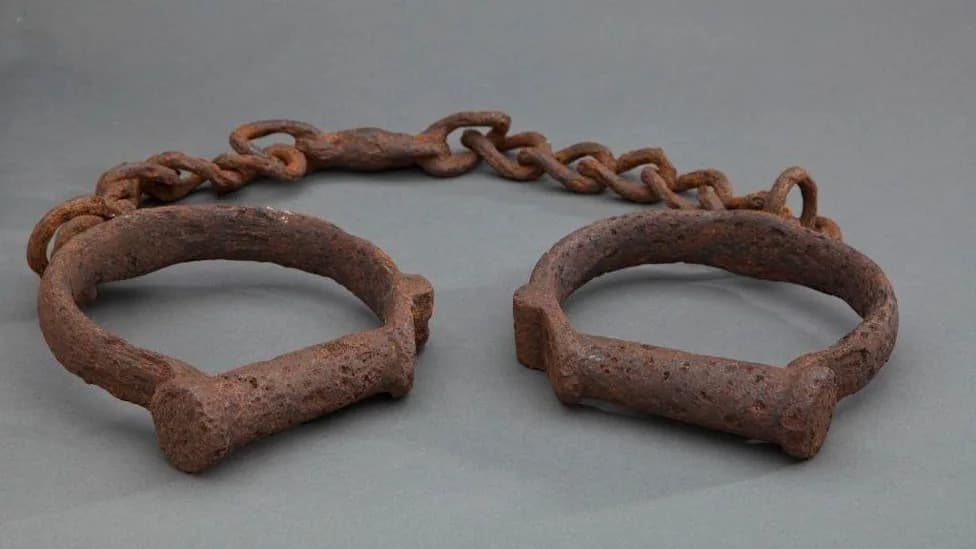
The Jersey was stripped of much of its fighting gear, moored roughly a hundred yards from shore, and packed with roughly a thousand prisoners at a time. Hatches and portholes were sealed; disease spread rapidly. Prisoners endured overcrowding, frostbite from winter exposure, and chronic hunger—their rations were often only two-thirds to three-quarters of required calories. Water was frequently contaminated, and waste management was primitive to the point of being deadly.
"If you didn’t drink, you died. If you did drink, you drank foul human excrement," Watson recounts, summarizing testimony about the ship’s water supply.
Many who died were buried in shallow graves on nearby beaches; corpses and bones later surfaced and washed ashore, visited by scavengers while survivors watched. The ship was repeatedly loaded with fresh groups of prisoners after earlier batches perished, perpetuating the death toll.
Brutality, Propaganda, and Resistance
The Jersey also became a tool of intimidation: the British printed broadsides warning rebels that capture meant the "Ghost Ship" and virtually certain death. A commissary commonly referred to in period accounts as Sproat (spelling of the name varies) oversaw the ship, and contemporary testimonies describe episodes of cruelty and sadism by the guards. Some evidence indicates starvation was used to coerce prisoners into enlisting with the British, though most refused and were shunned by fellow captives if they defected.
Acts of defiance and patriotism persisted despite the misery. On July 4, 1782, prisoners held a deck celebration of Independence with singing and stories. Guards drove them below with weapons; when prisoners continued their observance, guards bayoneted some of them. The next morning, ten Americans were dead.
Aftermath and Memory
Watson and other historians argue that more Americans died on British prison ships like the Jersey than on Revolutionary War battlefields (combat fatalities are commonly estimated in the range of 6,800–8,600). When George Washington learned of the abuses, he petitioned the British for better treatment and reminded them that he held thousands of British prisoners; his appeals were largely ignored. Survivors—including Alexander Coffin Jr. and Ebenezer Fox—later memorialized their fallen shipmates and praised their refusal to serve the British.
As the nation marks milestones like its 250th anniversary, the story of the HMS Jersey remains a stark reminder of the human costs of the Revolution and the resilience of those who endured its worst indignities.
Help us improve.