Operation Period will conduct the first dedicated scientific study of menstruation in microgravity on a Virgin Galactic suborbital flight in 2027. Co‑founders Manju Bangalore and Priya Abiram will fly and carry out in‑flight experiments to gather baseline data that could inform long‑duration mission planning and improve menstrual‑health understanding on Earth. This preliminary flight aims to identify priorities for future, larger studies.
Historic First: Operation Period to Study Menstruation in Microgravity on Virgin Galactic Suborbital Flight
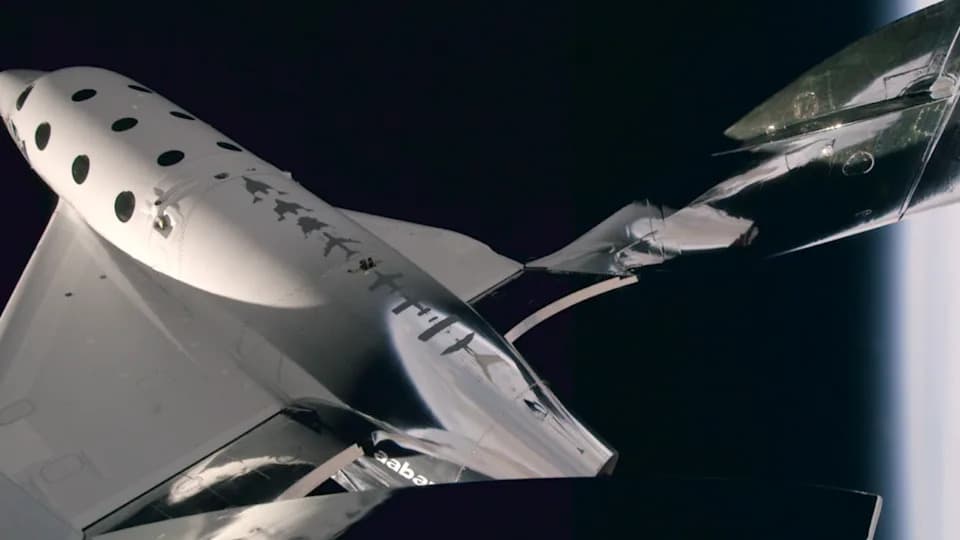
The first study dedicated to researching menstruation in microgravity will be launched by Virgin Galactic. . | Credit: Virgin Galactic
Operation Period, a Gen‑Z–led nonprofit focused on menstrual health and equity, will fly Operation Period‑01 (OP‑01) aboard a Virgin Galactic suborbital vehicle in 2027 to study how menstruation behaves in microgravity — the first dedicated mission of its kind.
Mission Overview
The OP‑01 team plans to collect baseline data on menstrual fluid dynamics, product performance and related human‑health questions during a short suborbital flight. Co‑founders Manju Bangalore and Priya Abiram will join the mission and carry out the in‑flight experiments themselves. The mission will be conducted under the nonprofit's newly established research arm; detailed protocols and specific data‑collection priorities will be announced closer to launch.
Why This Matters
Decades ago, reports that engineers asked astronaut Sally Ride whether 100 tampons would be enough for a short mission highlighted how menstrual needs were often treated as an afterthought in spaceflight planning. Despite anecdotal observations and limited clinical notes, there has never been a focused scientific study on menstruation in microgravity. Because many astronauts currently suppress their periods using hormonal IUDs or continuous oral contraceptives, there is little quantitative evidence about the safety, logistics and user experience of menstruating in space — data that will be important for longer missions and lunar or deep‑space stays.
Technical and Human Context
Bangalore, who trained in physics, astronomical engineering and bioastronautics and has worked at NASA, said terrestrial research revealed gaps in spaceflight medicine when it comes to menstrual health. "I want all menstruators to be able to live life with their full dignity and reach their fullest potential, and that includes astronauts," she told journalists. Limited existing data suggests menstruation in space is generally safe, but the lack of quantitative measurements prevents mission planners from making evidence‑based decisions about supplies, waste management, hygiene and medical risk on long‑duration missions.
Terrestrial Benefits
Microgravity research can also yield insights for health care on Earth. Operation Period points to current gaps such as product testing: some manufacturers have historically tested absorbency using saline rather than menstrual blood, which may misrepresent real performance and contribute to underdiagnosis of heavy menstrual bleeding — a condition estimated to affect about 20% of menstruators in the U.S. Better data on fluid behavior, product efficacy and diagnostics could improve care for people on Earth as well as astronauts.
Public Interest and Next Steps
Public engagement helped launch the project: Bangalore’s viral parabolic‑flight demonstration of menstrual fluid dynamics drew millions of views and helped destigmatize the subject while highlighting research gaps. OP‑01 is positioned as an initial, hypothesis‑generating flight: it will inform which questions deserve larger suborbital and orbital studies and help build the quantitative datasets needed for future mission planning.
Amber Favaregh, Virgin Galactic director of system analysis & research, said the collaboration shows how the company can "support real‑time, in‑flight scientific investigation into long‑overlooked areas of human health, helping advance more inclusive and innovative exploration that delivers insight for both space and life on Earth."
Operation Period expects to share experimental details and a research protocol in the months ahead as the team prepares for the 2027 flight.
Help us improve.