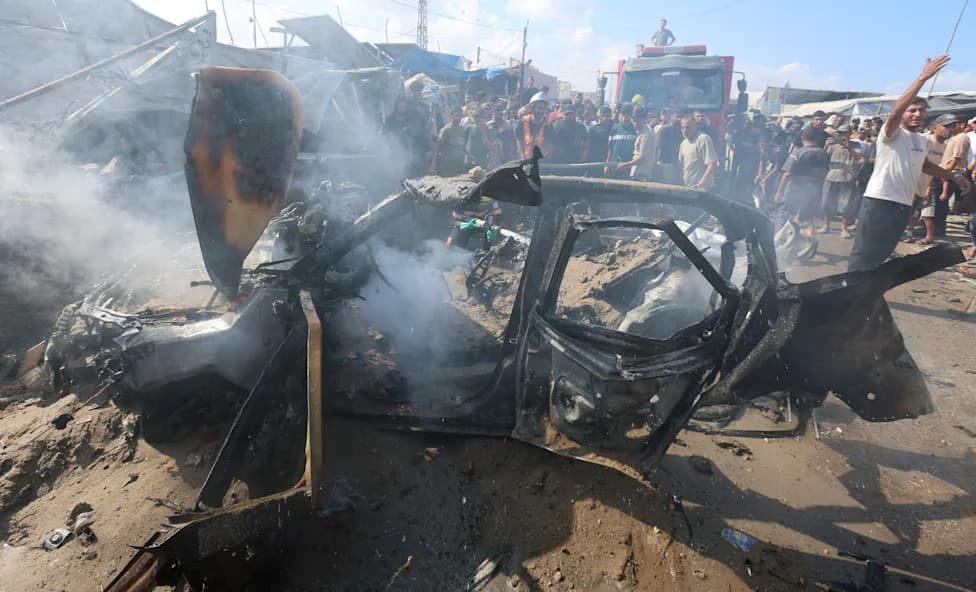
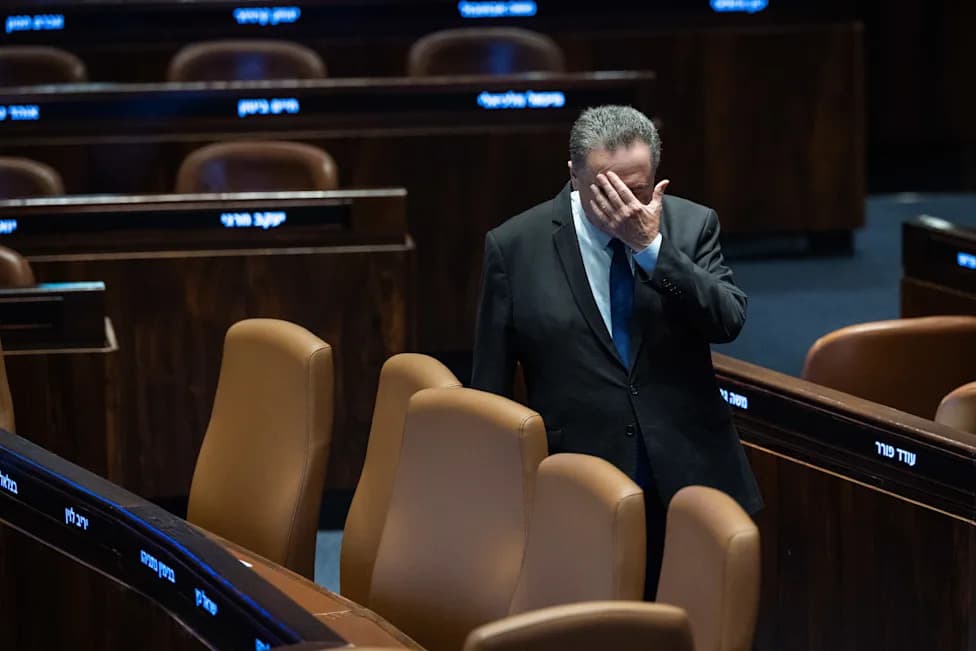
Diplomatic sources told The Jerusalem Post that Hamas now wields less control in Gaza and will not be allowed to veto the US-backed Board of Peace's plans. The Board is advancing security, governance and economic measures, including staging areas such as the Life Support Area near Kerem Shalom and assembling an International Stabilization Force with contributors like Kosovo and Albania. Key obstacles remain—most notably Hamas disarmament, verification and integrating a Palestinian civil administration—while additional diplomatic activity is expected in the coming weeks.
Diplomats: "Hamas No Longer Calls The Shots" As International Gaza Plan Moves Forward
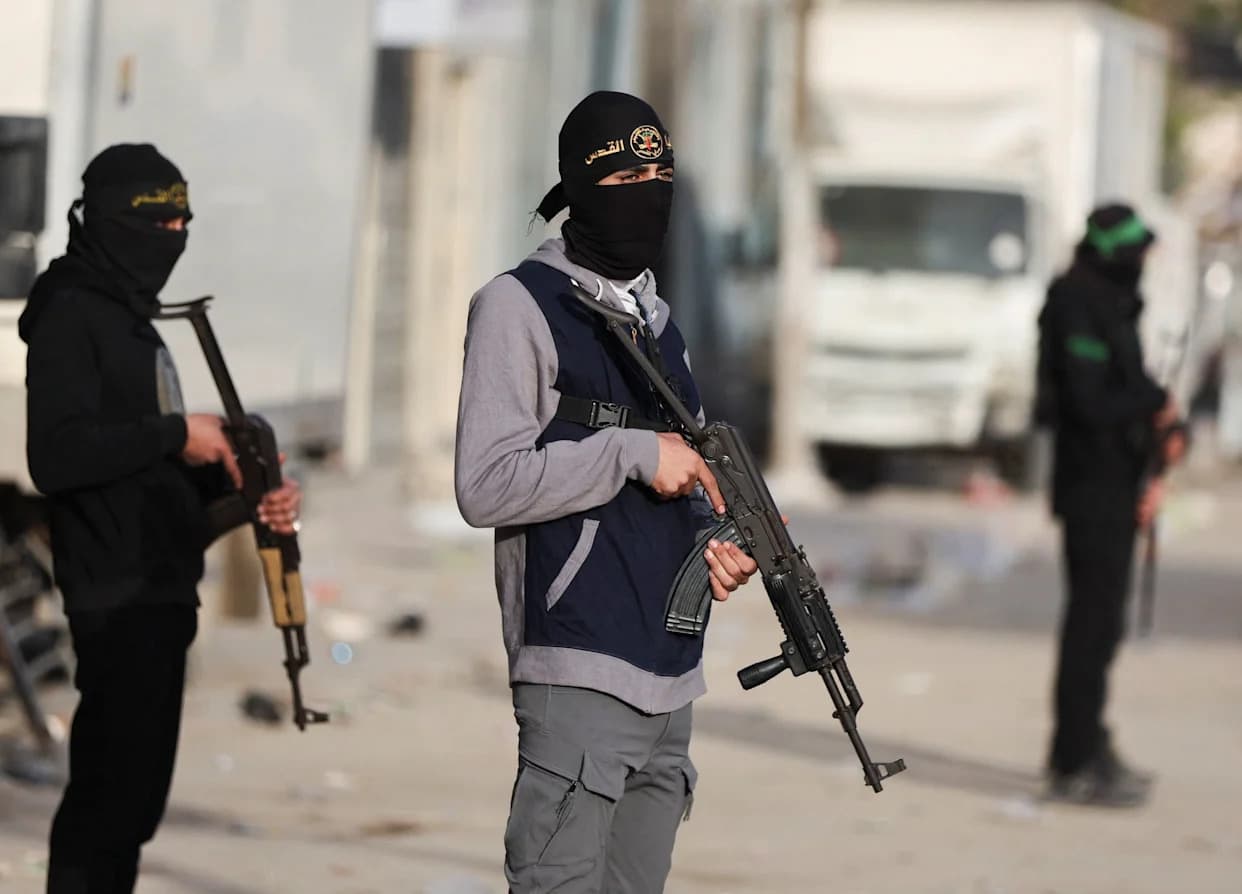
Terrorists from Hamas and Palestinian Islamic Jihad stand on a street during Eid al-Fitr in Gaza City, March 20, 2026. (photo credit: Dawoud Abu Alkas/Reuters)
Diplomatic sources told The Jerusalem Post that "Hamas doesn’t call the shots" in Gaza anymore and that the movement now controls a smaller portion of the territory than in the past. The US-backed Board of Peace, created after the Gaza ceasefire deal, says it will not allow Hamas to veto progress on security, governance and economic initiatives.
"Hamas doesn’t call the shots," a source familiar with the diplomatic efforts told The Jerusalem Post, adding that the group controls less of Gaza than it did previously.
Recent Developments
On Thursday the Board of Peace reported fresh planning progress for Gaza and highlighted the new Life Support Area Endurance near Kerem Shalom. Kosovo's Ambassador to Israel, Ines Demiri, visited the site and met International Stabilization Force (ISF) personnel there. The Board described the site as "a vital waypoint for ISF to refit while supporting restoration and humanitarian efforts." Kosovo is one of the countries already contributing to the ISF.
International Stabilization Force And Partners
The ISF is being assembled gradually. Teams from Kosovo and Albania have evaluated roles and capabilities, while Morocco and Kazakhstan appear likely to participate. Indonesia is reportedly reviewing participation and several other countries are considering contributions. U.S. Central Command helped establish the Civil-Military Coordination Center (CMCC) in Kiryat Gat last October to support planning.
Governance, Security And Civil Administration
Diplomats say a central objective is to enable a Palestinian civil administration—the Palestinian National Committee for the Administration of Gaza (NCAG)—to operate alongside the ISF, with parallel efforts to train Palestinian police. The plan aims to create safe, functioning areas where civilians can live outside Hamas control by boosting goods and services and establishing credible local governance.
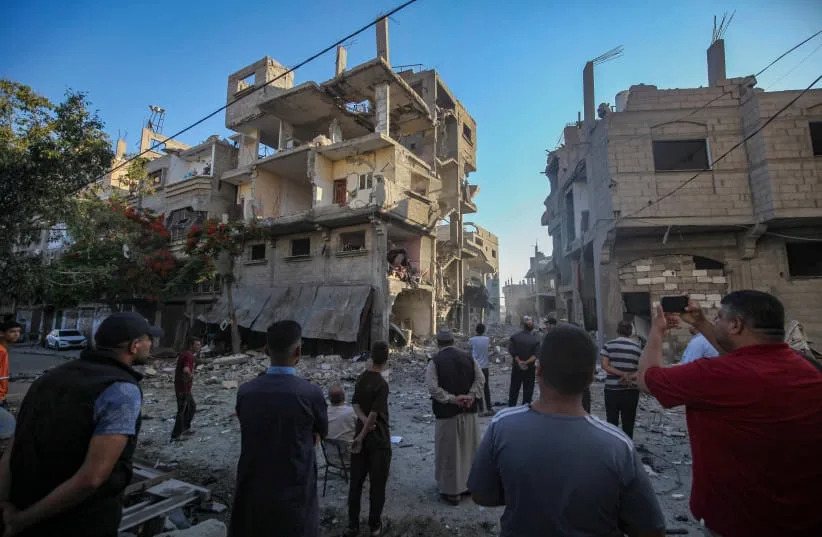
Palestinians inspect the damage to their homes following an Israeli airstrike on Al-Maghazi Refugee Camp in the central Gaza Strip, on June 12, 2026. (credit: Ali Hassan/ Flash90)
Ceasefire Talks And Disarmament Questions
Recent reporting indicated "positive" signals from talks held in Cairo between Board of Peace envoy Nickolay Mladenov, a Hamas delegation and representatives from mediator states including Egypt, Qatar and Turkey. Still, a major stumbling block remains: whether Hamas will agree to disarm. Officials warn that disarmament verification, the number and types of weapons to be surrendered, and possible phased or pocket-based disarmament are all unresolved.
Context And Political Backdrop
Sources estimate Hamas currently controls roughly 40% of Gaza and that some two million civilians live under Hamas administration in areas with limited exit options. Diplomats point to the Trump administration's 20-point plan—cited alongside U.N. Security Council Resolution 2803—as the benchmark guiding reconstruction and stabilization efforts. The Board of Peace says it will not wait indefinitely if Hamas refuses to lay down arms or seeks to block progress.
Outlook
Officials expect more active diplomatic engagement in the coming weeks, including U.S. outreach to regional actors. Timelines remain unclear, but planners say additional details may emerge soon. Key challenges include verifying disarmament, finalizing ISF deployment, integrating NCAG operations, and ensuring humanitarian and economic measures provide viable alternatives to life under Hamas control.
Note: The descriptions above reflect statements from diplomatic sources and reporting cited by The Jerusalem Post and Asharq Al-Awsat. Situations on the ground and diplomatic positions can evolve rapidly.
Help us improve.