The Iberian harvester ant, Messor ibericus, produces hybrid workers that carry paternal nuclear genes from Messor structor and also creates males that are nuclear clones of M. structor. Researchers sampled 132 males from 26 colonies and found about half matched M. structor nuclear DNA while retaining M. ibericus mitochondria. Scientists believe queens mate with M. structor males, then manipulate egg nuclei so fertilized eggs become cloned males used to generate hybrid workers — even where M. structor is absent. Genetic evidence suggests the two species diverged around five million years ago.
The Ant That Clones a Different Species: How an Iberian Queen Produces Hybrid Workers and Cloned Males
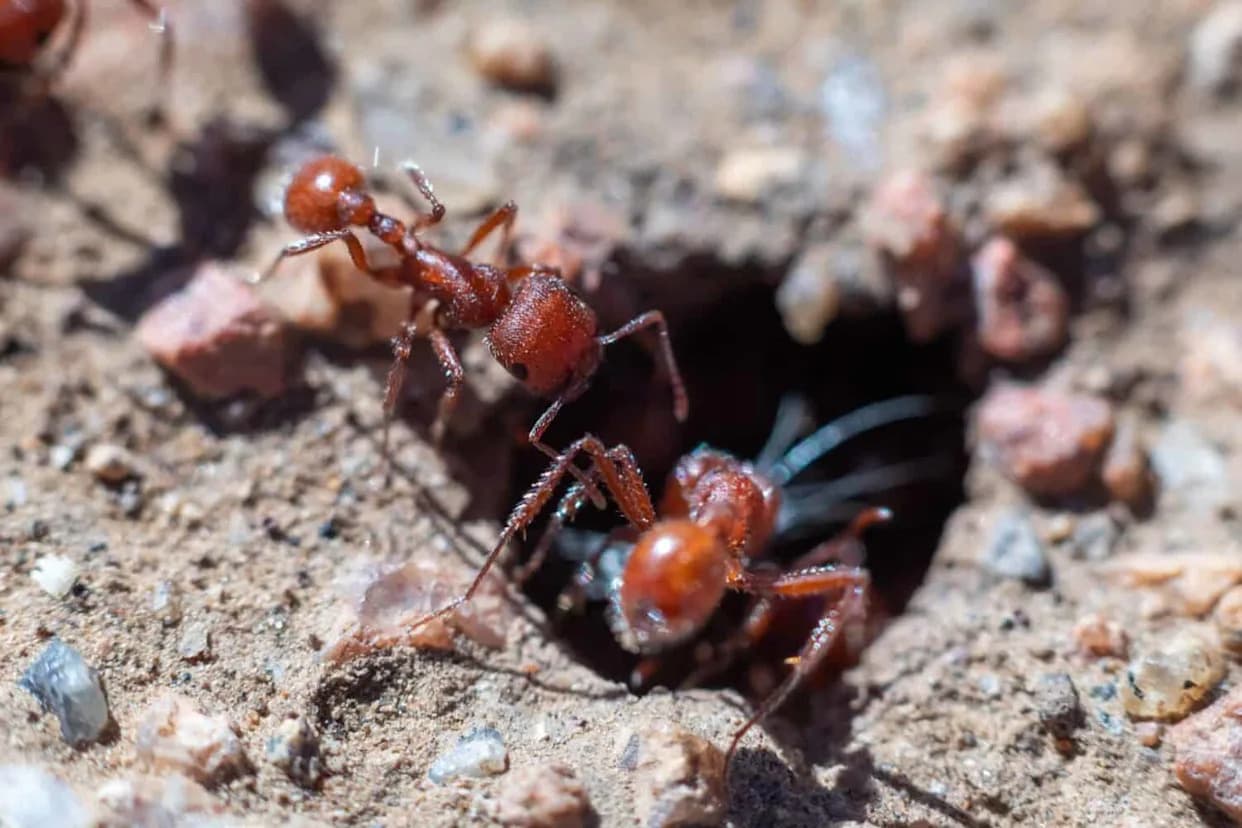
Red Harvester Ants around the entrance to their nest.© Kessler Bowman/Shutterstock.com
Most animals produce offspring of their own species — but the Iberian harvester ant, Messor ibericus, breaks that rule in two remarkable ways. Queens of this species generate hybrid worker ants that carry genes from another species and also produce males that are genetic clones of that other species. Scientists call this a striking example of interspecific reproductive manipulation.
Where These Ants Live
Messor ibericus is found across southern Europe and is most closely associated with the Iberian Peninsula. These reddish-brown harvester ants prefer open, dry habitats and feed primarily on seeds. Colonies can contain up to about 10,000 individuals and nest in soil, rotting wood, or beneath stones. The queen is the only fertile female and is responsible for laying eggs; workers tend brood, forage, and maintain the colony.
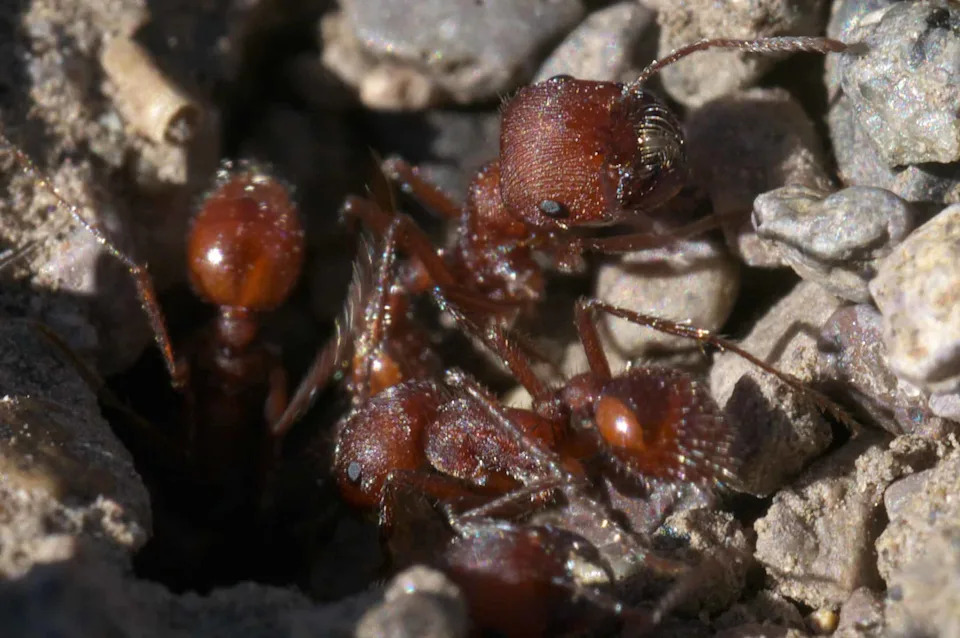
Queens are in charge of ant colonies.©xpda, CC BY-SA 4.0 –Original/License
Unusual Reproductive System
In most ants, fertilized eggs develop into females (workers or queens) and unfertilized eggs develop into males. In M. ibericus, however, workers are hybrids: they carry the maternal mitochondrial DNA of M. ibericus but paternal nuclear genes from a different Mediterranean harvester ant, Messor structor. This situation is best described as a form of sperm parasitism, where one species relies on another's sperm to produce functional workers.
How Cloned Males Are Formed
Genetic analyses show that some males found in M. ibericus colonies are genetic clones of M. structor in their nuclear genome, while retaining M. ibericus mitochondria from the queen. Researchers propose that a queen mates with an M. structor male, carries his sperm to a new nesting site where M. structor does not occur, and then manipulates egg development. By removing or overriding the egg's maternal nuclear contribution, fertilized eggs can develop into males whose nuclear DNA matches the foreign father — effectively cloning that other species' genome inside the queen's nest.
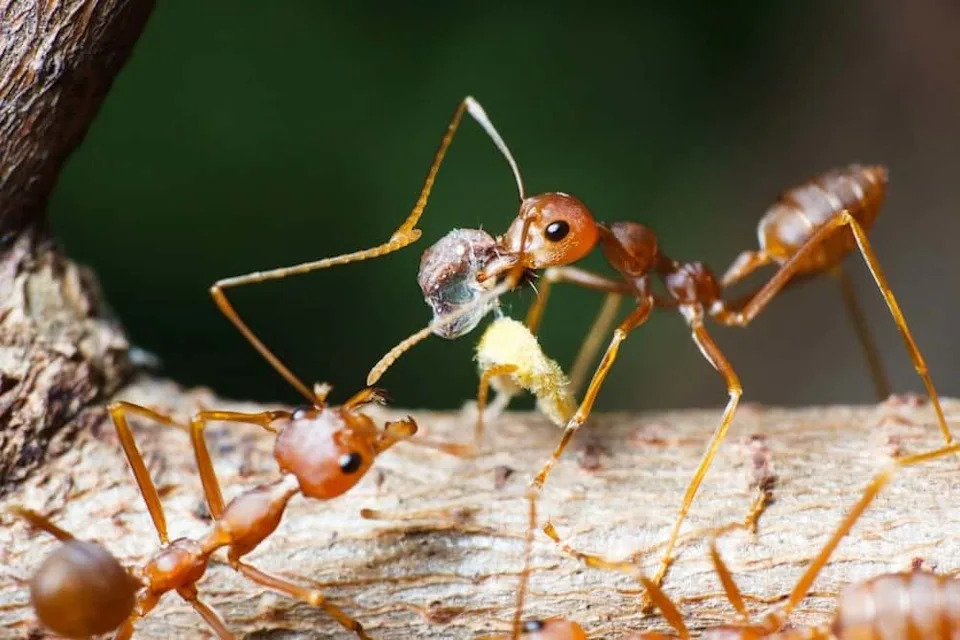
Harvester ants have a complicated reproduction method.©Deer worawut/Shutterstock.com
What the Evidence Shows
To investigate, scientists sampled 132 males from 26 colonies. About half of those males appeared hairless and morphologically similar to M. structor. Genetic tests revealed these ants had M. ibericus mitochondrial DNA (maternal) but M. structor nuclear DNA. Hybrid workers produced by this cross occur widely across southern Europe, even in places such as Sicily where the nearest M. structor populations are more than 600 miles away.
Ecological and Evolutionary Implications
This is the first documented case of one ant species cloning individuals of another species. The two species involved are not closely related: genetic data indicate they diverged from a common ancestor roughly five million years ago. The cloned M. structor-type males are essentially captive within M. ibericus nests and have no realistic opportunity to mate with M. structor queens in the wild, while the queen appears to control how many cloned males persist. At the same time, the arrangement creates a form of sexual interdependence: in areas without living M. structor males, the cloned males allow M. ibericus queens to keep producing hybrid workers.
Bottom line: These ants use a mix of sexual mating, interspecific sperm use, and targeted cloning to maintain colony function — a rare and sophisticated suite of reproductive strategies in nature.
Help us improve.