USGS webcams recorded multiple ash vortices (puahiohio) at Mt. Kīlauea on June 14, appearing alongside lava fountaining and drawing attention for their frequency and clarity. Dr. Tom Gillis highlighted one vortex observed at 12:21 PM HST and shared images and video. Puahiohio form when intense surface heating from lava produces rising, rotating columns of air that loft ash and debris. While visually similar to tornadoes, these vortices assemble from the ground up and are generally much weaker and short-lived.
Ash Vortices at Mt. Kīlauea: How Puahiohio (Volcanic Dust Devils) Formed a Striking Display
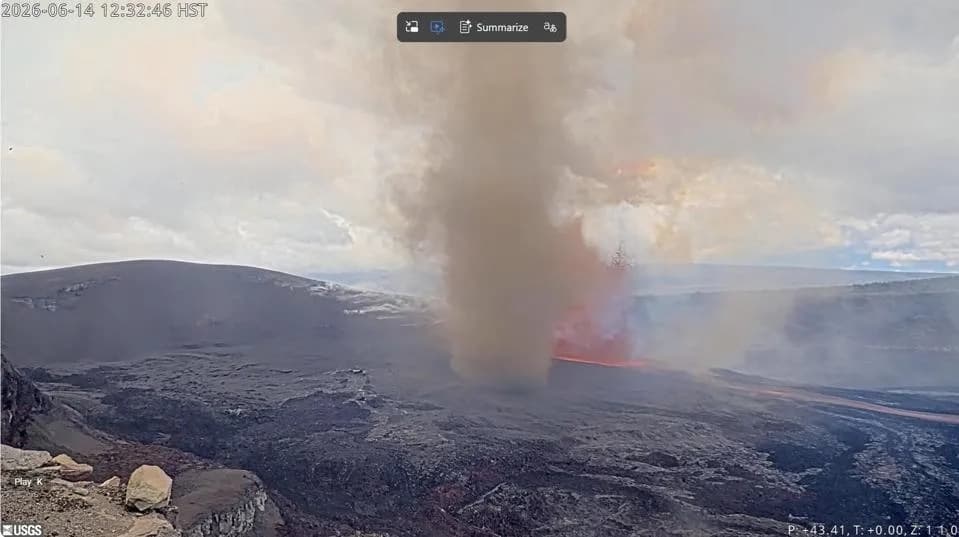
Large ash vortex on Mt. Kilauea.USGS Webcam via Dr. Tom Gill
Webcams operated by the U.S. Geological Survey captured several dramatic ash vortices over Mt. Kīlauea on June 14, creating a memorable visual alongside active lava fountaining. While molten lava often dominates attention at Kīlauea, these rotating columns of ash — known locally as puahiohio — drew widespread interest for their frequency and clarity in the footage.
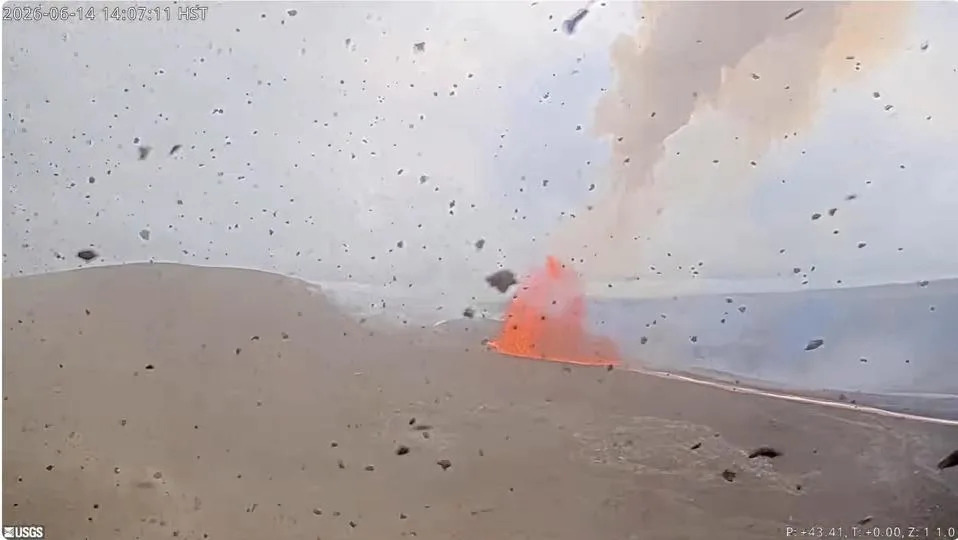
Debris from an approaching ash vortex on Mt. Kilauea.USGS Webcam via Dr. Tom Gill
What Is Puahiohio?
Puahiohio is the Hawaiian term used by the USGS Hawaiian Volcano Observatory to describe dust devil–like vortices driven by intense surface heating near lava flows or vents. During routine camera maintenance after the episode-45 activity, observatory staff observed large puahiohio rising from the hot floor of Halemaʻumaʻu crater. The USGS also maintains a photo gallery documenting puahiohio at Kīlauea and Mauna Loa.
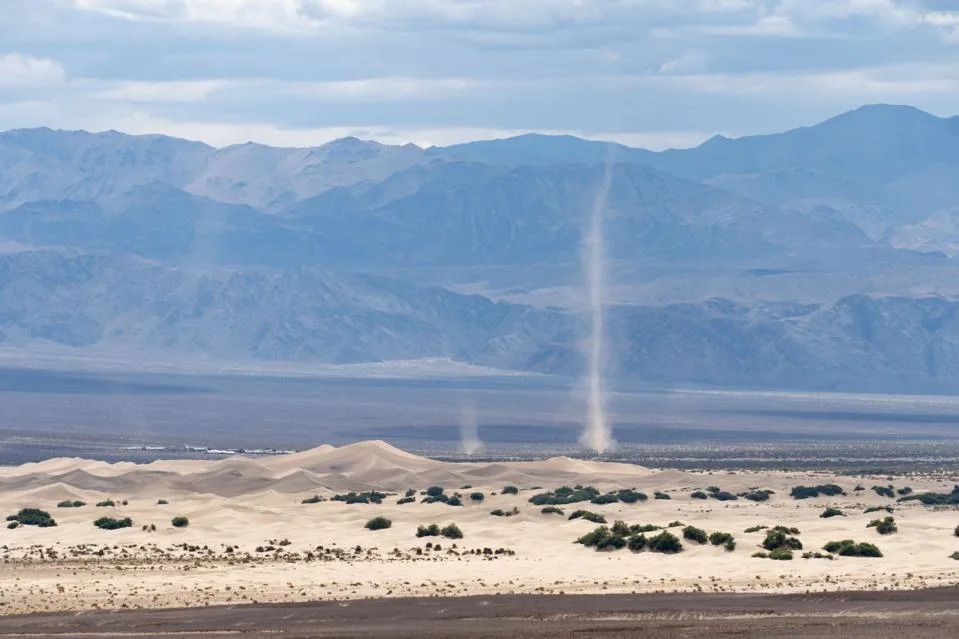
Dust Devil and Mesquite Flat Sand Dunes, Death Valley National Park, California. (Photo by: Marli Miller/UCG/Universal Images Group via Getty Images)UCG/Universal Images Group via Getty Images
Eyewitness Accounts and Timing
“Volcano devil or possible volcanic landspout tornado (volcano-nado? vol-nado?) formed off fountaining lava at Kilauea at 12:21 PM Hawaii time,”
That description came from Dr. Tom Gillis, Professor of Geological Sciences and Environmental Science and Engineering at the University of Texas, El Paso, who shared stills and videos of the event via social media. The webcams captured multiple vortices at different moments, some of which slammed debris into camera housings as they approached.
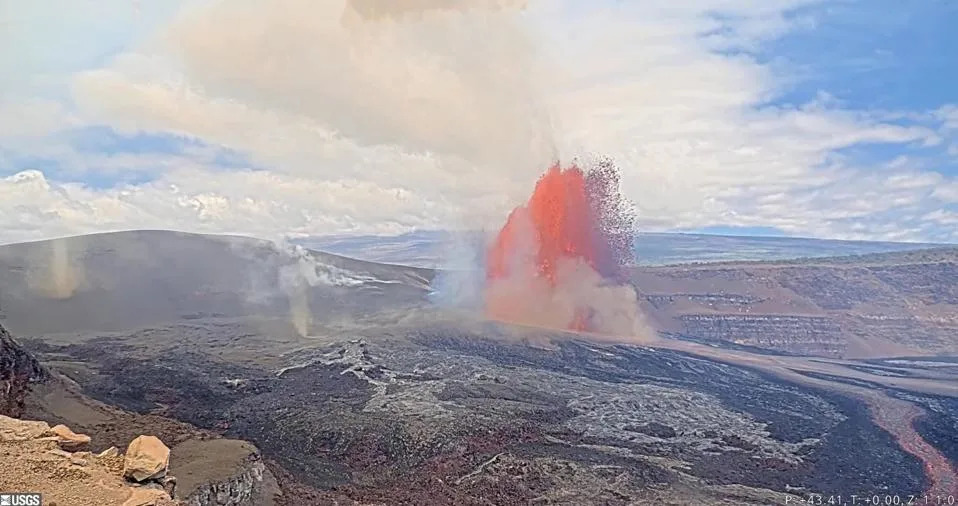
Multiple ash vortices are visible to the left of the hot plume.USGS Webcam via Dr. Tom Gill
How They Form
Ash vortices form when intense, localized heating from lava or vents creates strong upward motion of warm air. When that rising air acquires rotation — through local wind shear or small-scale changes in flow — a vertical vortex can develop. Conservation of angular momentum causes the rotating column to spin faster as it stretches upward, much like an ice skater pulling in their arms. The column then lofts ash, dust, glass shards and other debris, making the vortex visible.
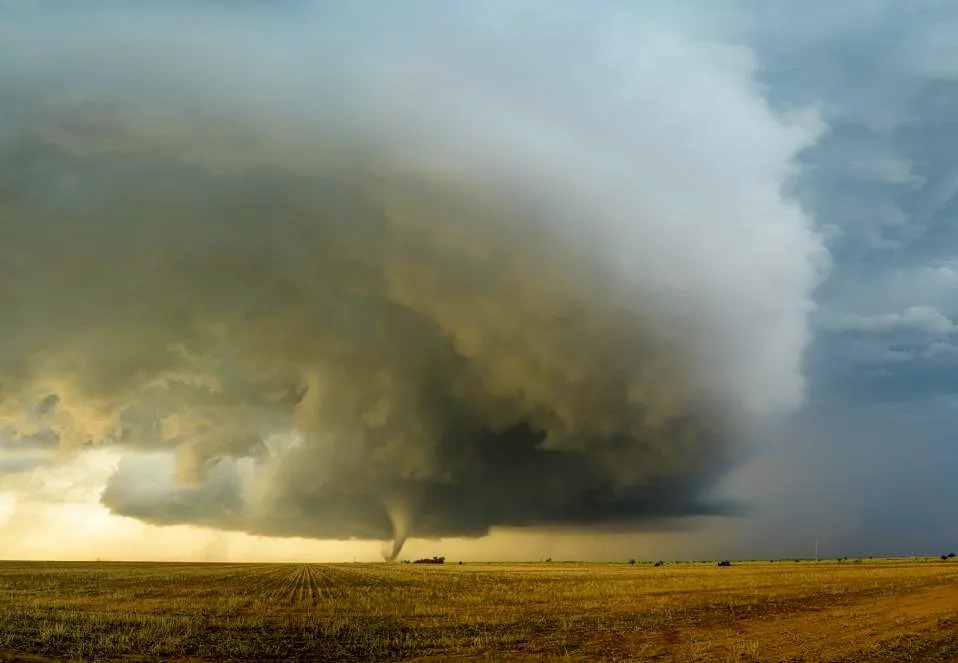
Twisters on the Great Plains US in spring and summertime with clear slots, collar cloud, striations.getty
How They Differ From Tornadoes
Although they may resemble tornadoes, puahiohio differ in origin and typical strength. Classic supercell tornadoes generally form downward from rotating storm updrafts, while puahiohio assemble upward from surface heating. Weaker atmospheric phenomena such as landspouts and waterspouts can form from the ground up as well, but volcanic dust devils are usually far weaker than the strongest supercell tornadoes and are typically short-lived.
Why They Matter
Puahiohio are visually striking and of interest to both scientists and the public because they reveal how extreme surface heating and local wind patterns interact. They can also loft fine ash and glassy particles that affect nearby instrumentation, air quality, and visibility around volcanic vents.
Observers continue to document puahiohio at Hawaiian volcanoes; the June 14 webcams offered a vivid reminder of how quickly and spectacularly surface heating and shear can combine to create short-lived, rotating columns of ash and debris.
Help us improve.