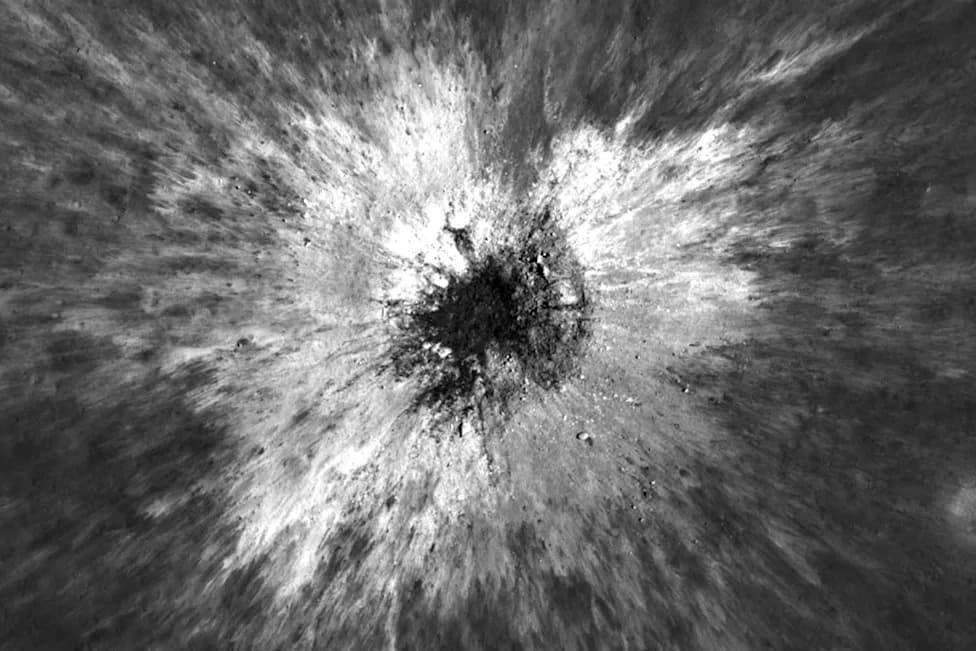
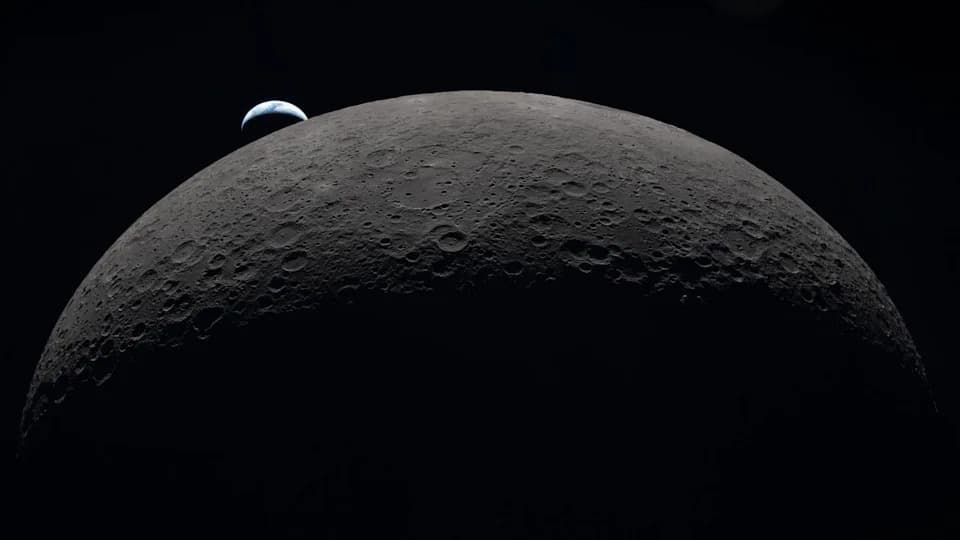
NWA 12593, a rare lunar meteorite found in northwest Africa, contains evidence that a massive impact melted parts of the Moon about 3.5 billion years ago. Radiometric dating ties the event to the epoch when Earth’s earliest fossil signs of life appear. Traces of cubic zirconia and its recrystallized products indicate extreme temperatures during the collision. The timing aligns with contemporaneous impacts on Earth and asteroid Vesta, giving a rare cross-body view of ancient bombardment.
3.5-Billion-Year-Old Impact Melted the Moon’s Surface, Rare Meteorite Reveals
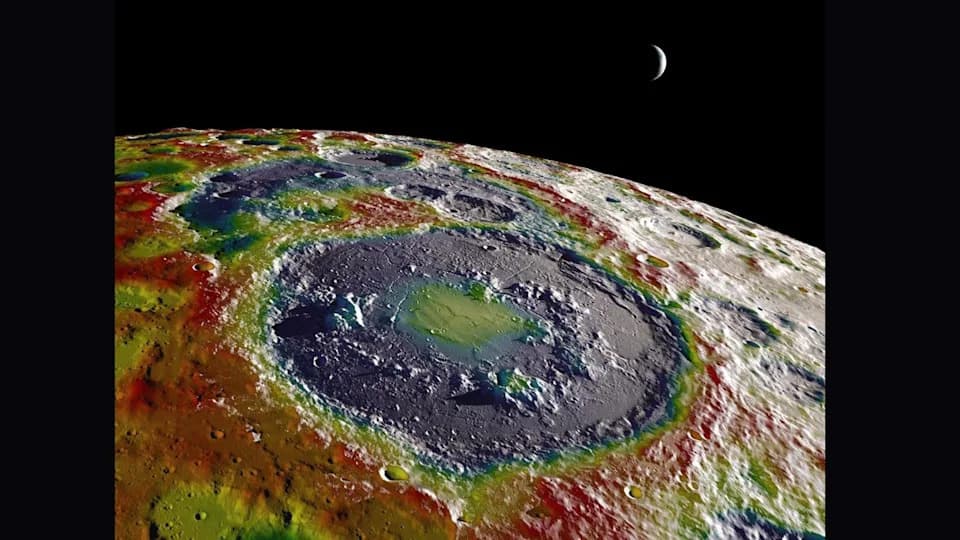
A gravity map of the moon showing large impact craters in purple. | Credit: NASA Goddard
A rare lunar meteorite recovered in northwest Africa preserves clear evidence that a giant impact melted part of the Moon about 3.5 billion years ago, researchers report. The specimen, designated NWA 12593, carries a record of three distinct collisions; the new study, published in the journal Geology, focuses on the earliest and most energetic of these events.
What the Rock Reveals
Using radiometric dating of minerals in the sample, the research team determined the first impact occurred roughly 3.5 billion years ago — about a billion years after the solar system formed. That timing overlaps with the period when Earth’s earliest fossil traces of life appear, making it useful context for evaluating how bombardment may have affected conditions on the young Earth.
High Temperatures, Clear Fingerprints
Crucially, the meteorite contains traces of cubic zirconia — a high-temperature form of zirconium dioxide (ZrO2) that forms only under extreme heat. Because the modern lunar surface is cold, intact cubic zirconia would not persist there for long. Instead, the team identified recrystallized products and chemical signatures that point to an original phase produced by intense melting during the impact. Those markers act as a forensic fingerprint for the temperatures reached in the event.
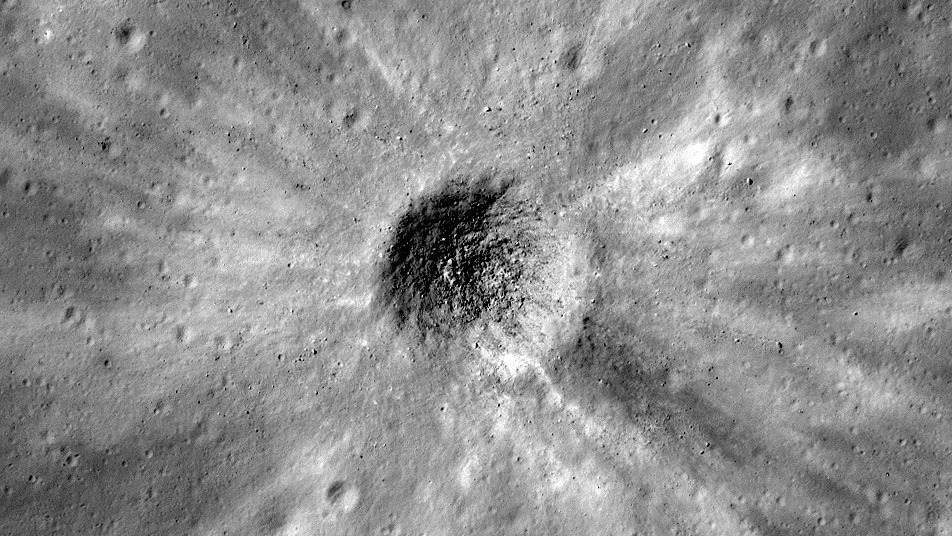
A large lunar impact crater snapped by NASA’s Lunar Reconnaissance Orbiter. | Credit: NASA/GSFC/Arizona State University
'The fossil record on Earth starts to appear near 3.5 billion years ago, which means life was getting established before then,' said lead author Carolyn Crow, a planetary scientist at the University of Colorado Boulder. 'We want to know what the impact environment looked like while life was taking hold — the frequency and scale of these catastrophic events matters for that story.'
Context Across the Inner Solar System
Independent studies have identified similarly timed, large impacts on Earth and on the large asteroid Vesta. Finding matching evidence of major collisions on multiple bodies at the same epoch is uncommon because billions of years of erosion, melting and space weathering typically erase or obscure such records.
The meteorite also preserves evidence of two later events: a breccia-forming melting episode following the primary collision, and a final impact that launched the rock from the lunar surface onto a trajectory that eventually delivered it to Earth.
Why This Matters
Putting these pieces together helps scientists reconstruct the bombardment history of the inner solar system and how the population of impactors evolved around the time life was emerging on Earth. The new findings point to a particularly energetic episode of collisions roughly 3.5 billion years ago and offer a rare, well-preserved snapshot of that ancient turmoil.
Help us improve.