The article argues that a bloc of "homeless Right" voters — veterans and national-religious Israelis frustrated by the haredi draft exemption — could decide Israel’s next election. Polling shows many former Likud voters are uncommitted but unlikely to shift further right; roughly 60% oppose preserving the exemption. With parliamentary blocs stuck near 50 and 60 seats, a small, non-aligned right-wing party of around six seats could act as kingmaker. The main obstacle is a fragmented supply of potential founders unwilling to move first.
The Homeless Right: Disaffected Veterans Who Could Decide Israel’s Next Election
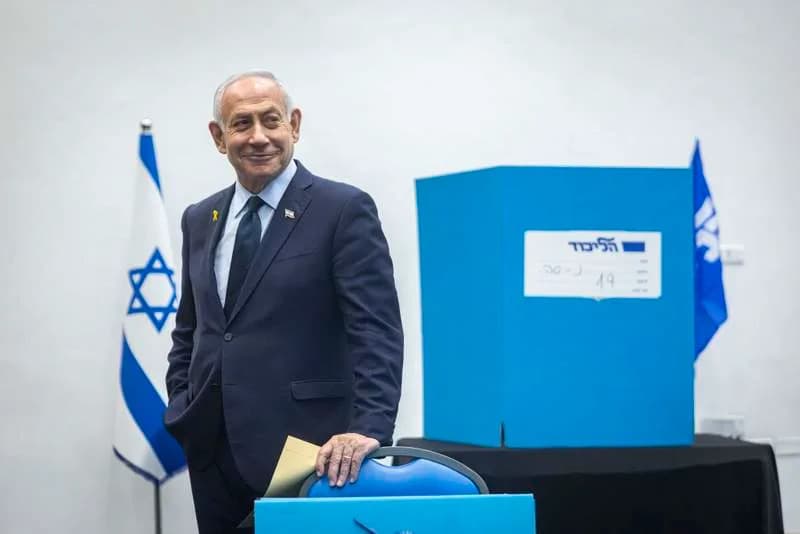
Prime Minister Benjamin Netanyahu and his wife Sara cast their vote during the elections for the Likud Central Committee, at the International Convention Center in Jerusalem, November 25, 2025 (photo credit: CHAIM GOLDBERG/FLASH90)
They served. They have grown tired of waiting. And their votes could determine who forms Israel’s next government.
I keep meeting a particular voter. He served in the army, or his son did, or both did. He has voted Right his whole life and believes that Torah and the rifle belong together — the ethos hesder yeshivot (programs that combine advanced Talmud study with military service) have embodied for two generations. Yet he feels unrepresented by any existing party.
A Right-Wing Voter Left Without a Home
He will not vote Likud because, in his view, the party he trusted spent this Knesset shielding the haredi (ultra-Orthodox) draft exemption to keep its coalition intact. He will not back Bezalel Smotrich, who made a career on the national-religious service ethos and then allowed his faction to promote a Basic Law on Torah study that preserves the exemption. He rejects Naftali Bennett’s Beyachad (“Together”) because Bennett bundled the draft issue with Yair Lapid — a combination this voter finds unacceptable.
Too Right to join the opposition, too betrayed to stay with the coalition, and too principled to embrace the far Right — call him the “homeless Right.” Polling suggests this bloc could equal at least six Knesset seats, and its voters, not slogans, may decide the next election.
What The Polls Say
The numbers are concrete. A Channel 12 poll this spring found that 42% of Likud’s 2022 voters are no longer firmly committed to the party, and only 58% say they will definitely vote for it again. The natural expectation is that they would drift further Right toward figures such as Smotrich or Itamar Ben-Gvir. That is not happening: only 4% of those former Likud voters say they would move further right. The exit is real, and it does not lead where the coalition assumes.
What unites these voters is one conviction the current political market refuses to sell: roughly 60% of Israelis — veterans and first-time voters alike — say they will not support a party that preserves the present haredi draft exemption. For national-religious communities, this is not abstract policy; it is a matter of life and death. Their neighborhoods served and buried more sons than parts of the yeshiva world. Their patience has run out, and no existing party matches their conviction in both word and deed.
An illustration of an Israeli voting at the ballot box. (credit: Niyazz/Shutterstock)
Why They Are Decisive
The arithmetic is stark. For months the blocs have been frozen: the coalition hovers near 50 seats and the Zionist opposition around 60, with neither side reaching the 61-seat threshold needed to govern. In a deadlocked parliament, the homeless seats are the only floating votes left. They will determine whether the Right can reassemble a majority or whether the stalemate hardens into further paralysis.
Their leverage extends beyond election night. Emerging right-wing efforts courting these voters share a common feature: a refusal to pre-commit to either camp. A small party of roughly six seats that pledges to commit to no one in advance can act as kingmaker in a 50-versus-60 Knesset. That is not rhetorical flourish; it is concrete bargaining power.
The Missing Party
Where is that party? That is the gap polls cannot capture. Demand is clear; supply is fragmented. Individuals and groups are weighing runs — some already named in the press, many moving quietly — and many potential founders are waiting to see how Benjamin Netanyahu and Likud position themselves before stepping forward. The homeless Right is not waiting for a platform; it is waiting for a founder. Prospective leaders, in turn, are waiting on one another and on the political signal from the prime minister. Demand is certain; supply remains contingent.
Conviction has outrun behavior — voters have told pollsters what they believe but for now have parked their support with parties they feel betrayed them. The home has not been built.
What Could Break The Logjam
Vacuum under this much pressure rarely stays empty. The first credible entrant who is authentically Right-wing, free of extremists, not allied with Lapid, and willing to make haredi enlistment the central campaign issue rather than a talking point is likely to clear the field. That prospect helps explain why potential founders are reluctant to move first: the risk of failure is high, and the reward for getting it right is enormous.
The coalition is betting these voters will come home out of habit or fear. The opposition is betting it can woo them via Beyachad. Both misread the voter I keep meeting. He is not undecided — he is unrepresented. The party that recognizes that distinction will hold the balance of power.
Bottom line: The homeless Right is a small but potent bloc whose demands center on ending the haredi draft exemption. If a credible, uncompromised right-wing party captures these voters, it could become the kingmaker in an otherwise deadlocked Knesset.
Help us improve.