Sara Wahedi witnessed a Taliban execution as a child and has since become an Oxford-educated technologist and activist. She co-founded Ehtesab, which sent more than 250,000 near-real-time security alerts from 2020–2024 and helped evacuate vulnerable people during Kabul’s fall on August 15, 2021. After Ehtesab closed in November 2024 due to escalating risks and restrictions on women, she founded Civaam AI to build covert digital tools that support healthcare, education and women’s networks inside Afghanistan.
I Saw a Taliban Execution as a Child — Now I’m Their Worst Nightmare: Sara Wahedi’s Fight for Afghan Women
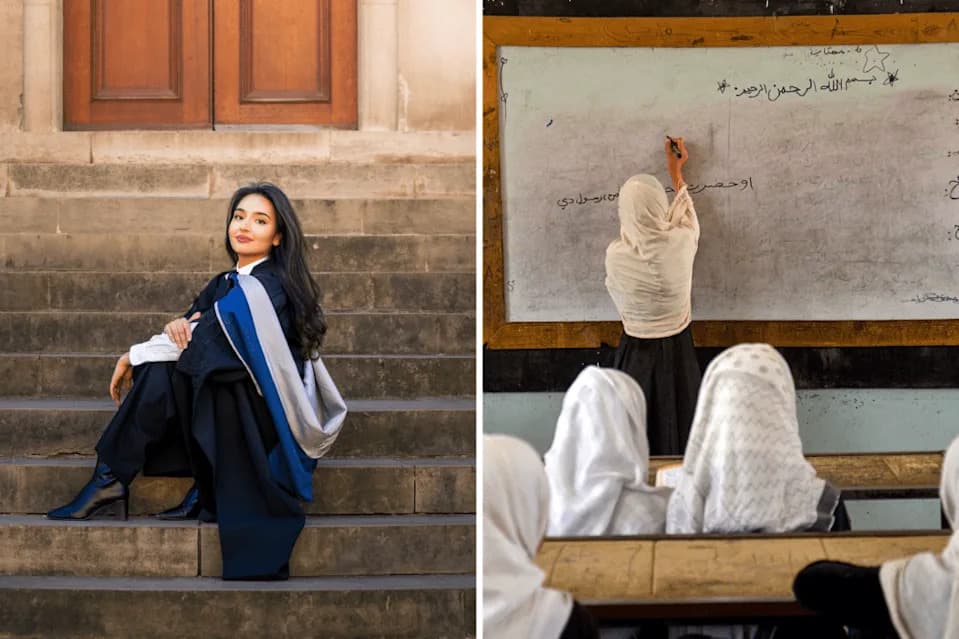
Sara Wahedi (L) graduates from Oxford University; and a small group of Afghan girls (R) at an elementary school in Kandahar on September 7, 2025.
The first image that shaped Sara Wahedi’s view of the Taliban was a woman being shot dead in a football stadium. She was a child when she saw it, and the memory, she told Newsweek, felt like a nightmare — a horror from which there could be no return. Years later, Wahedi says that belief proved wrong: she survived, learned, and now fights back.
From Kabul to Columbia and Oxford
Now 30, Wahedi is an Oxford-educated lecturer, technologist, policy researcher and founder of two startups. Trained in Urban Studies and Data Science at Columbia University — where she graduated at the top of her class — she returned to Afghanistan determined to build tools that would keep citizens informed and safer.
Ehtesab: A Lifeline of Real-Time Information
Wahedi co-founded Ehtesab, a mobile app and web platform that, between 2020 and 2024, delivered more than 250,000 near-real-time security alerts to Afghans across the country. Her team collected reports on civic incidents and tracked security trends, creating a critical information lifeline for people across Afghanistan.
"I truly feel that educated women are the Taliban’s worst nightmare," she said. "An educated female population is incompatible with Taliban rule."
Kabul’s Fall and Evacuations
As the Taliban advanced on Kabul in August 2021, many official information channels went dark. In the hours before the city fell — officially on August 15, 2021 — Ehtesab became, for many Afghans, the only accessible source of real-time information. The platform also helped coordinate and facilitate evacuations for vulnerable people, including women judges, activists, students, journalists, embassy staff, the elderly and the disabled.
A Deliberate Strategy to Silence Women
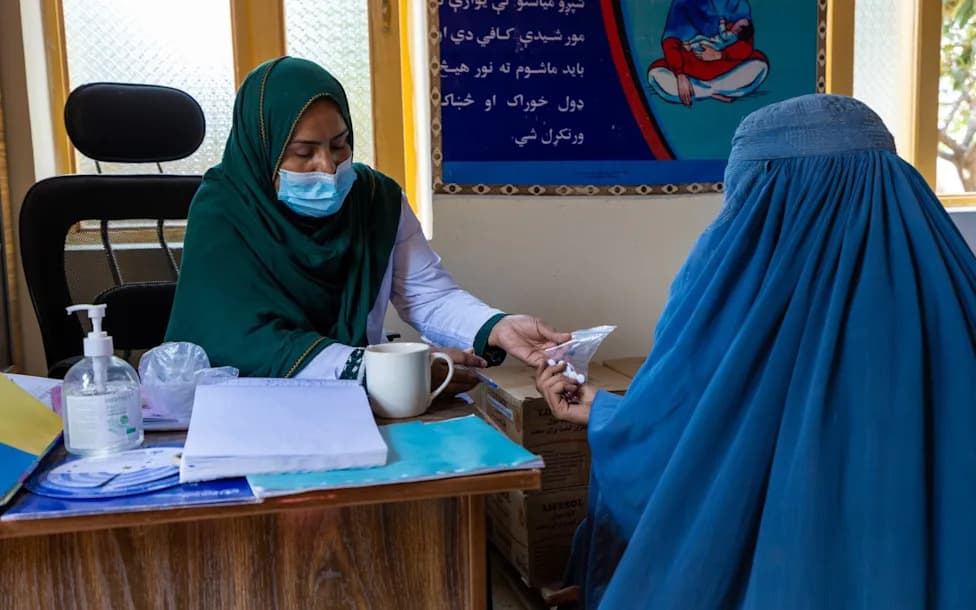
Since the collapse of the previous government, restrictions on Afghan women and girls have steadily increased. Girls were banned from secondary school soon after the takeover, and universities were closed to women in December 2022. A 2024 law further restricted women’s voices by prohibiting women from speaking on radio and effectively barring them from many public speaking roles. Today, more than 2.2 million girls remain locked out of education — a sharp reversal from the gains made between 2001 and 2021.
Wahedi argues these measures are not random but strategic: by preventing women from gaining education and public visibility, the Taliban limits the emergence of a population that might challenge its rule. She has also criticized the international community for failing to secure meaningful diplomatic outcomes that protect Afghan women and girls.
From Ehtesab to Civaam AI
Ehtesab operated until November 2024, when increasing restrictions on female staff and escalating risks made continued operation impossible. Instead of withdrawing, Wahedi launched Civaam AI, a policy and technology organization that develops covert digital tools for communities in crisis. Civaam AI focuses on mapping healthcare access, supporting clandestine education programs, and enabling women's networks inside Afghanistan, and it explores how AI can be deployed responsibly in conflict settings.
Because of the covert nature of this work, Wahedi cannot disclose specific projects without endangering participants. Still, she stresses that resistance continues: hundreds, if not thousands, of Afghan girls and women have found ways to complete their schooling through phones, radio and informal networks.
What This Means
Sara Wahedi’s journey — from a child who witnessed brutality to an Oxford graduate using data and technology to protect her community — is a vivid example of how education and digital tools can become forms of resistance. Her work underscores both the human cost of the Taliban’s policies and the creativity of those who refuse to be silenced.
Note: All facts in this piece reflect published reporting and Wahedi’s own public statements. Specific operational details of ongoing covert projects are withheld for safety reasons.
Help us improve.