A Current Biology study reconstructs the evolutionary history of all living millipedes and estimates their origin at about 460 million years ago — roughly 35 million years earlier than the oldest known fossils. Researchers sequenced hundreds of genes across 82 species, added data from 29 fossils, and successfully placed two elusive groups (Siphoniulida and Siphonocryptida) in the millipede tree. The work also traces the evolution of chemical defenses to about 260 million years ago and highlights that many species remain undiscovered.
Study Rewrites Land-Animal Timeline: Millipedes Originated About 460 Million Years Ago
A new study in Current Biology reconstructs the first comprehensive evolutionary history of all living millipedes and pushes their origin back to about 460 million years ago — tens of millions of years earlier than previously thought. These early arthropods helped prepare terrestrial environments for later life and were among the first animals to evolve chemical defenses.
Filling a Century-Old Gap
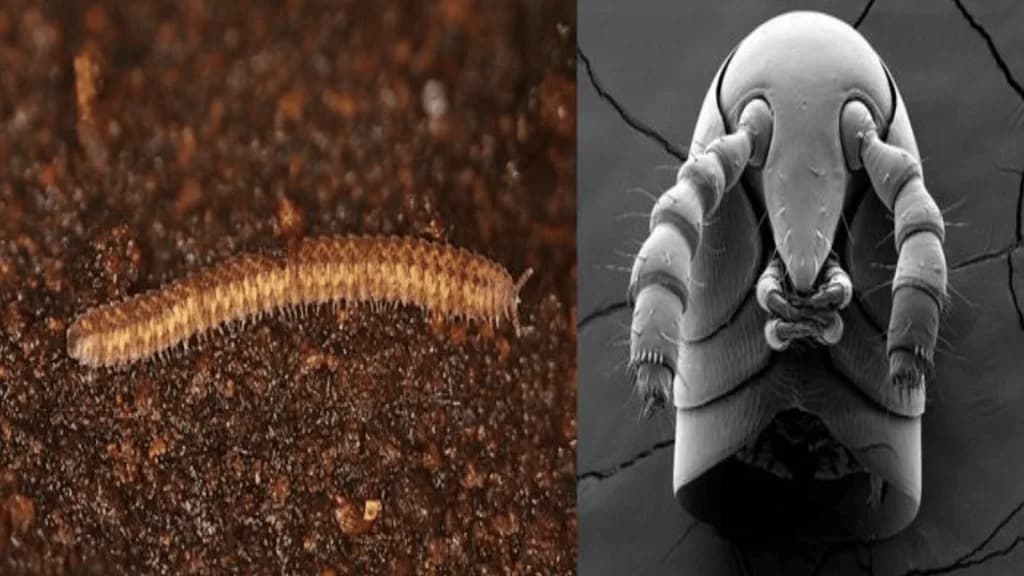
For more than a century, two obscure millipede groups — Siphoniulida and Siphonocryptida — eluded confident placement in the millipede family tree because no DNA data were available. One group lives largely underground, while the other is restricted to a few remote locations, making specimens extremely hard to find.
To solve the mystery, researchers traveled to Los Tuxtlas in Mexico and the Canary Islands to collect Siphoniulus neotropicus and Hirudicryptus canariensis. "It took 10 people over a week to find one tiny 10-millimeter adult," said Luisa "Fernanda" Vasquez-Valverde, the paper's first author. "Finding them in the field was hard because we were just seeing this little white nematode. We didn’t know for sure it was a millipede until we looked under the microscope."
How the Age Was Determined
The team sequenced hundreds of genes across 82 millipede species and combined that molecular dataset with age constraints from 29 well-dated fossils. Integrating genetic and paleontological evidence allowed the researchers to estimate divergence times across the millipede tree of life.
The results suggest millipedes may have originated nearly 460 million years ago — roughly 35 million years earlier than the oldest known millipede fossils and substantially earlier than many previous estimates. The placement of Siphoniulida and Siphonocryptida is now resolved: Siphonocryptida falls within an existing lineage rather than forming a separate order, and Siphoniulida has been placed among its closest relatives in the tree.
Key Innovation: Chemical Defenses
The reconstructed family tree also highlights a major evolutionary innovation: the origin of chemical defenses. The authors trace the earliest millipede secretions to about 260 million years ago, making them among the first animals to evolve chemical weaponry on land.
Why This Matters
Millipedes are critical detritivores: they break down decaying plant material and recycle nutrients, shaping early soil ecosystems and paving the way for later terrestrial life, including vertebrates. Paul Marek, the study’s lead investigator, noted: "Millipedes beat vertebrates onto land by more than 80 million years. They really set the stage for later life on land, including humans and vertebrates."
Although more than 14,000 millipede species have been described, experts estimate tens of thousands remain undiscovered — especially in understudied tropical and subterranean habitats. The authors emphasize that much remains to be learned about this ancient, ecologically important group.
"There is all this potential for discovery. It keeps me wondering what else we're going to find," the press release concluded.
Help us improve.