Monterrey turned the notorious Topo Chico prison site into Liberty Park, a family-friendly green space that opened in stages from 2021. The 76-year-old prison was dismantled in 2019 after a deadly riot that left about 49 people dead. Residents successfully opposed a 2023 proposal to build a hospital on the site and are pushing for the park to receive legal protected-area status. The transformation illustrates broader public-safety gains as Monterrey prepares to host four World Cup matches.
From Cartel Prison To Family Park: How Monterrey Reclaimed Topo Chico Ahead Of The World Cup
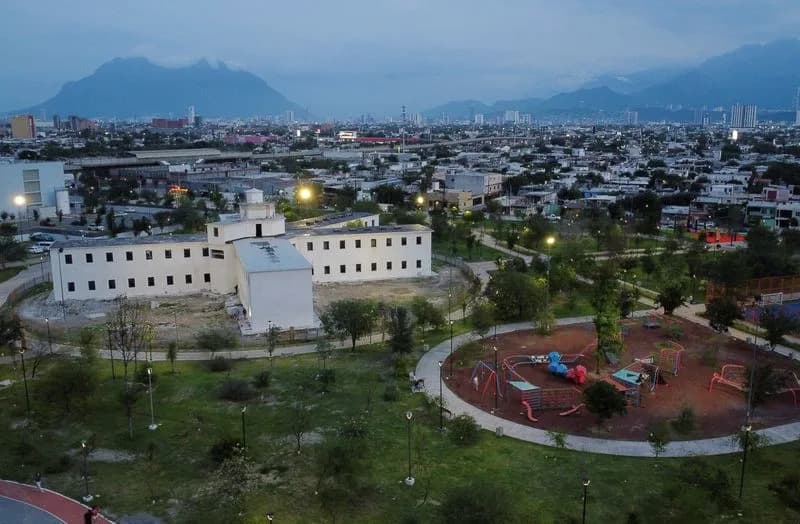
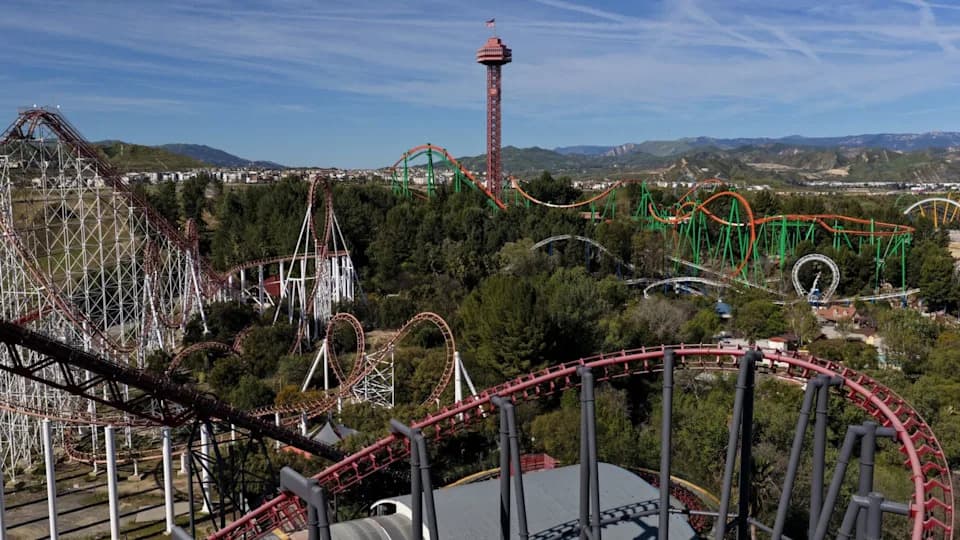
A drone view shows the Liberty Park, built on the former Topo Chico prison in Monterrey, where dozens died in a 2016 massacre, as residents celebrate renewed safety while pushing to preserve the transformed space, in Monterrey, Mexico, May 11, 2026. REUTERS/Daniel Becerril
MONTERREY, Mexico — A sunlit soccer pitch, children's laughter and evening joggers now fill a space that just over a decade ago was the scene of one of Mexico's bloodiest prison riots. The former Topo Chico penitentiary, where roughly 49 people were killed in a violent clash between rival cartels, has been transformed into Liberty Park — a symbol of Monterrey's efforts to rebuild public life and public safety.

Children play soccer in Liberty Park, built on the former Topo Chico prison in Monterrey, where dozens died in a 2016 massacre, as residents celebrate renewed safety while pushing to preserve the transformed space, in Monterrey, Mexico, May 12, 2026. REUTERS/Daniel Becerril
Officials dismantled the 76-year-old prison in 2019 and began converting the site into green space. The multi-stage project opened to the public in 2021 and received new playgrounds and a sports pitch ahead of the 2026 World Cup, for which Monterrey is slated to host four matches.
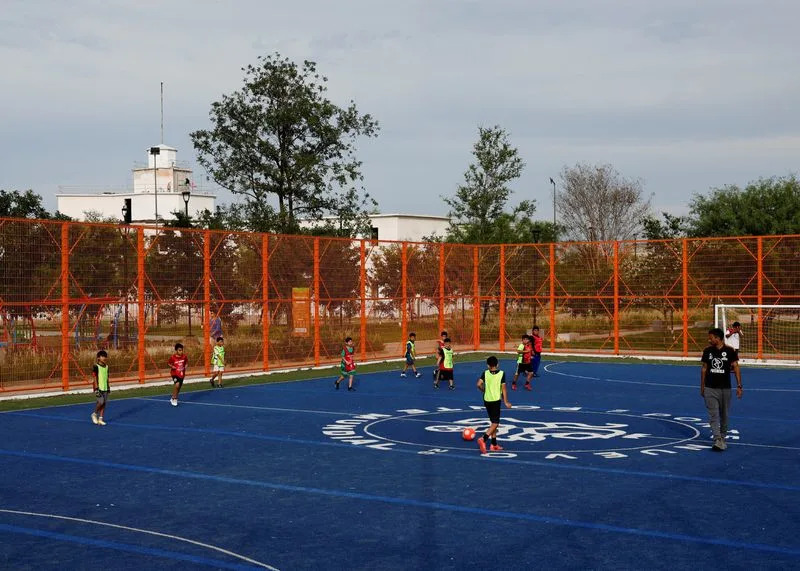
Children play soccer in Liberty Park, built on the former Topo Chico prison in Monterrey, where dozens died in a 2016 massacre, as residents celebrate renewed safety while pushing to preserve the transformed space, in Monterrey, Mexico, May 12, 2026. REUTERS/Daniel Becerril
From Fear To Recreation
Longtime residents recall hearing riots, explosions and helicopter patrols when the prison was active. Francisco Rodríguez Castillo, 66, who has lived nearby for decades, remembers running for cover during unrest. Today he jogs with a local group and watches children play outdoors well into the evening — a visible sign of change.
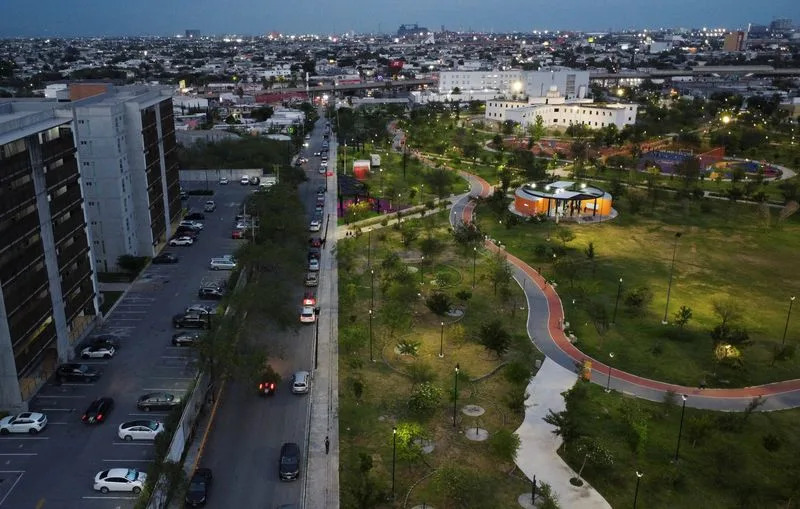
A drone view shows the Liberty Park, built on the former Topo Chico prison in Monterrey, where dozens died in a 2016 massacre, as residents celebrate renewed safety while pushing to preserve the transformed space, in Monterrey, Mexico, May 11, 2026. REUTERS/Daniel Becerril
Community Pushback Shaped The Site
When city authorities proposed building a children's hospital on the grounds in 2023, neighborhood activists, led by residents such as lawyer Gala Jazmín Rojas Cruz, organized protests and legal challenges that successfully preserved the park. The community then campaigned to secure legal protection for the area; state officials are finalizing a designation that would classify Liberty Park as a protected natural area.
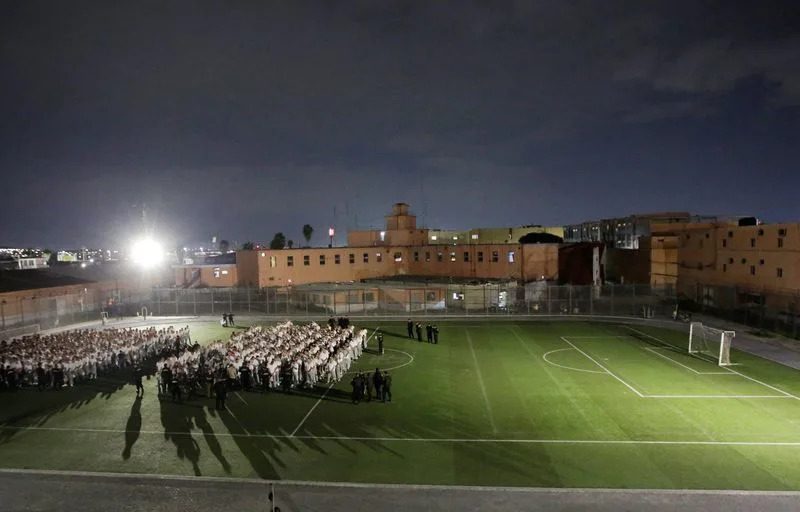
Inmates at Topo Chico Prison wait on a soccer field with their hands tied to be transferred to a new facility as part of the process of closing the prison and converting it into a public area, now known as Liberty Park, in Monterrey, Mexico, September 27, 2019. REUTERS/Daniel Becerril
"When I was a child, I had nowhere to play," Rojas Cruz said. "This park is our chance to reclaim public space for families."
While cartel violence continues to affect parts of Mexico — and has raised concerns in other host cities like Guadalajara — residents and visitors in Monterrey now cite traffic congestion and air pollution as their main World Cup worries. Local officials credit sustained investment in policing and economic development over the past 15 years for the city's improved safety record.
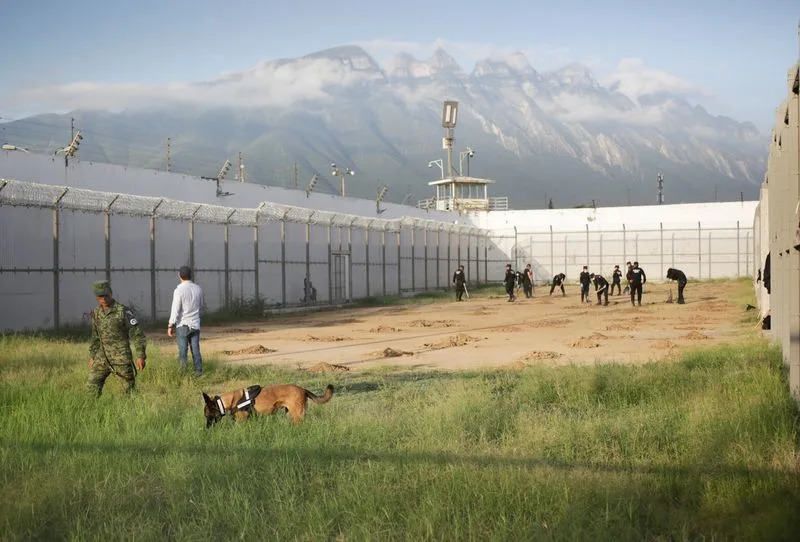
Mexican authorities take part in a search for mass graves inside the Topo Chico prison after being closed and before it was converted into Liberty Park, in Monterrey, Mexico October 8, 2019. REUTERS/Daniel Becerril
Reporting: Laura Gottesdiener and Daniel Becerril in Monterrey. Editing: Rosalba O'Brien.
Help us improve.