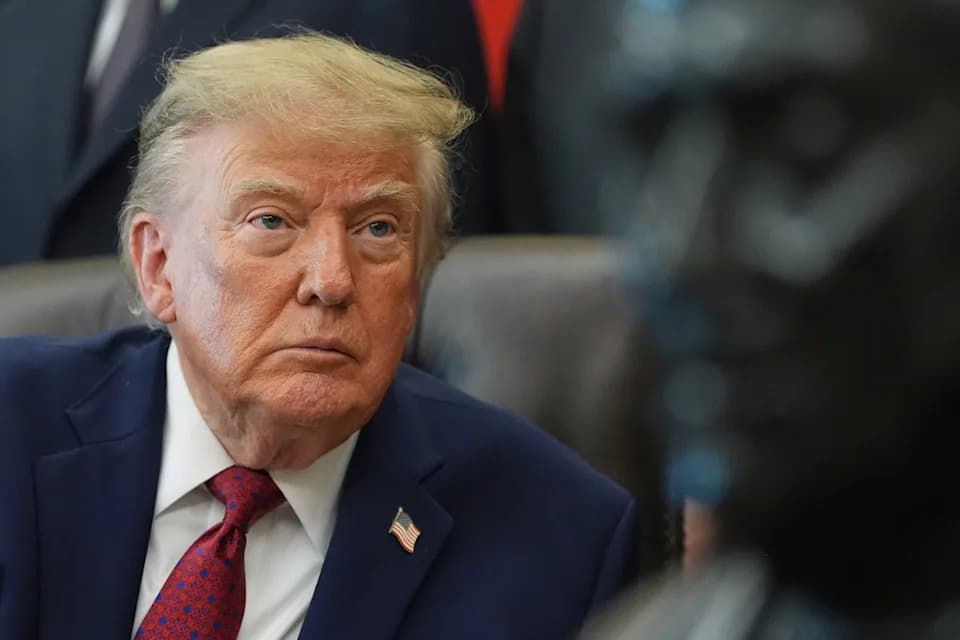
President Trump told NBC’s Meet the Press that the U.S. is pursuing a binding diplomatic deal to halt Iran’s nuclear program but is prepared to resume harsh military action if talks fail. He said Washington is “very close to a deal,” warned the diplomatic window is narrow, and insisted sanctions relief would be conditional on Iranian compliance. The interview reviewed the 100-day conflict timeline — including a 56-day U.S. naval blockade, airstrikes, a fragile May ceasefire — and cited casualty figures: 13 Americans and more than 7,000 dead regionwide, per Al Jazeera.
Trump: 'Negotiation — Or We'll Blow the Hell Out of Them' — 100 Days Into U.S.-Iran Conflict
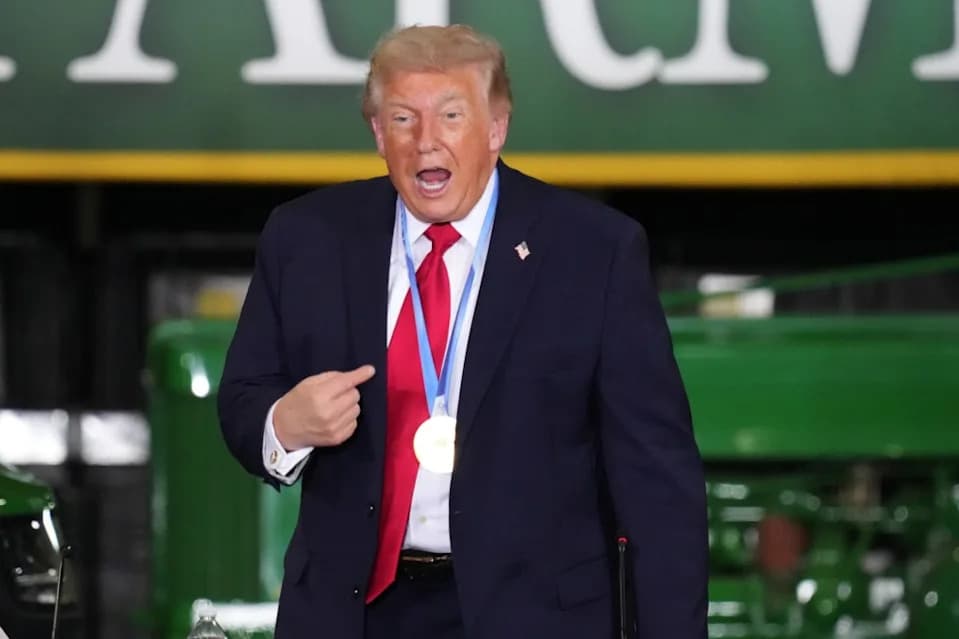
President Donald Trump wears a gold medal from Olympic speedskater Jordan Stolz at Custer Farms in Chippewa Falls, Wisconsin, on June 5. (AP Photo/Glen Stubbe)
President Donald Trump told NBC’s Meet the Press that the United States is pursuing an urgent diplomatic agreement to halt Iran’s nuclear program but is prepared to resume harsh military operations if talks fail. Speaking to Kristen Welker in an interview taped Friday and broadcast Sunday to mark the 100th day of the conflict, Trump described a two-track strategy of intense diplomacy backed by the credible threat of overwhelming force.
Trump said Washington is “very close to a deal” with Iranian leaders but repeatedly warned that, should negotiations stall, military action would remain an option. He framed the choice bluntly:
“I’m going to do it either through negotiation or I’m going to blow the hell out of them, to be honest with you. That’s actually the easier path.”
The president defended the administration’s handling of the confrontation, calling it limited in scope and rejecting comparisons to past prolonged wars. “I don’t like these endless wars. This is not an endless war,” he said, noting U.S. involvement has lasted roughly three months. He added that the administration’s threshold for resuming offensive operations would be a clear lack of diplomatic momentum: “My red line would be if I think I wasn’t going to make a deal, or if I wasn’t going to make a deal fast enough.”
What Trump Says a Deal Must Include
Trump insisted any agreement must go beyond previous accords — including the 2015 Joint Comprehensive Plan of Action — by closing perceived loopholes. He said the deal must prevent Iran from developing or acquiring nuclear weapons by any means. Economic incentives such as sanctions relief or the unfreezing of Iranian assets, he said, would be conditional and only provided after Iran complied: “If they behave, if they do a good job, we start talking.”
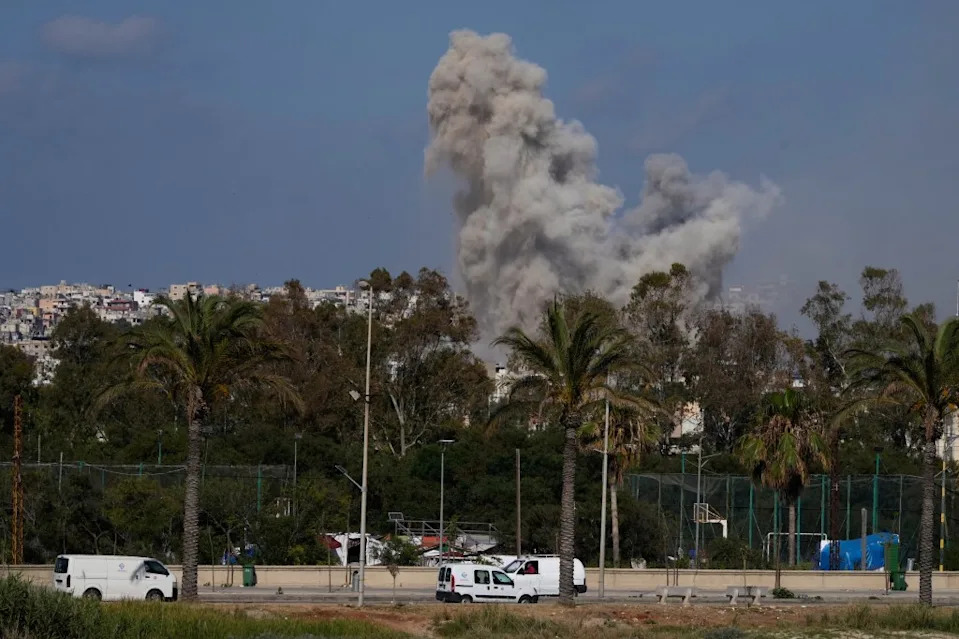
Smoke rises from an Israeli airstrike that hit Burj al-Shamali village near the southern port city of Tyre, Lebanon, on June 2. (AP Photo/Mohammed Zaatari)
As a potential enforcement mechanism, Trump suggested U.S. personnel and technical teams could be deployed to Iran to oversee the removal and destruction of highly enriched uranium — a substance he referred to as “nuclear dust.”
Diplomacy and Tehran’s Position
Iran’s Foreign Ministry spokesman Esmail Baghaei told state media that the negotiations are focused on ending the war and that Tehran is not discussing nuclear details at this stage. Iranian officials continue to assert an inalienable right to nuclear technology and describe their program as peaceful.
Still, Trump said he is cautiously optimistic about the current Iranian interlocutors, calling them “more rational” than previous leaders while warning the diplomatic window is narrow: “They cannot have a nuclear weapon. Either we’re going to have something done fairly quickly, or we’ll finish it out militarily.”
Timeline Of The Conflict (Key Events)
Feb. 28: After Iranian-backed attacks on U.S. positions in Iraq and Syria, U.S. and Israeli forces carried out coordinated strikes on Iranian missile sites, drone hubs and Islamic Revolutionary Guard Corps command centers. Iran responded with ballistic missiles against American bases and mobilized naval forces near the Strait of Hormuz.
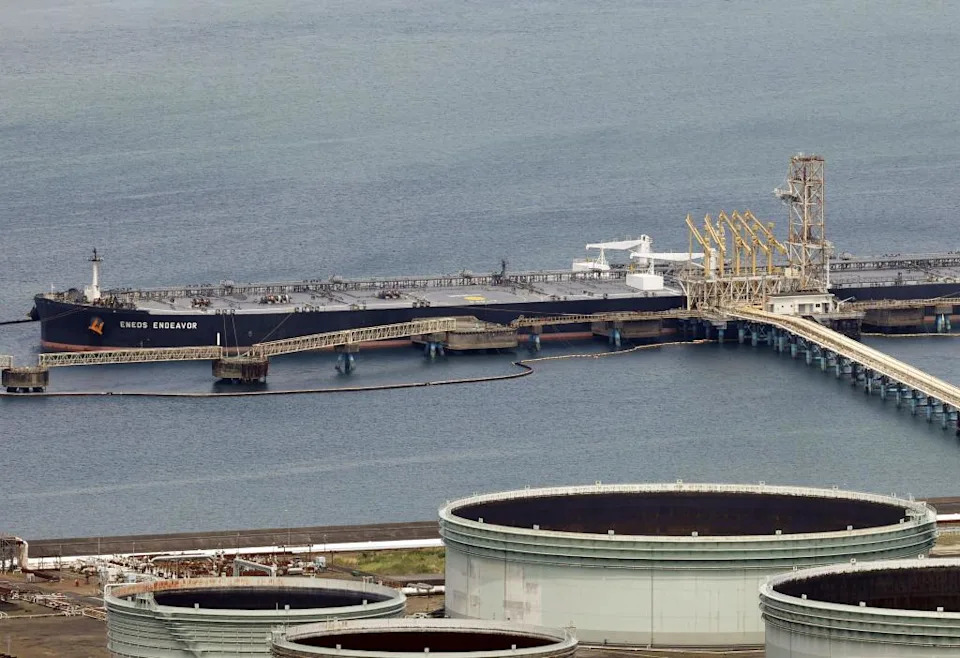
Photo taken on June 3 shows the Eneos Endeavor, an oil tanker operated by Eneos Corp., arriving at the oil distributor’s Kiire crude oil reserve terminal in Kagoshima, Japan. It’s the second oil tanker to arrive in Japan via the Strait of Hormuz since the Iran war erupted in late February. (Kyodo via AP Images) ==Kyodo
Early March (Naval and Cyber Warfare): The U.S. intensified strikes against Iranian air defenses and logistics hubs. Naval clashes increased in the Persian Gulf as U.S. destroyers intercepted fast-attack boats; U.S. Cyber Command said it disrupted Iranian radar and missile-tracking networks, prompting commercial shippers to reroute tankers and driving up insurance costs.
Mid-March to April (Maximum Mobilization): The Pentagon deployed additional carrier strike groups. Following maritime interdictions aimed at choking off weapons shipments, Iran fired anti-ship missiles and briefly closed the Strait of Hormuz. The U.S. launched its largest wave of airstrikes to date, targeting missile factories and naval bases, and sent thousands more troops to bolster regional air defenses as Congress pressed the administration for a long-term plan amid War Powers Act deadlines.
May (The Pause): Near-daily naval encounters and rising civilian casualties preceded a fragile ceasefire brokered by Pakistan, producing the first sustained lull and opening space for indirect diplomacy.
As of June 7, the conflict reached its 100th day and the U.S. naval blockade had been in place for 56 days. Trump said 13 Americans have been killed in the fighting — a toll he called “too many” but far smaller than in some past wars. Reporting from Al Jazeera cited a much larger regional death toll, saying more than 7,000 people have died across countries including Jordan, Iran, Kuwait, Lebanon and Qatar.
Outlook
Trump framed the current moment as a narrow diplomatic window: a deal must prevent Iran from developing or obtaining nuclear weapons, and incentives will be contingent on compliance. If diplomacy falters, the administration says it is ready to use force to achieve its objectives.
Sources: Interview broadcast on NBC’s Meet the Press; reporting by Al Jazeera and official U.S. statements cited in the interview.
Help us improve.