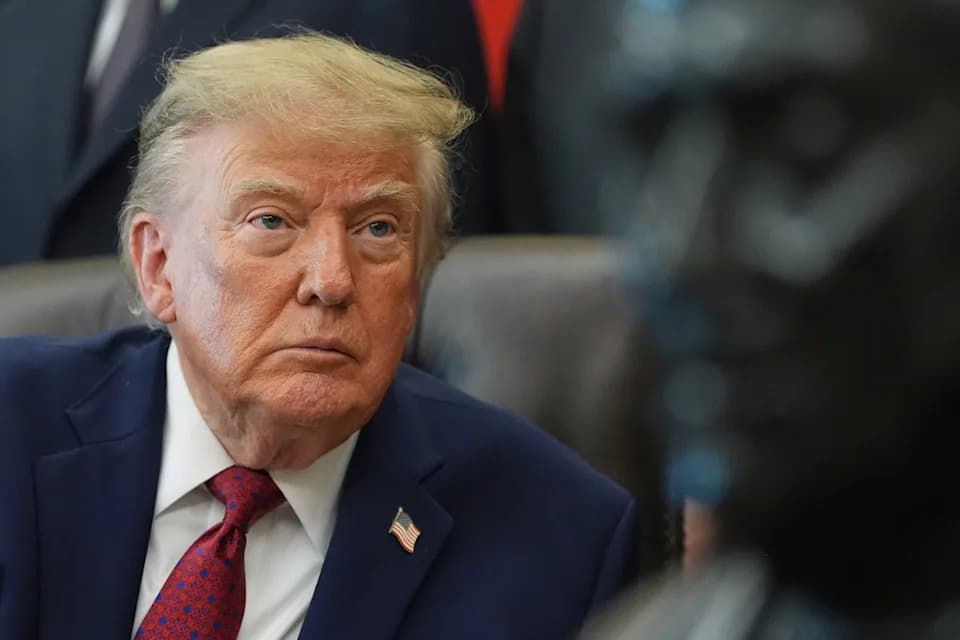
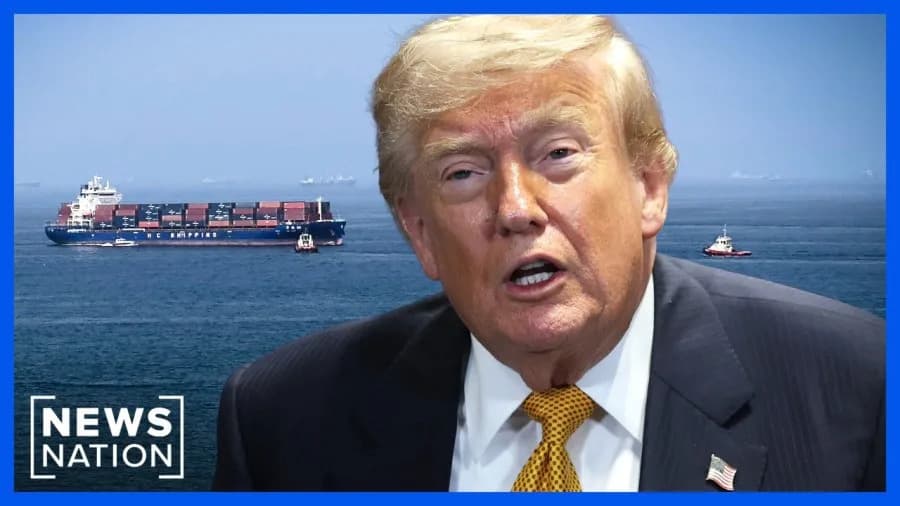
President Trump says the U.S. and Iran are "very close" to a deal to end a three-month conflict, claiming Tehran has agreed in principle to abandon a nuclear weapons program. His remarks contrast with Iranian reports that back-channel talks were suspended and threats to close the Strait of Hormuz. Key unresolved issues include sanctions relief, the fate of enriched uranium stockpiles, and whether U.S. naval measures would end alongside any reopening of the strait.
Trump: U.S. and Iran "Very Close" to a Deal — Major Gaps Still Remain
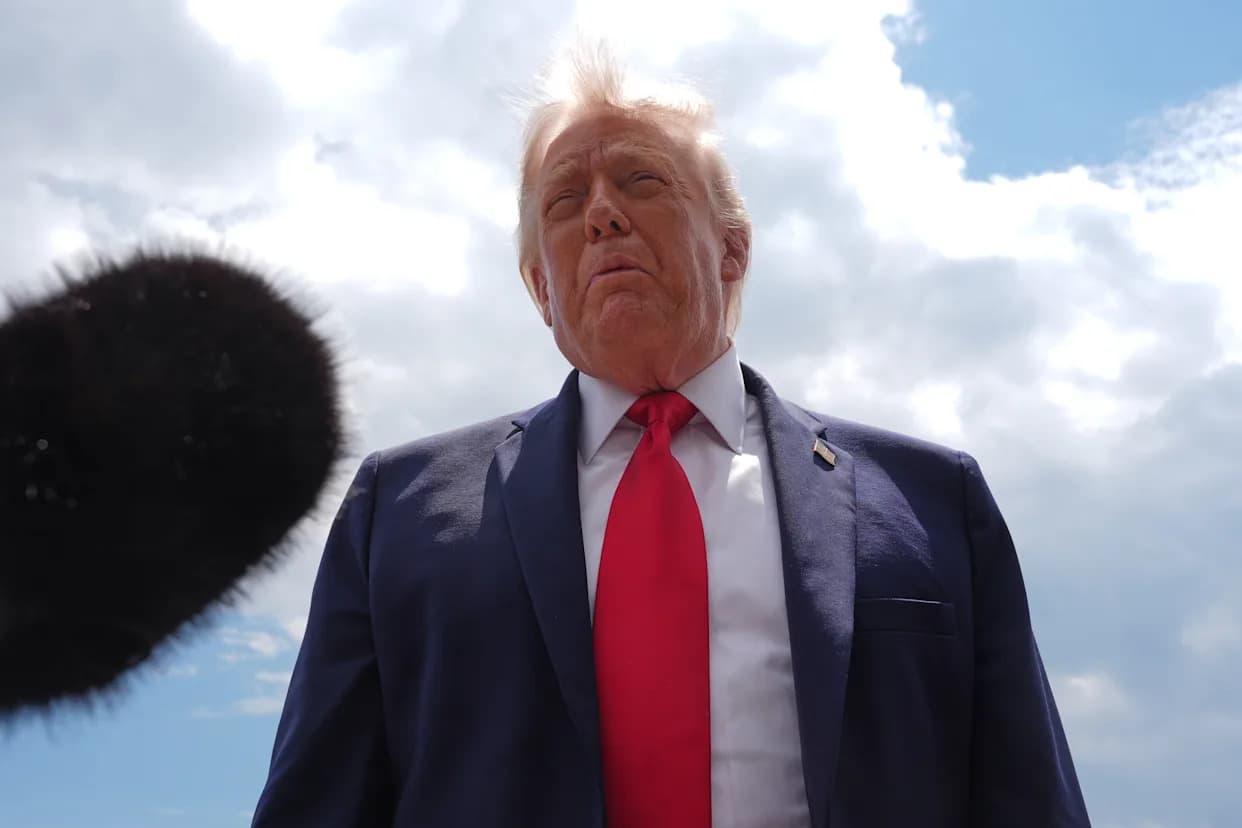
President Trump talks with reporters after arriving on Air Force One at Chippewa Valley Regional Airport in Eau Claire, Wis.(Mark Schiefelbein/AP)
President Donald Trump told NBC's Meet the Press that the United States and Iran are "very close" to a deal to end their three-month conflict, and that Tehran had, in principle, agreed to forgo pursuit of a nuclear weapon.
Trump's comments came despite public signals from Tehran earlier in the week that suggested talks were stalling. Iran's state-affiliated Tasnim News Agency reported that Tehran had suspended back-channel exchanges with Washington, accusing the U.S. of continuing ceasefire violations. Iranian officials also warned they might fully close the Strait of Hormuz — a strategic chokepoint that handles roughly one-fifth of the world's oil shipments — and Foreign Minister Abbas Araghchi said U.S. bases used in strikes could be regarded as legitimate targets.
In the interview, Trump characterized the remaining differences as "limited but substantive." He said he was pressing to expand the deal language so Iran would be barred not only from developing a nuclear weapon but also from acquiring one from another source. Trump added that the U.S. would help dismantle Iran's stockpile of highly enriched uranium if a final agreement were reached: "If we make a deal that now we're friendly, we'll all go together. It'll be our equipment. We'll take it out and destroy it, whether it's on-site or whether we take it off-site," he said, adding that without a deal the U.S. might act militarily "very harshly."
Sticking Points
U.S. officials and reporters say negotiators remain deadlocked on several key issues: the scale and timing of sanctions relief for Tehran, the disposition of Iran's existing enriched-uranium stockpile, and whether a U.S. naval blockade would end at the same time Iran reopens the Strait of Hormuz. Public descriptions of the framework suggest a 60-day extension of the ceasefire and the start of formal talks on Iran's nuclear program, but details are unresolved.
Domestic and Regional Political Reactions
The White House is also navigating pushback from Republican lawmakers. Senators Ted Cruz, Lindsey Graham, Roger Wicker and Thom Tillis have warned that the emerging terms could leave Iran strategically stronger than before the conflict. Trump defended keeping U.S. forces in the region as leverage: he said roughly 50,000 American troops remain deployed and argued it would be "foolhardy" to withdraw them before a deal.
Trump offered a personal assessment of Iran's reported new leader, Mojtaba Khamenei, calling him "younger" and "more rational" than his father and saying he understood Mojtaba to be "pretty badly injured" but still pursuing negotiations. When asked whether he knew the successor's exact whereabouts, Trump declined to specify: "There's a good probability that I do," he said.
Public Opinion And Closing Notes
Public sentiment about the conflict remains mixed. An Ipsos poll from mid-May found 52% of Americans said the U.S. military action in Iran has not been worth it, versus 23% who said it had been worth it. Trump taped the interview at a farm in Chippewa Falls, Wisconsin; NBC reported the session lasted about 50 minutes and ended after Trump grew visibly frustrated with questions about election interference and media criticism.
Bottom Line: Trump presented an optimistic timeline for a near-term deal, but major technical and political disagreements — both in Tehran and within the U.S. — leave the outcome uncertain.
Help us improve.