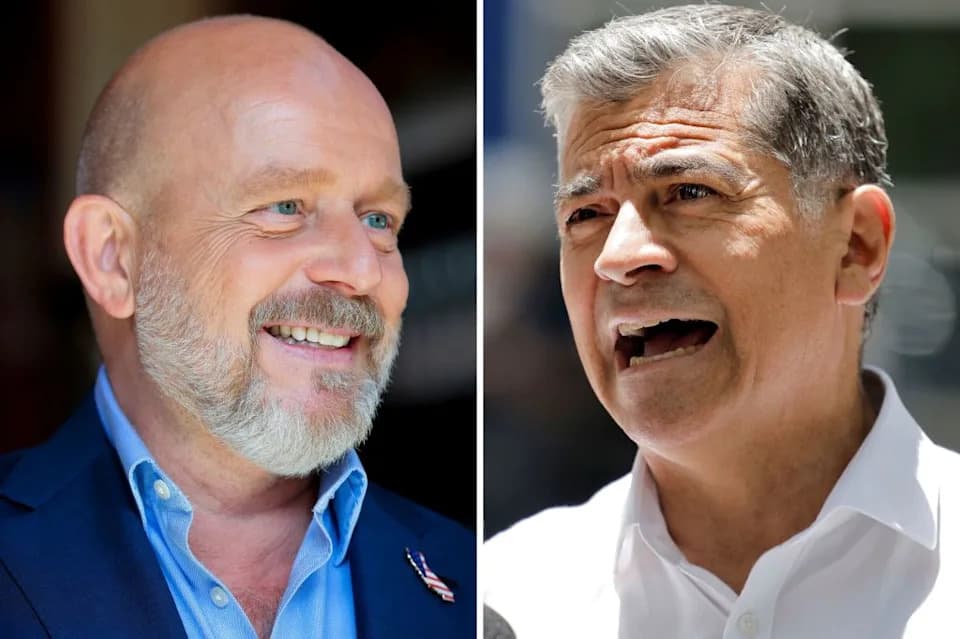
Xavier Becerra rebounded from a weak start—polling near 3% in late March—to secure a top-two finish in California’s governor primary. His surge followed Eric Swalwell’s withdrawal amid misconduct allegations, prompting many Democrats to consolidate around a familiar, experienced option. Becerra’s immigrant roots and working-class story helped him connect with Latino and centrist voters (37% Latino support in a recent poll). With about 3 million ballots still uncounted, the final November opponent—Steve Hilton or Tom Steyer—remains uncertain.
From 3% To The Top Two: How Xavier Becerra Staged A Comeback In California’s Governor Race
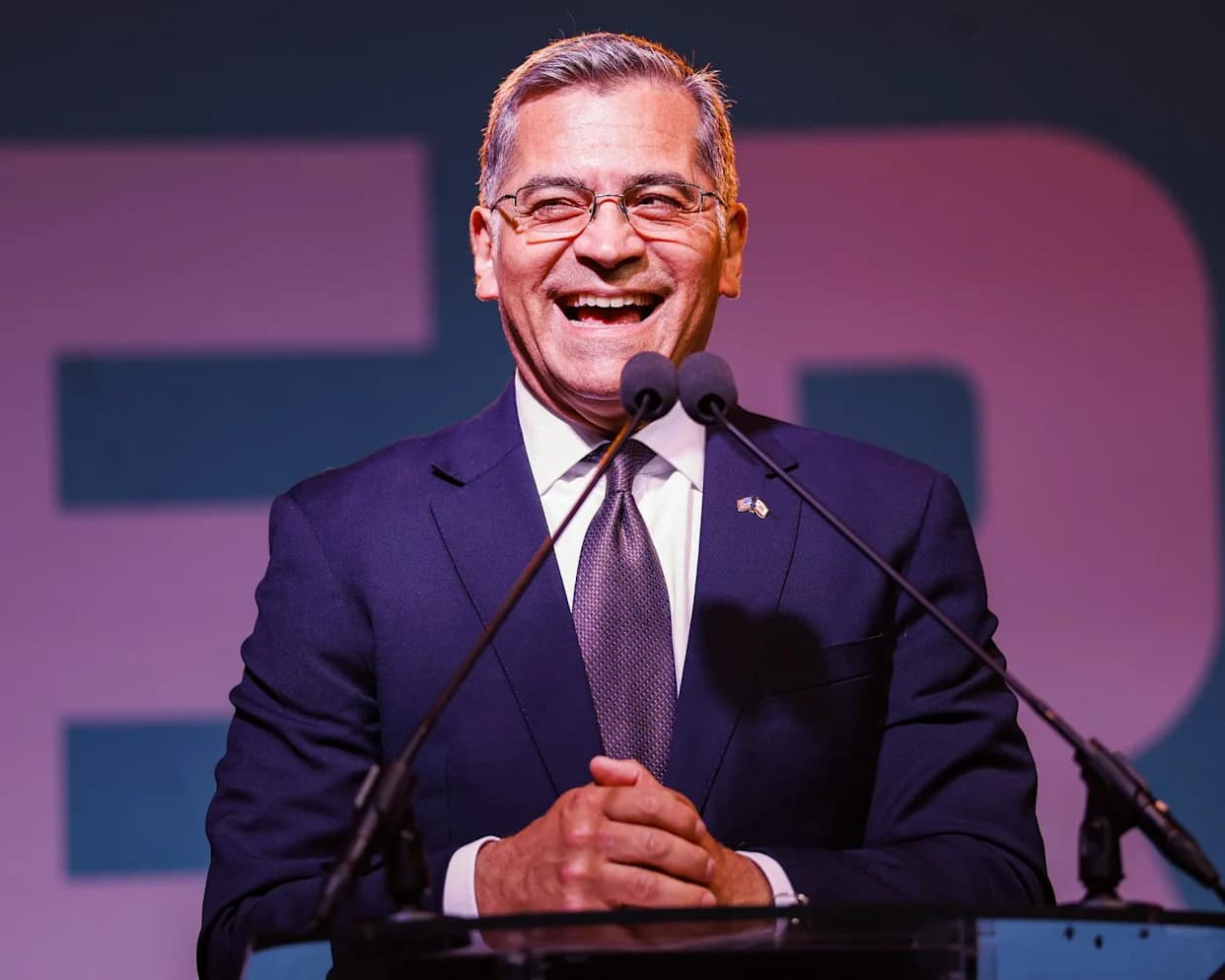
Xavier Becerra during his election-night party at La Plaza de Cultura y Artes in Los Angeles, on 2 June.Photograph: Chris Torres/EPA(Photograph: Chris Torres/EPA)
Xavier Becerra, the former Biden Cabinet official whose campaign for California governor began with little momentum, rebounded to secure a spot in the state’s general election in a striking political turnaround.
If elected in November, Becerra would be California’s first Latino governor since Romualdo Pacheco briefly held the office in 1875. Born in Sacramento to a Mexican immigrant family, Becerra rose from the state legislature to the U.S. House of Representatives (1993–2017), later serving as California attorney general and then as U.S. secretary of health and human services after his 2021 nomination by President Joe Biden.
Early Struggles in a Crowded Field
Despite long public-service credentials, Becerra stumbled at the start of the open race to replace term-limited Governor Gavin Newsom. By late March his polling hovered around 3%, placing him well behind other Democrats — then-Congressman Eric Swalwell, former Congresswoman Katie Porter and billionaire activist Tom Steyer — and two Republicans, Steve Hilton and Chad Bianco, in California’s nonpartisan primary.
With Donald Trump back in the White House, many Democrats gravitated toward combative, anti-establishment figures who echoed Governor Newsom’s aggressive tone. Becerra, a 68-year-old political veteran with a measured style, initially struggled to capture that mood. The crowded Democratic field also raised fears that a splintered vote could allow two Republicans to advance to the general election, prompting party leaders to urge weaker candidates to consider stepping aside.
The Turning Point
The dynamics shifted in April after sexual misconduct and assault allegations against Eric Swalwell prompted him to withdraw from the race. In the vacuum that followed, many Democratic voters who wanted a known, experienced alternative began to coalesce around Becerra.
“He had the résumé. He was known to voters. So, he was an alternative to turn to that made sense,” said Christian Grose, a political science professor at the University of Southern California. That consolidation, combined with concern about Democrats being shut out of the November ballot, helped propel Becerra upward in polls.
Appeal To Latino And Working-Class Voters
On the campaign trail, Becerra has frequently evoked his upbringing as the son of Mexican immigrants and connected that life story to contemporary debates over immigration and governance. While critics have attacked his record at the Department of Health and Human Services — particularly around care for migrant children — his background struck a chord with many Latino voters who found him relatable.
A pre-primary poll by professors at three California universities found about 37% of Latino voters supported Becerra; the next-most-supported candidates among Latino voters were Republican Chad Bianco (17%) and Steve Hilton (12%). Across communities, supporters pointed to his long public-service résumé and working-class roots — stories of construction work, East L.A. ties and steady political experience — as reasons to back him.
What Comes Next
California’s primary count remained slow, with roughly 3 million ballots still outstanding at the time of the primary projection. That left open whether Becerra would face Republican Steve Hilton or Democrat Tom Steyer in November’s general election.
“California, we’re just getting started. Let’s hit the ground running. Let’s go win this thing,” Becerra said after taking the lead in the primary tally.
As the count continues, Becerra’s campaign will seek to broaden its appeal beyond Latino and centrist Democrats and sharpen messages on housing, working-class economic relief and public safety to prepare for a general election matchup.
Help us improve.