The X-59 completed its first supersonic flight on June 5, reaching 713 mph (Mach 1.1) at 43,400 feet during an 81-minute test from Edwards Air Force Base. Cathy Bahm called the run a key validation step for the program. Future tests will push speeds toward Mach 1.6 (about 1,218 mph) and altitudes approaching 60,000 feet, then focus on measuring noise and surveying communities to confirm whether the aircraft achieves a "quiet supersonic thump."
NASA’s X-59 Breaks the Sound Barrier — First Supersonic Flight Advances Quest for Quiet Supersonic Travel
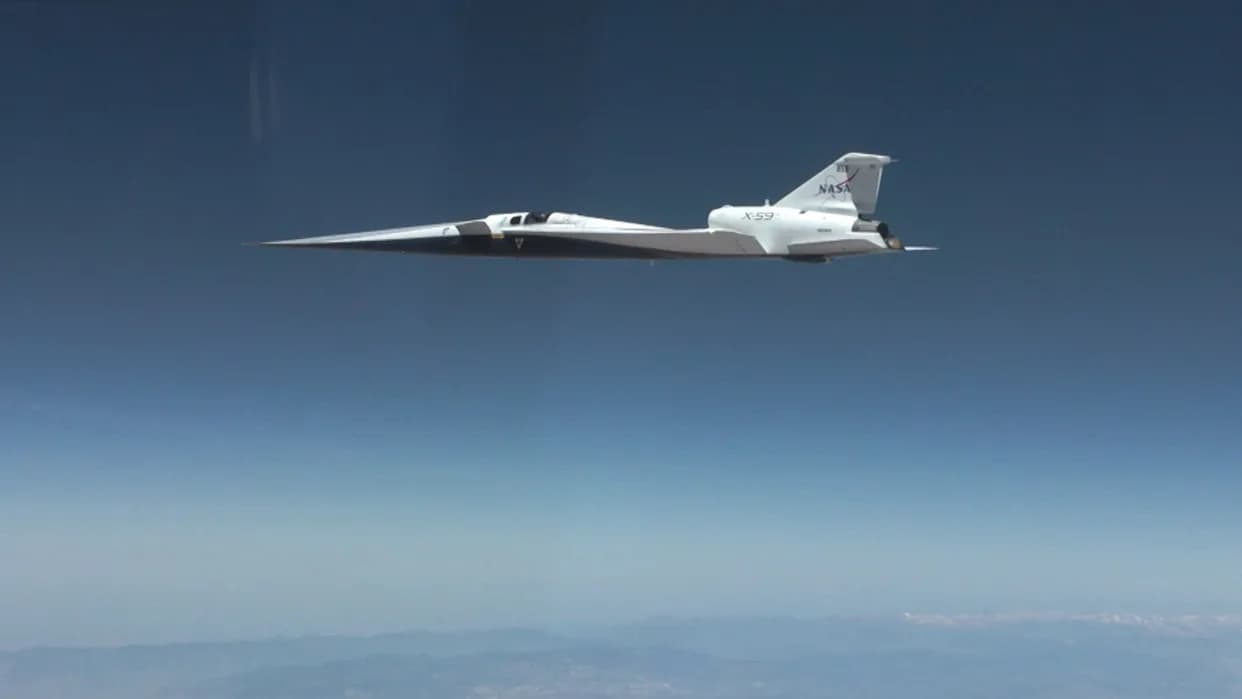
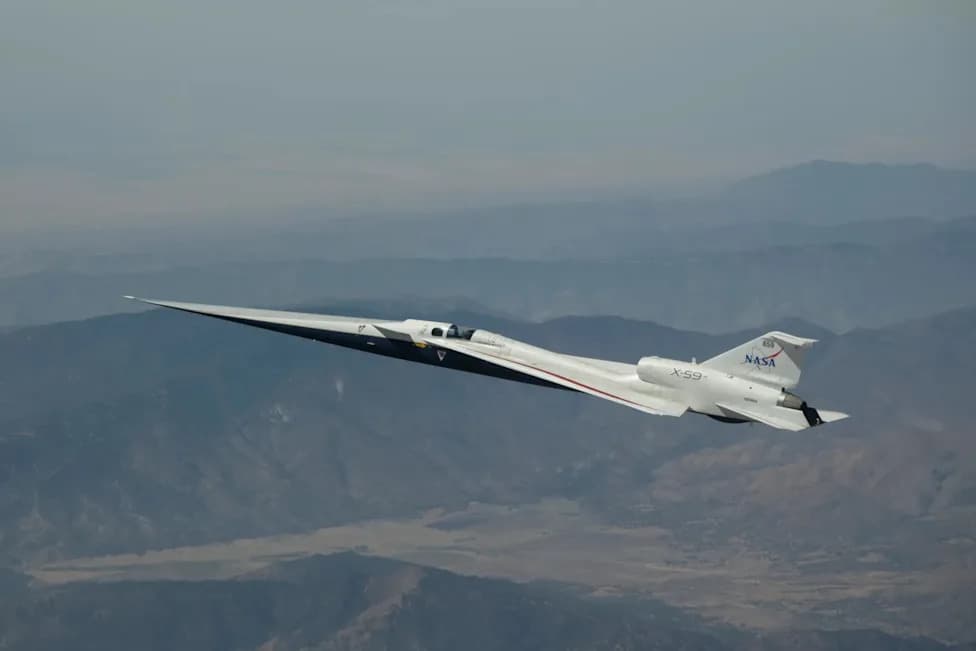
NASA’s experimental X-59 plane in flight on June 5, 2026, the first time the aircraft has reached supersonic speeds.(NASA/Lori Losey)
NASA’s experimental X-59 aircraft moved a step closer to making faster-than-sound travel quiet when it completed its first supersonic flight on June 5, reaching a peak speed of 713 miles per hour (about Mach 1.1) at 43,400 feet. The 81-minute test sortie launched from Edwards Air Force Base with NASA pilot Jim Less at the controls.
“Flying at supersonic speeds is a major milestone for the X-59 team,” said Cathy Bahm, project manager for the program at NASA. “Completing the first mission-conditions flight is especially meaningful—it’s the moment where we begin validating the aircraft in the environment it was designed for.”
“Supersonic” describes travel faster than the local speed of sound, which varies with temperature and pressure. Mach 1 denotes that local sound speed; Mach 5 and above is generally classed as hypersonic. When an aircraft exceeds Mach 1, pressure waves compress into a cone trailing the vehicle. If that cone reaches the ground, observers on the surface can hear a sudden, loud sonic boom.
Why the X-59 Matters
The disruptive noise of sonic booms—plus high operating costs—led to the retirement of the Concorde in 2003, ending regular supersonic passenger service that had begun in 1976. NASA’s X-59 is designed to change that by reshaping the shock waves so they arrive as a much gentler sound at the ground. The aircraft’s elongated nose and carefully tuned aerodynamics aim to soften a conventional boom into what NASA calls a “quiet supersonic thump,” an effect likened to distant thunder or a car door closing about 20 feet away.
The X-59 first flew in October 2025 and has completed more than a dozen preparatory flights. With the milestone supersonic run completed, the program will continue collecting data across a range of speeds and altitudes—eventually pushing to Mach 1.6 (about 1,218 mph) and altitudes near 60,000 feet—while also flying lower-speed profiles to expand the engineering dataset.
Next Steps: Noise Measurement And Community Trials
After the current validation flights, NASA will move into a second phase focused on measuring the aircraft’s noise signature to confirm whether it produces the intended quiet thump rather than objectionable sonic booms. The final phase will take those tests over populated areas; residents beneath the flight paths will be surveyed to record human reactions and preferences, information NASA will use when assessing whether quieter supersonic flight can be permitted over land.
These staged tests are intended to build confidence in the X-59’s performance and to provide the scientific and community feedback needed to inform future rules for commercial supersonic flight. If successful, the X-59 program could help restore practical, public-facing supersonic travel with far less noise impact than past aircraft.
Help us improve.