Nine-year-old Sydney Smoot spoke to the Hernando County School Board in 2015, arguing that the Florida Standards Assessment reduced students to numbers, created undue stress, and failed to measure their full abilities. Her viral remarks—viewed over two million times—called for multiple assessments across the school year rather than one high-stakes exam. In 2022 Florida replaced the FSA with FAST, a three-times-per-year progress-monitoring system, though critics say total testing burdens may not have declined. Sydney later studied Marine Sciences at Oregon State, underscoring the limits of one-size-fits-all testing.
Nine-Year-Old’s Viral Speech Challenged High-Stakes Testing — And Helped Change Florida’s Approach

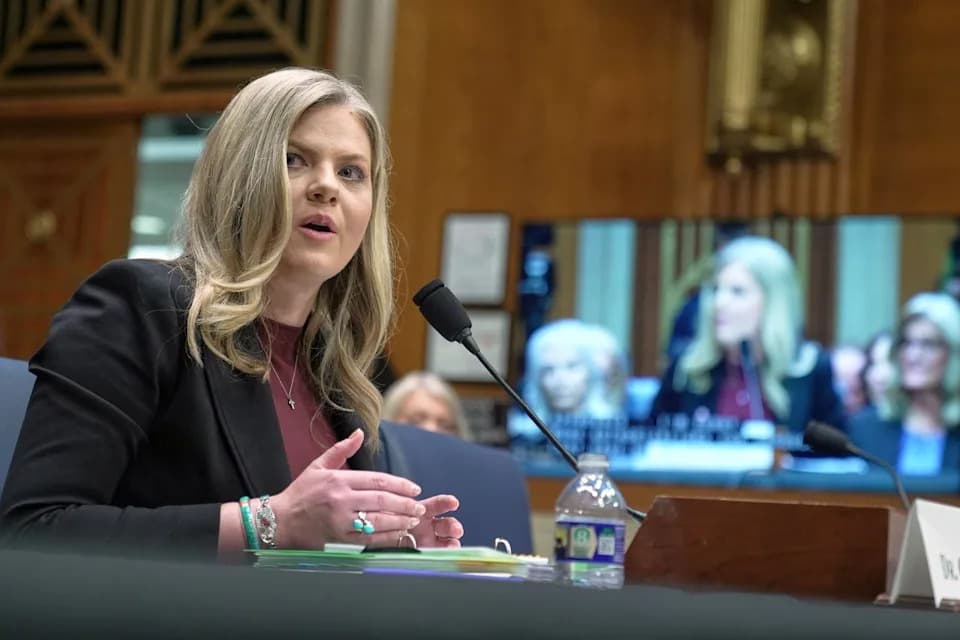
On March 17, 2015, nine-year-old Sydney Smoot stood before the Hernando County School Board in Florida and delivered a blunt, now-viral critique of the Florida Standards Assessment (FSA). Her remarks—captured on video and viewed more than two million times—argued that a single end-of-year exam reduces students to numbers, increases stress, and fails to reflect the full range of a child’s abilities.
Why Sydney’s Message Resonated
Sydney spoke with clarity and conviction well beyond her years. She told the board that the FSA treated students as scores on a rubric, often returning results after the school year ended and offering little meaningful feedback to students, teachers, or parents. She also objected to restrictions that limited discussion about the test and questioned whether assessments developed outside Florida accurately measured what local students had learned.
“Fellow members of the school board, today I will express my concerns about the FSA testing. I consider myself a well-educated young lady. However, with FSA tests my five years of school… do not matter. This testing looks at me as a number. One test defines me as either a failure or a success through a numbered rubric. One test at the end of the year that the teacher or myself will not see the grade until after the school year is already over.
I do not feel that all of this FSA testing is accurate to tell how successful I am. It doesn’t take into account all of my knowledge and abilities, just a small percentage. ... My opinion is that we should take a test at the beginning of the year, middle, and end of the school year to accurately measure what we know. The pressure this puts on me and I’m sure most students is not healthy. Why should we have so much stress about one test when we should be learning and having fun in school? ... I urge you to put a stop to high-stakes testing today. It’s not fair to the schools, teachers, and students. Parents and students, contact your governor to put a stop to all the standardized testing. Thank you so much for your time.”
Context and Aftermath
Critics of high-stakes standardized testing have long argued that such exams narrow curricula, crowd out untested subjects and activities (like recess and creative projects), and place unhealthy pressure on students and teachers. Analyses cited in coverage of Sydney’s speech — including commentary from outlets such as Edutopia — note that classroom grades often capture important "soft skills" (persistence, study habits, willingness to take risks) that a single standardized score misses, and can be better predictors of later success.
In 2022, Florida Governor Ron DeSantis announced the end of the FSA. Calling the moment symbolic, he said, “Today we come, not to praise the FSA, but to bury it.” The state replaced the FSA with a progress-monitoring system called FAST (Florida Assessment of Student Thinking). FAST assessments are shorter, given three times a year, and intended to provide more timely feedback to students, teachers and parents rather than a single end-of-year score.
Ongoing Debate
Although FAST was designed to reduce the pressure of a single high-stakes exam, some groups — including the Florida Education Association — say the overall amount of testing did not necessarily decline. The broader debate continues: how to balance accountability, instructional time, and students' well-being while collecting useful data on learning.
More than a decade after her courtroom-style rebuke of high-stakes testing, Sydney Smoot went on to study Marine Sciences at Oregon State University — a personal outcome often cited to illustrate the limits of one-size-fits-all academic rubrics.
Originally published 11 years ago; updated to reflect subsequent policy changes.
Help us improve.