A subset of Republican senators are increasingly willing to oppose President Trump on issues such as war powers, Justice Department funding and high-profile nominations. The likely dissenters include long-term critics like Lisa Murkowski and Susan Collins, outspoken retirees such as Thom Tillis and Mitch McConnell, and senators facing tough reelection fights. Key upcoming tests—the Blanche confirmation, DOJ funding battles and Iran war-powers votes—could show whether these fractures tip the balance in the narrowly divided Senate.
Seven Republican Senators Poised to Break With Trump — Who Could Decide the Senate?
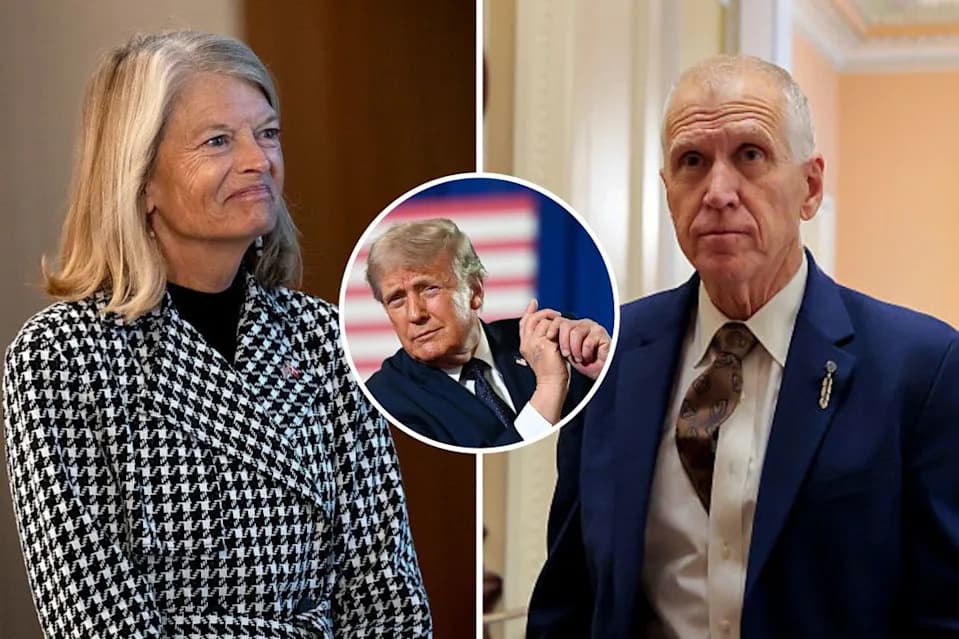
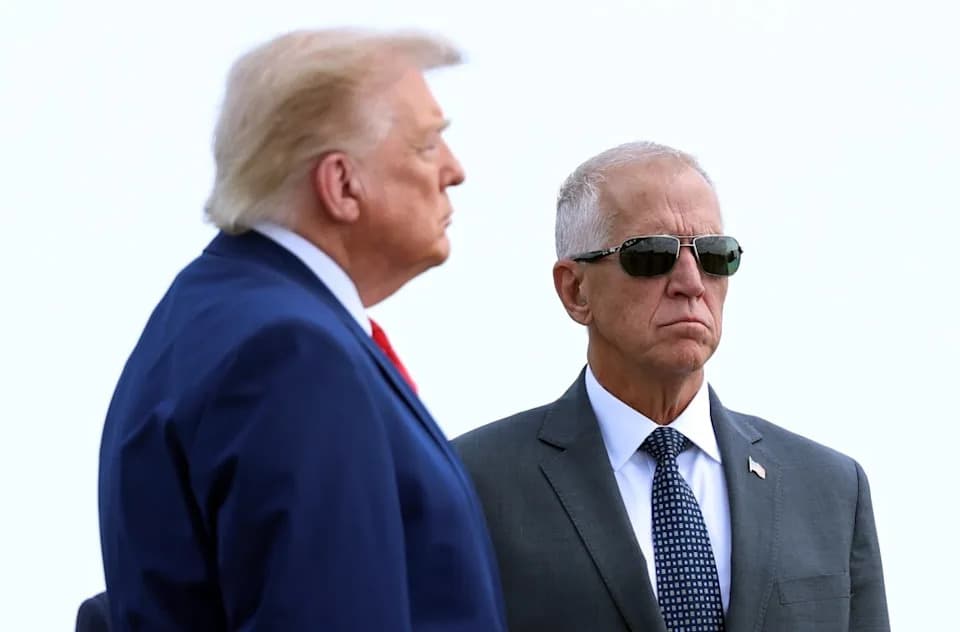
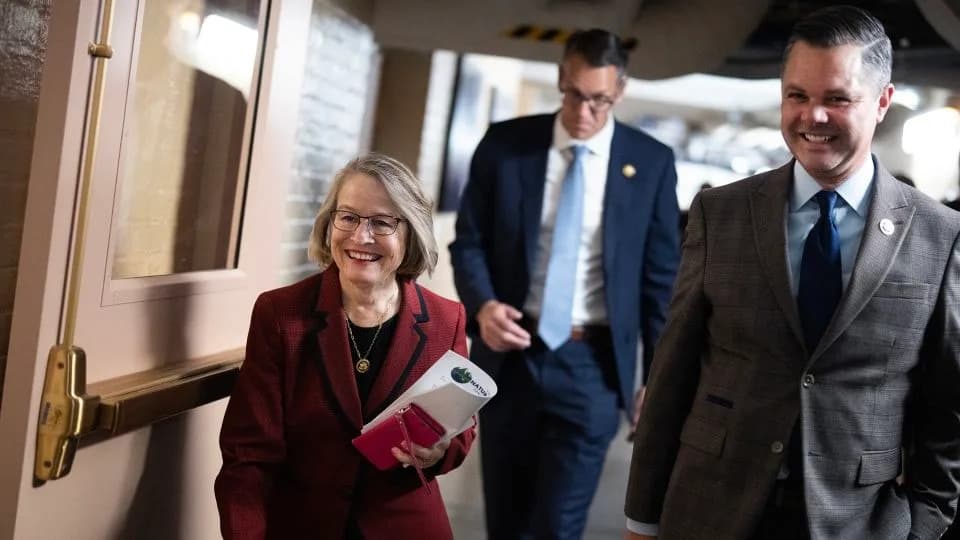
Lisa Murkowski in Copenhagen, Denmark, on January 17, 2026. U.S. President Donald Trump on May 22, 2026, in Suffern, New York. Sen. Thom Tillis on February 12, 2026, in Washington, D.C.
A small but growing group of Republican senators is increasingly willing to push back against President Donald Trump on issues ranging from war powers to Justice Department funding. With the 2026 midterms approaching and the GOP majority narrow, even a handful of defections could determine the outcome of high-stakes Senate votes.
How They Break With the President
The senators most likely to defect fall into three broad categories: long-term dissenters who regularly oppose Trump, lawmakers who split with the White House on specific high-profile items, and those distancing themselves for electoral reasons. Below are the seven Republicans most often mentioned as potential swing votes.
Lisa Murkowski (Alaska)
Murkowski has the most consistent record of breaking with Trump among Senate Republicans. She voted to convict after January 6, defeated a Trump-backed primary challenger in Alaska, and has sided with Democrats on war-powers limits and other institutional checks on executive authority. Not up for reelection until 2028, Murkowski has less immediate electoral pressure to toe the White House line.
Susan Collins (Maine)
Collins is a long-standing moderate who has split with the party on trade, executive power and national-security matters. She has criticized proposed Medicaid cuts tied to tax and budget plans and voted against winding up broad GOP initiatives when they threatened core programs. Collins faces a competitive 2026 race in Maine — a state Donald Trump lost by roughly seven points — which gives her incentive and political cover to demonstrate independence.
Thom Tillis (North Carolina)
Tillis has emerged as one of the most vocal GOP critics of the Trump administration since announcing his retirement. He has publicly clashed with the White House over Medicaid, NATO, personnel decisions and oversight of Justice Department actions. As a retiring senator (in office through January 3, 2027), Tillis has fewer electoral constraints and has used that freedom to block or slow nominations and press for accountability.
Bill Cassidy (Louisiana)
Cassidy’s opposition is narrower but notable: he voted to convict after January 6 and subsequently faced — and lost to — a Trump-backed primary challenger. In his final months in the Senate, Cassidy has increasingly used his platform to pressure the administration, including calling to eliminate a controversial Justice Department anti-weaponization fund.
Mitch McConnell (Kentucky)
McConnell tends to couch his disagreements in institutional and foreign-policy terms rather than partisan spectacle. He has criticized tariff policy and signaled concern about risks to U.S. national-security and institutional prerogatives. As a retiring senator with deep institutional clout, McConnell’s dissent can carry outsized weight even if he avoids headline-grabbing theatrics.
John Cornyn (Texas)
Cornyn spent much of his career as a Senate institutionalist, but a loss precipitated by a Trump-backed challenger has changed his incentives. He has publicly urged Congress to kill the contested anti-weaponization fund and, freed from electoral pressure, may be less likely to defer to the White House on issues he deems important.
Dan Sullivan (Alaska)
Sullivan has occasionally split with the administration on Alaska-specific matters and on foreign-policy votes. He faces a competitive reelection contest against Democrat Mary Peltola, who has strong name recognition in the state. That vulnerability could push Sullivan to distance himself from unpopular White House policies ahead of a tight general election.
What To Watch
Several upcoming Senate flashpoints will test GOP cohesion: the confirmation process for attorney general nominee Todd Blanche, disputes over Justice Department spending and fights over Iran war powers. Given the Republicans’ narrow majority, a handful of defections from the conference—particularly among retirees or vulnerable incumbents—could stall or reshape major legislation heading into 2026.
Help us improve.