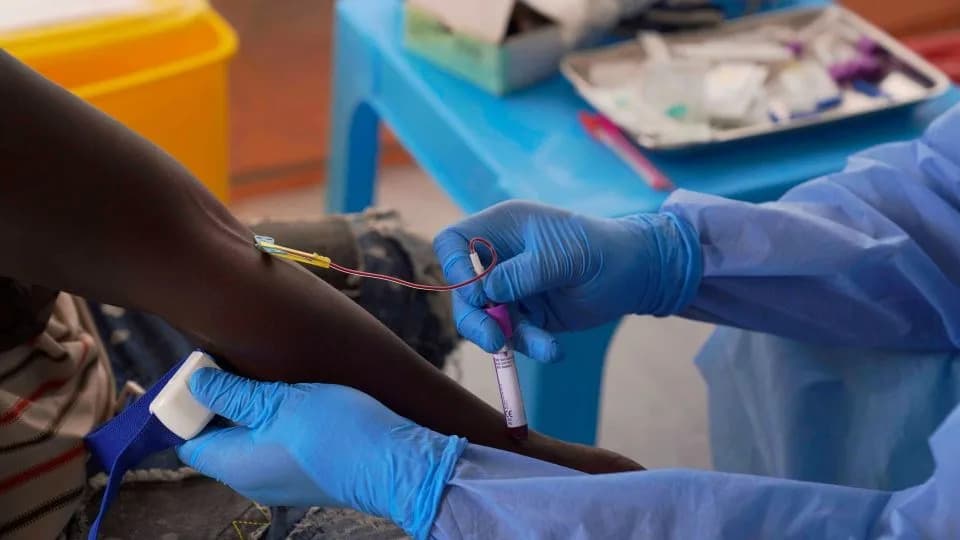
The EMA's Emergency Task Force is working with the African Medicines Agency and AVAREF to design clinical trials for vaccines and treatments against Bundibugyo ebolavirus. Priority candidates include rVSV-, ChAdOx1- and mRNA-based vaccine approaches, therapeutics such as MBP-134, remdesivir (Veklury) and Inmazeb (maftivimab), and obeldesivir as a potential post-exposure option. Trial planning will cover prophylaxis, post-exposure prophylaxis and treatment across age groups. The collaboration follows WHO's 17 May declaration of the outbreak in DRC and Uganda as a Public Health Emergency of International Concern.
EMA and African Medicines Agency Join Forces to Fast-Track Clinical Trials for Bundibugyo Ebola After WHO Declares PHEIC
The EMA and AMA will work together to run clinical trials in the DRC and Uganda. Credit: faniadiana24 / Shutterstock.com(faniadiana24 / Shutterstock.com)
The European Medicines Agency's Emergency Task Force (EMA ETF) is coordinating with the African Medicines Agency (AMA) to design and harmonise clinical trials for vaccines and therapeutics targeting the ongoing Bundibugyo ebolavirus outbreak. Leveraging regulatory and technical expertise from WHO-AFRO's African Vaccines Regulatory Forum (AVAREF), the agencies aim to accelerate development while ensuring rigorous safety and efficacy evaluation across affected countries.
Priority Candidates Identified
The ETF has reviewed and prioritised several vaccine and treatment candidates for further assessment and potential clinical development:
- Vaccine candidates: an rVSV-based Bundibugyo vaccine, a ChAdOx1 (modified adenovirus) platform vaccine targeting Bundibugyo, and an mRNA vaccine candidate.
- Therapeutics: MBP-134 (Mapp Biopharmaceutical) — a two-monoclonal-antibody combination with reported activity against multiple ebolaviruses including Bundibugyo; Gilead's antiviral Veklury (remdesivir); and Regeneron's monoclonal antibody cocktail Inmazeb (maftivimab).
- Post-exposure prophylaxis (PEP): Gilead's antiviral obeldesivir has been flagged as a potential PEP option for further study.
Designing Trials Across Uses and Ages
EMA and AMA, with AVAREF support, are developing trial strategies that span early-phase safety studies through to pivotal efficacy trials. Planned discussions will cover the full spectrum of product use: primary prophylaxis, post-exposure prophylaxis, and therapeutic treatment for Bundibugyo virus disease. Trial designs will consider diverse populations, including children and older adults, and the practicalities of conducting studies in outbreak settings across the Democratic Republic of the Congo and Uganda.
Context And Implications
On 17 May, the World Health Organization declared the outbreak of Ebola virus disease caused by Bundibugyo ebolavirus in the Democratic Republic of the Congo and Uganda a Public Health Emergency of International Concern (PHEIC). This is the first public health emergency in which the EMA has formally collaborated with the AMA since the AMA's establishment in 2021.
Unlike Zaire ebolavirus, for which licensed products such as MSD's Ervebo and Johnson & Johnson's two-dose regimen (Zabdeno/Mvabea) exist, there are currently no authorised vaccines or treatments specific to Bundibugyo. Countermeasures developed for Zaire are unlikely to be fully protective against Bundibugyo, so bespoke products or adapted candidates will be required. Investigational pan-filovirus monoclonal antibodies and antivirals in development may offer some cross-protection and are being evaluated further.
Disclaimer: This article summarises regulatory planning and candidate prioritisation for informational purposes and does not constitute medical or regulatory advice. Final authorisations will depend on the review of clinical data and regulatory decisions by competent authorities.
Help us improve.