This study uses Texas education and labor data to show that schools where shootings occur suffer lasting harms: exposed students miss more class, repeat grades at much higher rates, and—particularly those in grades 10–11—are less likely to finish high school, enroll in college, or earn a bachelor’s degree. Exposed youth also face lower employment rates and earn about $2,421 less per year, amounting to an average lifetime earnings loss of roughly $100,439 (2018 dollars). The authors note schools often increased disciplinary staff rather than expanding mental-health support, highlighting prevention and better post-incident care as policy priorities.
The Lasting Educational and Economic Cost of School Shootings
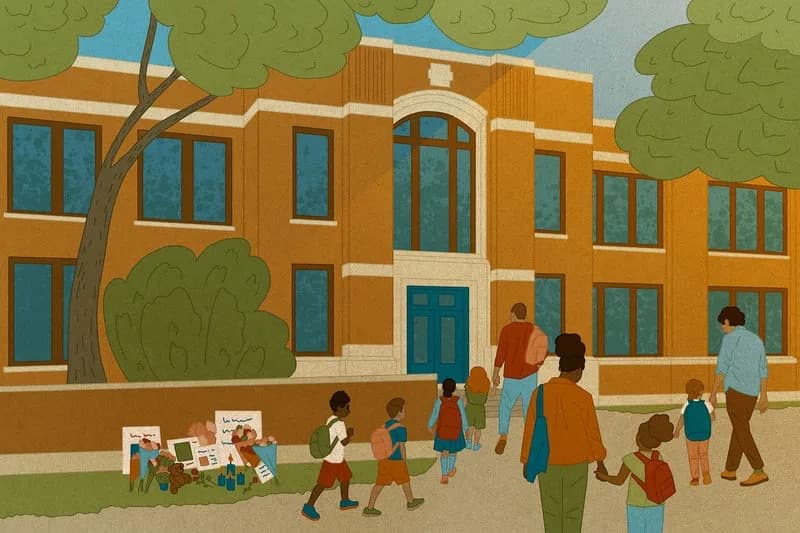
Uvalde, Sandy Hook and Columbine are the most widely known examples of school shootings, but they represent only a fraction of on-campus gun violence. New research led by Molly Schnell (Northwestern University) and colleagues uses Texas education and labor-market records to quantify the broader, long-term harms that students exposed to school shootings experience.
Short-Term Academic Impacts
The study first analyzed students who attended Texas public schools where a shooting occurred during school hours between 1995 and 2016 (32 incidents). Compared with their own records before the incident and with similar peers at schools without shootings, exposed students showed meaningful declines in school engagement and performance:
- 12.5% more likely to be absent
- 28.6% more likely to be chronically absent
- 110.7% more likely to repeat a grade
Long-Term Education, Employment and Earnings
For longer-run outcomes the researchers focused on eight Texas public high-school shootings that took place between 1998 and 2006. They compared students who experienced those shootings with peers who attended the same schools five years earlier and with similar students at schools without shootings. The key long-term findings:
- Students in grades 10–11 at the time of a shooting were 3.4% less likely to graduate high school.
- Those same students were 6.3% less likely to enroll in any college, 13.3% less likely to enroll in a four-year college, and 14.7% less likely to earn a bachelor’s degree by age 26.
- Students in grades 9–11 when exposed were 3.8% less likely to be employed at ages 24–26 and 5.6% less likely to be employed for at least a full year.
- Among those who worked, annual earnings were about 7.8% lower (roughly $2,421 less per year).
On average, the researchers estimate an individual student exposed to a school shooting loses about $100,439 in lifetime earnings (2018 dollars).
Disparities and Mental-Health Channels
These negative effects were observed across genders and racial groups, but they were especially pronounced for students receiving free or reduced-price lunch and for non-Hispanic Black students. While the Texas data did not include direct measures of mental-health diagnoses, related work by the authors found that fatal school shootings lead to large, persistent increases in antidepressant use among local youth. That suggests mental health and longer-term psychosocial functioning are likely important channels linking shootings to education and labor-market outcomes.
How Schools Responded
Rather than expanding health services, schools in the sample most commonly increased disciplinary staffing: assistant principals rose by about 19.9% on average. Schools did not, on average, hire more health professionals to support students, and teacher and staff turnover increased after incidents.
"We need to broaden the lens when thinking about the impact of gun violence at schools," says Molly Schnell. "Or we risk significantly underestimating the costs."
Policy Implications
Prevention remains the clearest priority, but given persistent shootings, the study argues for stronger mitigation and recovery efforts: expand school-based health centers and long-term mental-health services, lower access barriers (cost, scheduling), and target support to the students most affected—especially older high-school students and those from low-income and marginalized communities. Without such steps, the harms extend beyond classrooms into the workforce and the broader economy.
Help us improve.