The U.S. Fish and Wildlife Service designated about 1.5 million acres across six states—Illinois, Iowa, Minnesota, Virginia, Wisconsin and West Virginia—as critical habitat for the endangered rusty patched bumble bee (Bombus affinis). The move, prompted in part by litigation from conservation groups, does not change land ownership but may affect federally related projects. Scientists identify multiple likely drivers of decline—disease, pesticides, habitat loss, managed bees and climate change—and recommend planting native flowers and reducing pesticide use to aid recovery.
1.5 Million Acres Designated As Critical Habitat To Help Endangered Rusty Patched Bumble Bee Recover
Rare, endangered bee gets habitat protection across 6 states: Here’s where
The U.S. Fish and Wildlife Service has designated roughly 1.5 million acres across six states as critical habitat for the endangered rusty patched bumble bee (Bombus affinis), an effort aimed at helping the species recover after dramatic population declines.
What Was Announced
On Friday the FWS finalized critical-habitat designations that span parts of Illinois, Iowa, Minnesota, Virginia, Wisconsin and West Virginia. These designations do not change land ownership or create new reserves; instead, they may affect projects that require federal planning, permits or funding.
Why It Matters
The rusty patched bumble bee was once common across much of the eastern and Midwestern United States. Since 2000, confirmed records have been limited to about a dozen states and one Canadian province. In 2017 it became the first bee species in the U.S. to receive federal endangered status. Habitat protection is a key step toward reversing its range contraction and reducing risks from habitat loss and other threats.
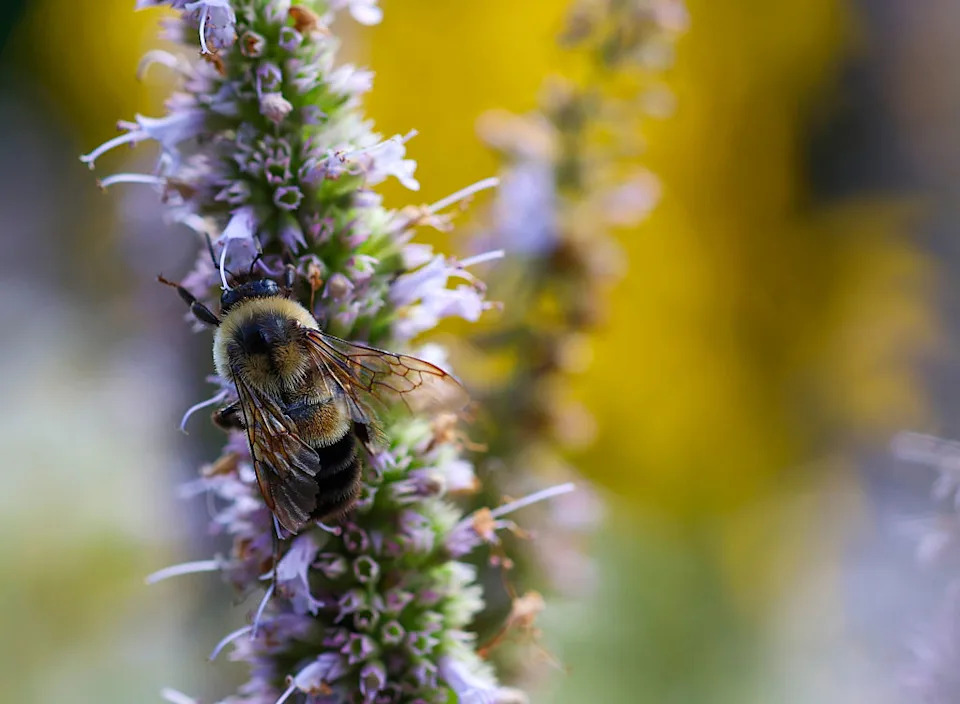
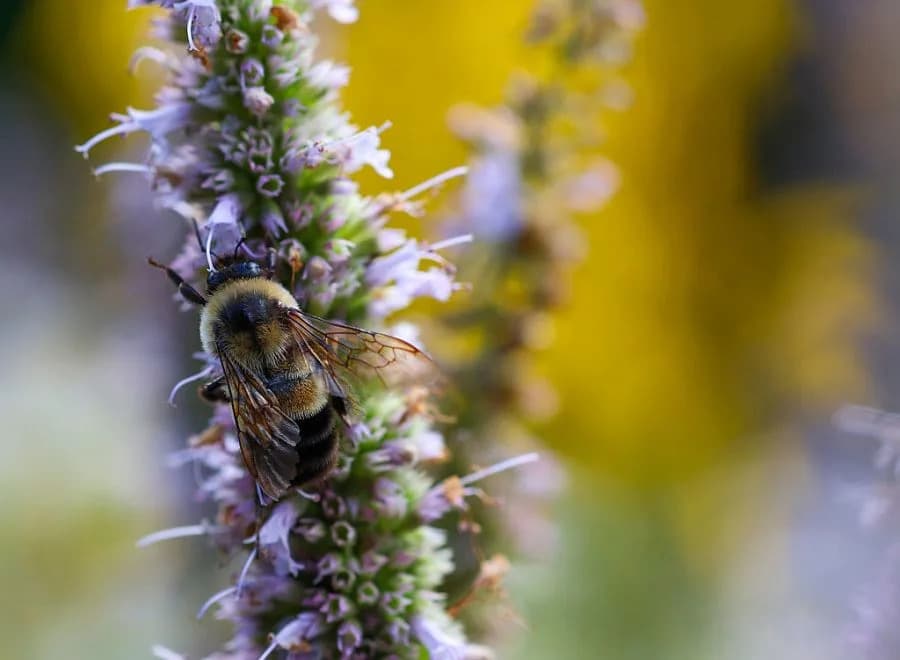
An endangered rusty patched bumblebee forages on a stem of anise hyssop in Amanda Nugent’s parkway garden on Aug. 25, 2025, in Wilmette, Illinois. (Stacey Wescott/Chicago Tribune/Tribune News Service via Getty Images)
Causes of Decline
Scientists point to multiple, interacting causes for the species’ decline, including pathogens and parasites, pesticide and fungicide exposure, habitat loss and fragmentation, interactions with managed bees, climate change effects and the challenges small, isolated populations face.
Where Protections Apply
FWS maps show designated critical habitat in parts of 33 counties, many of them near Midwestern population centers where the bee has historically been found, including the Minneapolis–St. Paul, Chicago, Iowa City and Milwaukee areas.
Designated Counties By State
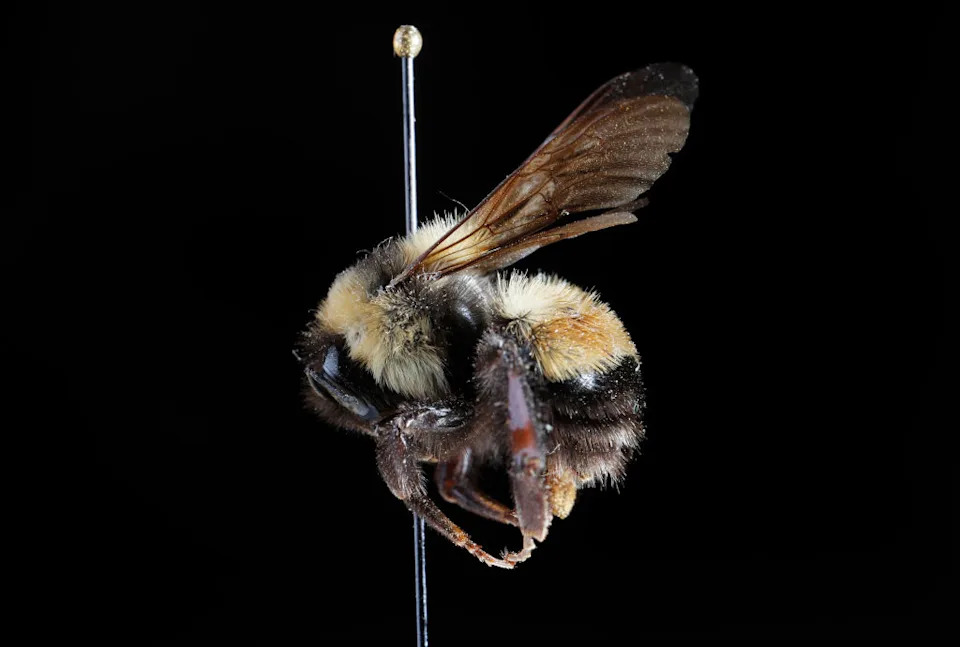
HALLOWELL, ME – JANUARY 10: A Rusty Patched bumblebee is seen Tuesday, Jan. 31, 2017 at the Maine State Museum Archives in Hallowell, Maine. (Staff Photo by Joel Page/Portland Portland Press Herald via Getty Images)
- Illinois: Boone, Ogle, Winnebago, McHenry, Lake, Cook, Kane, Lee
- Iowa: Johnson
- Minnesota: Ramsey, Scott, Dakota, Pierce, Washington, Carver, Hennepin, Rice, St. Croix, Olmsted, Winona
- Virginia: Highland, Bath
- West Virginia: Greenbrier, Pocahontas
- Wisconsin: Sauk, Iowa, Dane, Milwaukee, Ozaukee, Racine, Washington, Waukesha, Kenosha
Legal Context
The designations follow litigation by conservation groups including the Natural Resources Defense Council, the Center for Biological Diversity and Friends of Minnesota Scientific and Natural Areas after the FWS initially declined to set critical habitat. The NRDC called the protections “essential to the survival of one of America’s most imperiled pollinators.”
How People Can Help
Recovery actions that benefit rusty patched bumble bees also help many other pollinators. Key, practical steps include:
- Planting diverse native flowers that bloom from spring through fall (examples: Dutchman’s breeches, eastern bluebells, wild bergamot, Culver’s root and milkweed species, though best choices vary regionally).
- Reducing or eliminating pesticide and fungicide use, especially during bloom periods.
- Protecting and restoring nesting and overwintering habitat such as leaf litter, grass mats, hollow stems, brush piles and rodent burrows.
Looking Ahead
The FWS has also updated range maps showing current occupancy and areas with high potential for recolonization, including parts of Wisconsin, southeastern Minnesota, northeastern Iowa and northern Illinois, as well as pockets in the Northeast. Continued monitoring, habitat restoration and coordinated conservation actions will be needed to give this once-common pollinator the best chance of recovery.
Source: U.S. Fish and Wildlife Service; reporting by conservation groups and state wildlife biologists.
Help us improve.