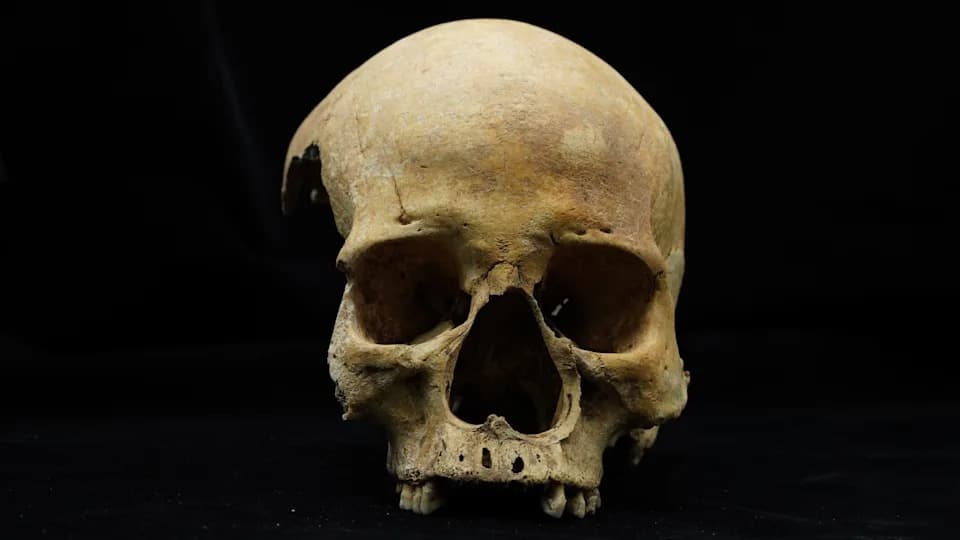
The 4,000-year-old skull of a child unearthed at Djarkutan, Uzbekistan, shows clear evidence of cranial trepanation, making it the oldest known surgical intervention in Central Asia and among the earliest in Asia. The five-year-old was buried with a roughly three-year-old companion; the grave dates to the late third millennium B.C. Researchers believe the trepanation was performed with stone or bone tools and say further analysis will explore who performed the operation and whether it was medical, ritual, or both.
4,000-Year-Old Bronze Age Child's Skull Reveals Earliest Known Cranial Surgery in Central Asia
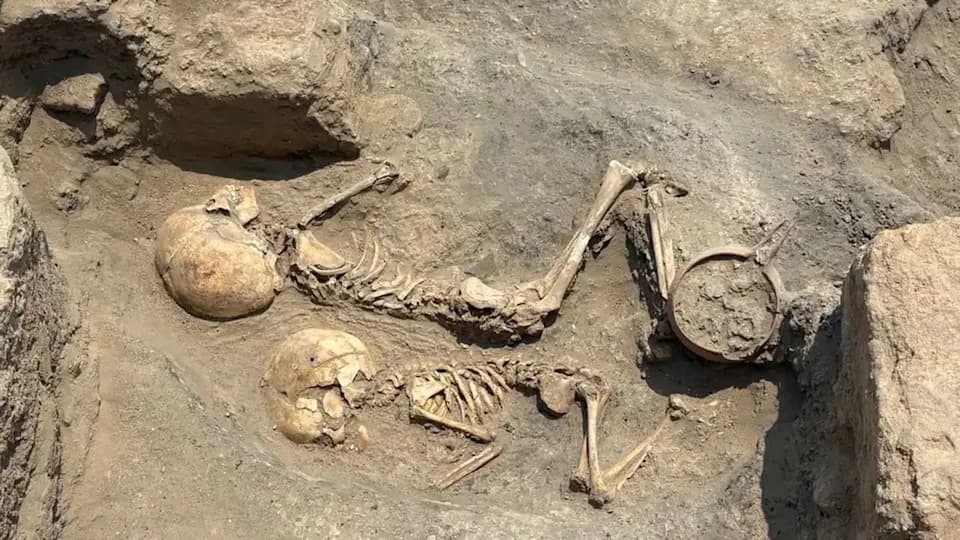
The researchers found the skeleton of the 5-year-old child in a single grave alongside the skeleton of a younger child. | Credit: Italian Archaeological Mission in Uzbekistan
The 4,000-year-old skull of a Bronze Age child discovered at Djarkutan in present-day Uzbekistan shows clear signs of cranial trepanation — a deliberate surgical cut or hole made in the skull. Researchers say this is the oldest documented evidence of surgical intervention in Central Asia and among the earliest known cases across Asia.
Discovery and Context
The skeleton, uncovered in April, belonged to a child who was about five years old at death and was buried in the same grave with another child of roughly three years. An international team from Italy and Uzbekistan, excavating in the Northern Bactria region near the Afghanistan border, dated the grave to the late third millennium B.C. This period corresponds to Djarkutan's role as an urban center of the Oxus civilization — also known as the Bactria-Margiana Archaeological Complex (BMAC) — which flourished across Central Asian river oases from roughly 2500 to 1500 B.C.
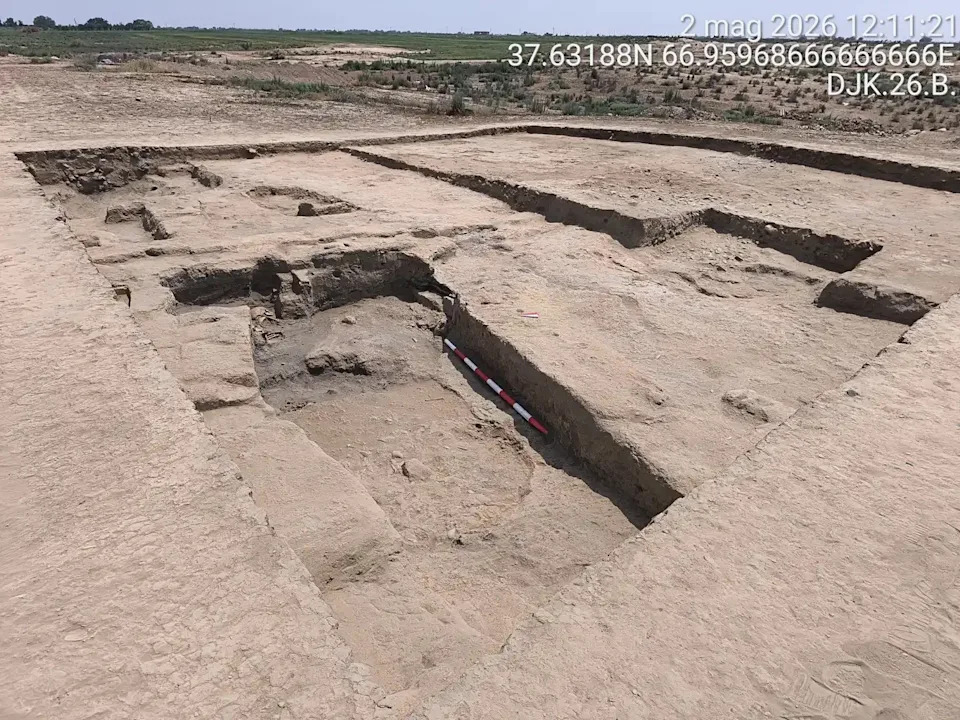
The grave was discovered during excavations at the Djarkutan archaeological site in the south of Uzbekistan, near the border with Afghanistan. | Credit: Italian Archaeological Mission in Uzbekistan
Evidence of Surgery
Examination of the five-year-old's skull revealed unmistakable marks consistent with cranial trepanation. The researchers report that the cuts and remodeling are consistent with tools made of stone or bone rather than metal. In antiquity, trepanation has been interpreted as an attempt to treat conditions such as epilepsy, severe headaches, or behavioral disturbances, though ritual motives or combined medical-ritual practices are also possible.
"A cranial trepanation on a child, four thousand years ago, in Central Asia: until yesterday it was unthinkable. Today it is in our data," said Enrico Ascalone, an archaeologist at the University of Salento who led the excavation.
Outstanding Questions
The rarity of trepanation on such a young child raises several important questions: Which local specialists would have possessed the knowledge and tools to perform this procedure? What level of anatomical or surgical understanding did they have? And what were the social or medical reasons for operating on a five-year-old? The excavation team noted that distinctions between medical treatment and ritual practice in the Bronze Age were likely much less rigid than modern categories allow.
The discovery is part of a broader research project at Djarkutan that began in 2024. Researchers plan follow-up analyses — including microscopic study of the bone margins, comparisons with other regional finds, and further excavation — to better understand the technique, timing relative to the child's death, and the cultural context of the operation.
Help us improve.