Fertilizer price spikes tied to disruptions from the Iran conflict have pushed farmers in Senegal, Brazil, India and beyond to seek organic alternatives such as manure, compost, jivamrita and biofertilizers. Experts warn that synthetic fertilizer production relies on natural gas and global shipping, and that current subsidy structures often favor chemical inputs. While alternatives can reduce greenhouse gas emissions and runoff, scaling them requires labor, logistics and policy support. Governments have started limited measures, but many farmers say more support is needed.
From Cow Dung to Compost: How the Iran Conflict Is Forcing Farmers to Rethink Fertilizers
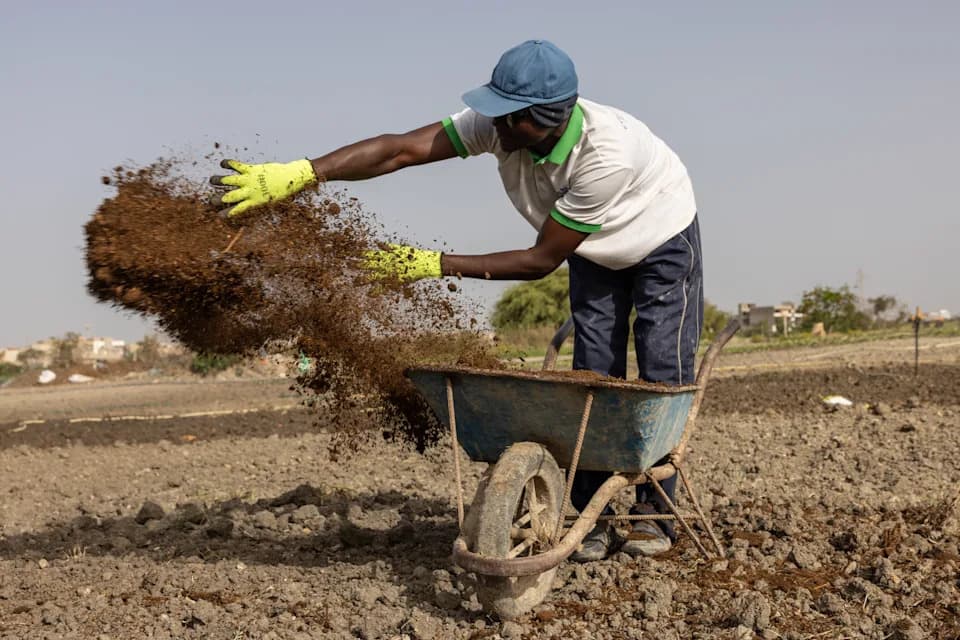
Farah Jammeh throws organic compost on the fields at the cooperative in Rufisque, Senegal, Tuesday, May 12, 2026. (AP Photo/Caitlin Kelly)(AP Photo/Caitlin Kelly)
DAKAR, Senegal — When Senegalese farmer Abou Sow first saw videos of U.S. missiles striking Iran circulating online, he feared the conflict would soon reverberate through agriculture in his country. Since the fighting began on Feb. 28, fertilizer prices in Senegal have risen roughly 40%, and global fertilizer prices have climbed by about 50%.
Impact of Supply Disruptions
Analysts say disruptions around the Strait of Hormuz and wider Gulf tensions have tightened supplies of natural gas, a key feedstock for producing synthetic fertilizers, and have snarled global shipping routes. The Gulf region supplies roughly 30% of the world’s traded chemical fertilizer, according to the International Food Policy Research Institute, while the World Bank’s fertilizer price index shows a sharp rise in recent months.
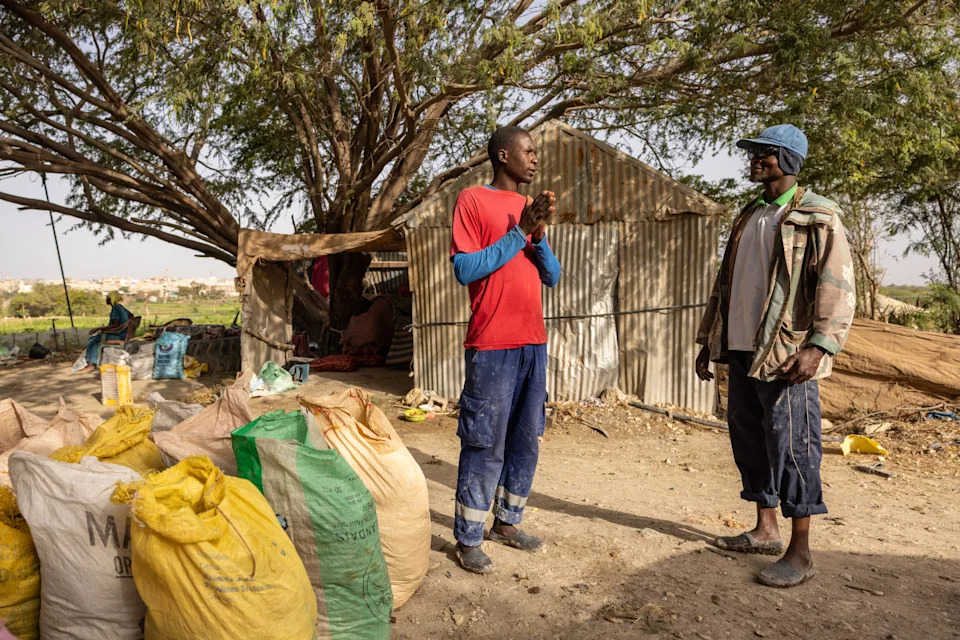
Abou Sow, left, and Farah Jammeh are both exploring local, organic alternatives to chemical fertilizers in Rufisque, Senegal, Tuesday, May 12, 2026. (AP Photo/Caitlin Kelly)(AP Photo/Caitlin Kelly)
Local Responses: Compost, Manure and Community Action
Sow, who abandoned chemical fertilizers eight years ago in favor of organic compost and other natural inputs, is better prepared than most. He organizes farmers to buy manure from herders and teaches them how to build nutrient-rich compost heaps, pointing out wriggling worms as a sign of healthy soil biology.
“We can’t afford to wait for a ceasefire. It’s risky to depend on chemical fertilizers,” Sow said.
He applies about six tons of compost annually. While he benefits from being near a town where sheep are commonly reared for religious holidays, many farmers in remote areas struggle to source and transport the large volumes of manure needed. Sow worries some may be forced to abandon plots they cannot properly fertilize.
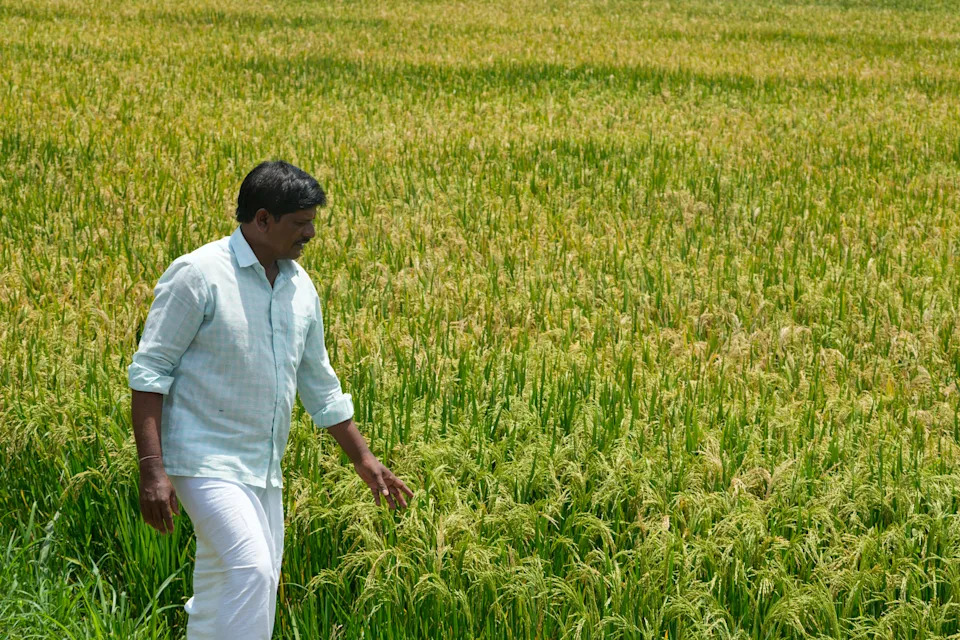
Kavali Narsimhulu, 46, walks through his paddy fields in Padmaram village, Ranga Reddy district, about 70 kilometers (43 miles) from Hyderabad, India, Saturday, May 9, 2026. (AP Photo/Mahesh Kumar A.)(AP Photo/Mahesh Kumar A.)
Alternatives and Innovations
Farmers and companies are turning to several alternatives: traditional organic inputs such as manure and compost; jivamrita, a potent mix of cow dung, urine, flour, soil and sugar used by some Indian farmers; and industrial-scale biofertilizers and composts produced from municipal organic waste. Biofertilizers contain beneficial bacteria and microorganisms that help plants access nitrogen and other nutrients more efficiently.
In Brazil, the biofertilizer sector grew about 15% from 2023 to 2024, and many farmers can produce low-cost biofertilizers locally because of flexible patent rules. In India, about 1.7 million farmers in Telangana and Andhra Pradesh have adopted natural farming techniques that integrate livestock waste and crop diversity. Prime Minister Narendra Modi announced a national mission to expand natural farming and aim to cut fertilizer use by 50%.
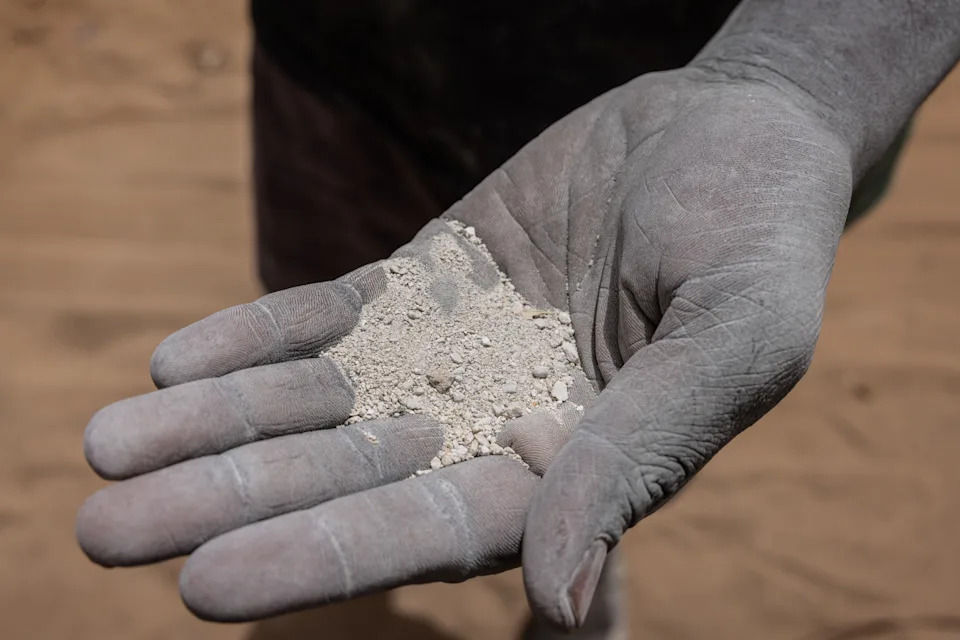
A worker shows the chemical fertilizer that is used across the country in Thies, Senegal, Tuesday, May 12, 2026. (AP Photo/Caitlin Kelly)(AP Photo/Caitlin Kelly)
Policy, Subsidies and Climate Co-Benefits
Governments worldwide spend roughly $700 billion annually on agricultural subsidies, with a large share helping keep chemical fertilizers affordable, the OECD says. Experts caution that these subsidies can make alternatives relatively more expensive and slow adoption. Susan Chomba of the International Panel of Experts on Sustainable Food Systems said current incentive structures often favor the wrong products.
Beyond immediate supply concerns, experts note potential climate and environmental benefits from shifting away from heavy synthetic fertilizer use. Chemical fertilizer production and overuse are significant sources of greenhouse gas emissions, while organic practices and biofertilizers can help sequester carbon in soils and reduce nutrient runoff that pollutes waterways.
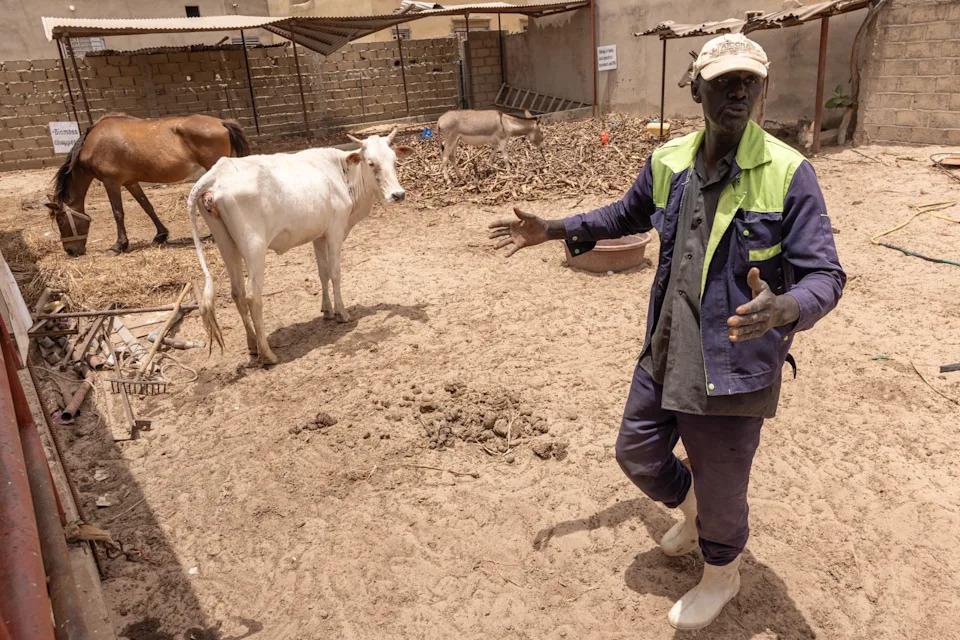
Gora Samba, one of many farmers making their own compost from animal manure, seen at an animal farm in Meouane, Senegal, Tuesday, May 12, 2026. (AP Photo/Caitlin Kelly)(AP Photo/Caitlin Kelly)
What Governments Are Doing
In Senegal, the government announced in April it would subsidize and distribute 30,000 tons of organic fertilizer products, a move farmers say is helpful but insufficient compared with the country’s annual import needs of about 125,000 tons. India has scrambled to source and subsidize chemical fertilizers — it imports roughly 60% of its fertilizer from Gulf suppliers — even as it promotes natural farming. In Mexico, adoption has lagged amid policies that still favor chemical fertilizers, but some experts say the crisis may accelerate change.
Experts caution that transitioning to organic or biological inputs requires time, labor and technical support. Many farmers will face a transition period of lower yields unless governments and development partners provide training, logistical help and targeted subsidies for alternatives.
Bottom Line: The Iran conflict has exposed vulnerabilities in global fertilizer supply chains and prompted a renewed look at organic and biological alternatives. While the shift could yield climate and environmental benefits, widespread adoption will require investment, policy shifts and practical support for farmers during the transition.
Reporting by AP correspondents in Dakar, Bengaluru and Mexico; additional contributions from São Paulo. The Associated Press receives financial support for global health and development coverage in Africa from the Gates Foundation. The AP is solely responsible for all content.
Help us improve.