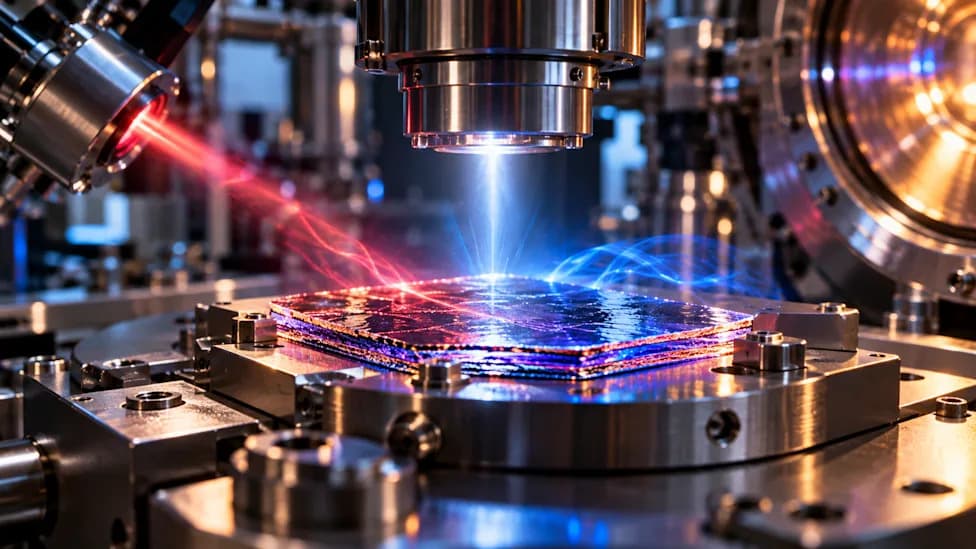
The University of Houston team reports an ambient-pressure superconducting transition at 151 K (-122°C), the highest temperature recorded for a superconductor at normal pressure and a new record since 1993. Using pressure quenching, researchers stabilized an enhanced superconducting state that remains at ordinary conditions. The result, published in PNAS, could improve power-grid efficiency and medical technologies, though room-temperature (≈300 K) superconductivity remains far off and requires further replication and study.
University of Houston Sets New Ambient-Pressure Superconductivity Record at 151 K
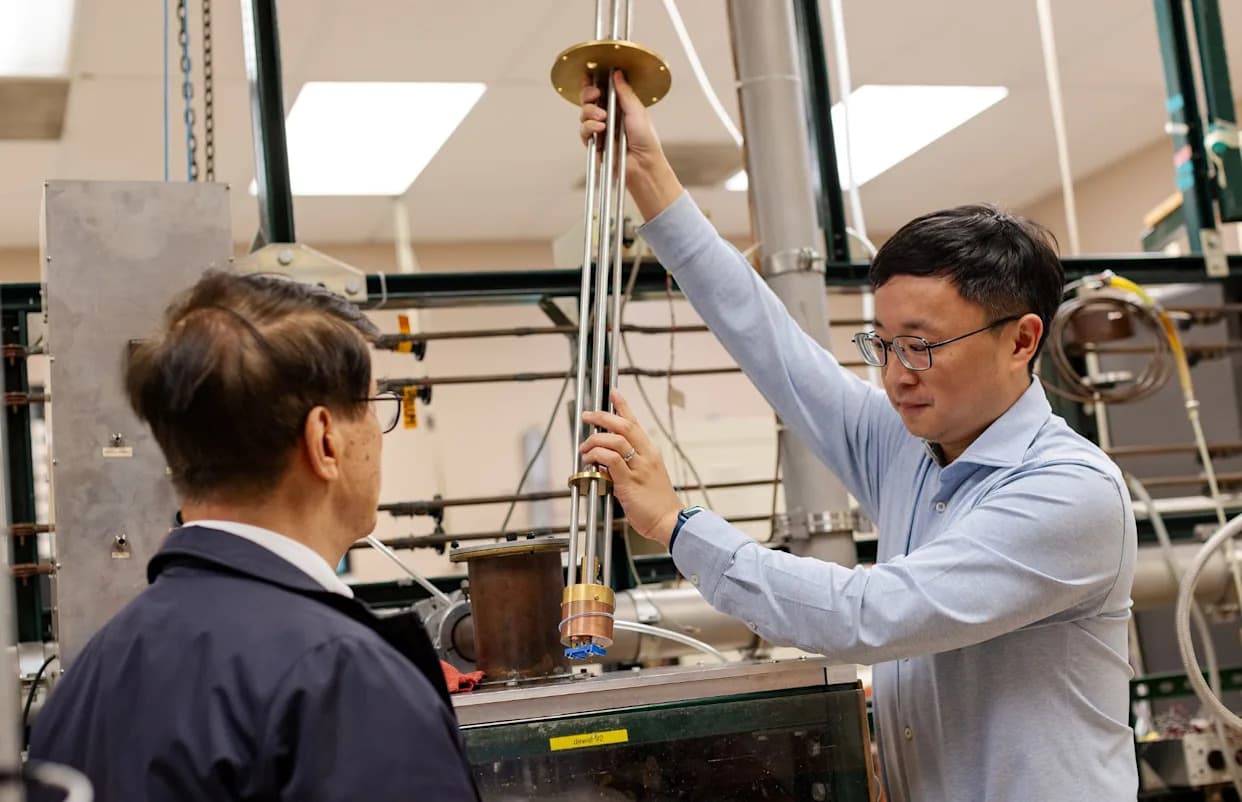
Photo Credit: University of Houston
A research team at the University of Houston has produced a material that superconducts—conducts electricity with zero resistance—at 151 K (-122°C) under normal atmospheric pressure, the highest ambient-pressure superconducting temperature reported to date. The finding, published in the Proceedings of the National Academy of Sciences (PNAS), surpasses a 30-year record and marks an important step toward more practical superconducting technologies.
How the Breakthrough Was Achieved
Physicists Ching-Wu Chu and Liangzi Deng led the work at the Texas Center for Superconductivity and the university's physics department. They used a technique called pressure quenching: the material was first exposed to high pressure to enhance its superconducting properties, then cooled and rapidly depressurized so the enhanced state remained stable at ambient pressure.
"Our method shows that it is possible to retain that state without maintaining pressure," Chu said.
Why It Matters
Superconductors transmit electricity without resistance, meaning almost no energy is lost as heat. That property could significantly improve power-grid efficiency, reduce energy waste, enable more compact and powerful MRI systems, accelerate electronics, and support future clean-energy technologies such as fusion.
The University of Houston team notes that roughly 8% of electricity is lost in transmission on today’s grids; widespread practical superconductors could cut those losses and reduce the pollution and cost associated with wasted generation.
Context and Caveats
The new 151 K result eclipses the previous ambient-pressure record of 133 K set in 1993 by the mercury-based cuprate Hg1223. Still, 151 K (‑122°C) is far below typical room temperature: it remains about 149 K (≈149°C) short of roughly 300 K, the nominal target for true room-temperature, ambient-pressure superconductivity.
Most superconductors still require cryogenic cooling, so while raising the operating temperature makes materials more practical, significant engineering and materials research remain before everyday applications become realistic. The authors emphasize that replication, independent verification, and further study are needed to confirm stability, reproducibility, and scalable synthesis.
Next Steps
Chu and Deng also coauthored a companion paper outlining six potential research paths to raise superconducting transition temperatures further, including pressure quenching and complementary materials-design strategies. Rohit Prasankumar of Intellectual Ventures highlighted that future progress will likely require collaboration among physicists, chemists, engineers, and materials scientists.
Bottom line: This is a notable and carefully validated advance toward more practical superconductors, but room-temperature, ambient-pressure superconductivity remains a long-term goal.
Help us improve.