A new exhibition by Vikas Kumar traces how India's postal network—stamps, postmarks and postmen—helped persuade citizens to take part in the census and built public trust in the early republic. While the upcoming 16th census will be conducted digitally and will, for the first time in decades, collect caste data, experts warn that technology alone cannot ensure accurate results. The exercise remains massive, covering 36 states and territories, thousands of sub-districts, nearly 10,000 towns and roughly 640,000 villages.
How Stamps, Postmarks and Postmen Helped India Count Its People — And What That Means for a Digital Census
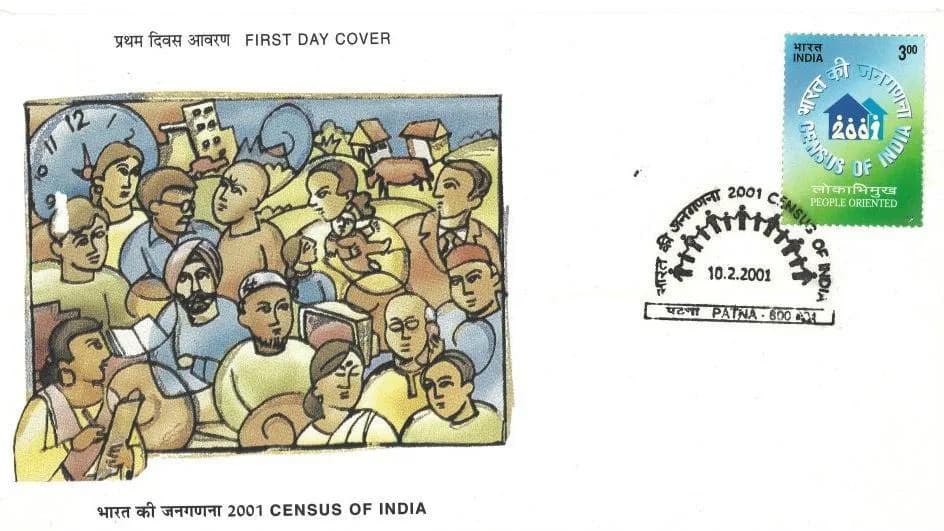
Issued to mark India's 2001 census, this commemorative stamp featured a family of four beneath the slogan "People Oriented". The first day cover celebrated India's diversity with a colourful crowd scene, while its postmark showed men, women and children holding hands in a semi-circle - a symbolic portrait of a nation counting itself. [Vikas Kumar]
Long before smartphones and apps, India's vast postal service was a key tool in persuading millions to take part in one of the world's largest statistical exercises: the national census. A new exhibition curated by Vikas Kumar of Azim Premji University in Bengaluru traces this overlooked history through stamps, postmarks and letters that were used to mobilise and reassure citizens about the headcount.
Postal Network as a Nation-Building Instrument
Independent India urgently needed dependable demographic data to organise elections under universal adult franchise and to plan a mixed economy. The Constituent Assembly recognised the census' centrality and passed the Census Act in 1948. But the state faced two immediate problems: convincing people to cooperate, and maintaining communication between enumerators and officials across a huge, mostly rural country.
Why the Post Office Mattered
For decades the postal department was the largest unified communications network available to the Indian state. After independence it expanded rapidly: by 1968 more than 100,000 post offices were delivering mail daily to some 300,000 villages and weekly to another 300,000. Postmen often acted as readers, scribes and informal state intermediaries in villages—making the postal network an ideal channel for public outreach in a low-literacy environment.
Campaigns, Imagery and Messaging
In the lead-up to the 1951 census—the first after independence—the government used a bilingual pictorial postmark stamped on letters across the country. The mark depicted a family of three and carried the words "Census of India" in Hindi and English. Slogans evolved with the decades: 1961 postmarks urged people to "Get yourself and all the family counted" and to "Ask your friends to do the same." By 1971 commemorative stamps celebrated the census as "one of the largest administrative operations in the world" and proudly referenced the use of electronic computers for processing.
Printed material from later years reframed the census as a collective portrait—ads around 2000 called it the "Mirror of the nation" or a "Group Photograph of the nation." At the same time, visuals began to incorporate population-management themes such as the two-child norm, reflecting changing policy concerns and social anxieties.
Trust, Legitimacy and the Long View
Trust was central: colonial-era censuses had faced boycotts and charges of communal manipulation, so building public confidence was essential for the legitimacy of the independent state's first count. As Kumar notes, these fragile postal artefacts reveal how the state used everyday communication to build legitimacy, shape national identity and link counting to ideas of development and diversity.
"Awareness about the census is critical to building trust," Kumar warns, arguing that technology cannot replace the need for public confidence.
From Family-Shaped Postmarks to Mobile Apps
The upcoming 16th census—India's eighth since 1947—will be different in one fundamental way: it will be conducted digitally. Enumerators will use mobile apps to collect and upload data in real time. The operation is enormous: it will cover 36 states and federally administered territories, more than 7,000 sub-districts, over 9,700 towns and nearly 640,000 villages, with millions of households surveyed by teachers, local officials and other government staff.
For the first time in decades, caste data will be collected again—an inherently sensitive and politically charged subject in a society where caste continues to shape social and economic life. While digital tools promise speed and efficiency, Kumar and other experts stress that technology alone cannot guarantee accurate enumeration: outreach, transparency and public trust remain decisive.
From family-shaped postmarks stamped on envelopes to data uploaded from smartphones, the census has travelled a long route. The exhibition uses these postal artefacts to remind us that counting a nation is as much about communication and legitimacy as it is about numbers.
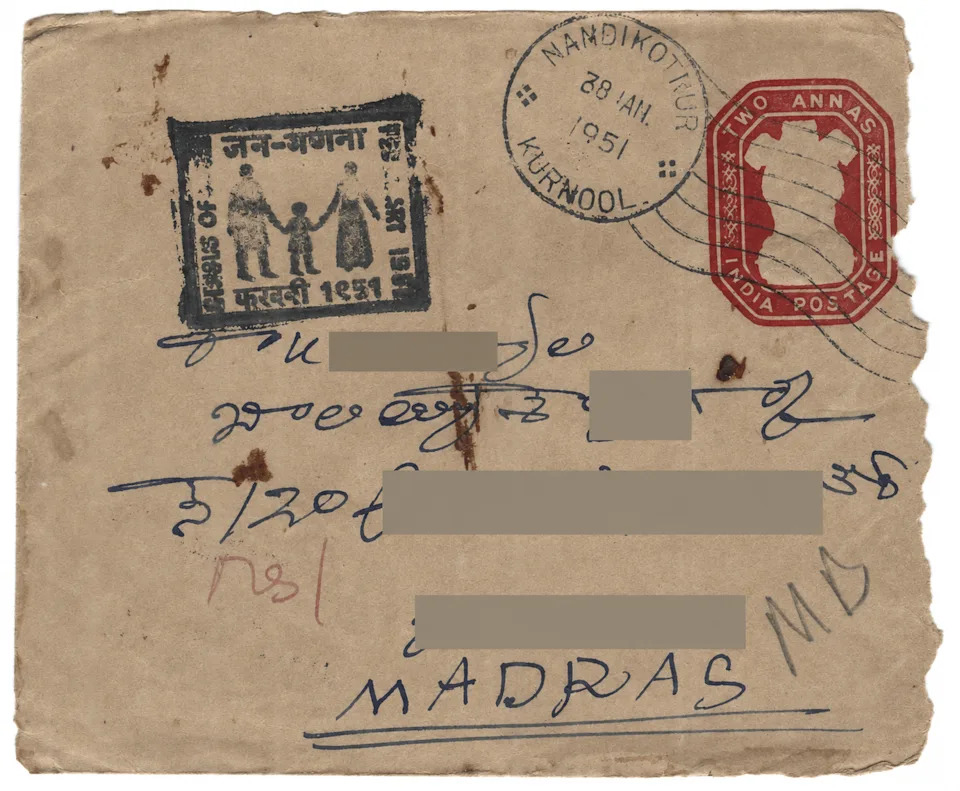
An envelope mailed from Nandikotkur in January 1951 and delivered in Madras (now Chennai) days later bears one of the earliest known bilingual postmarks promoting India's first post-independence census. The black pictorial stamp - showing a family of three with "Census of India, February 1951" in Hindi and English - became a widely used census postmark of the era. [Vikas Kumar]
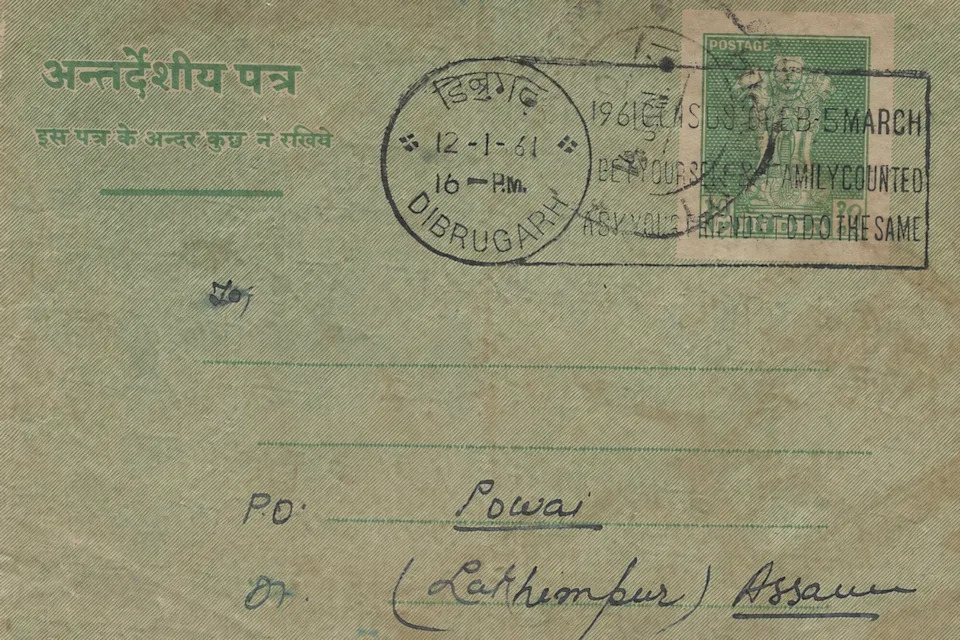
This inland letter card, mailed within Assam in January 1961, carried a census postmark urging Indians to "Get yourself & family counted" - and to persuade friends to do the same. It was part of a nationwide postal campaign that turned everyday mail into a tool of public mobilisation. [Vikas Kumar]
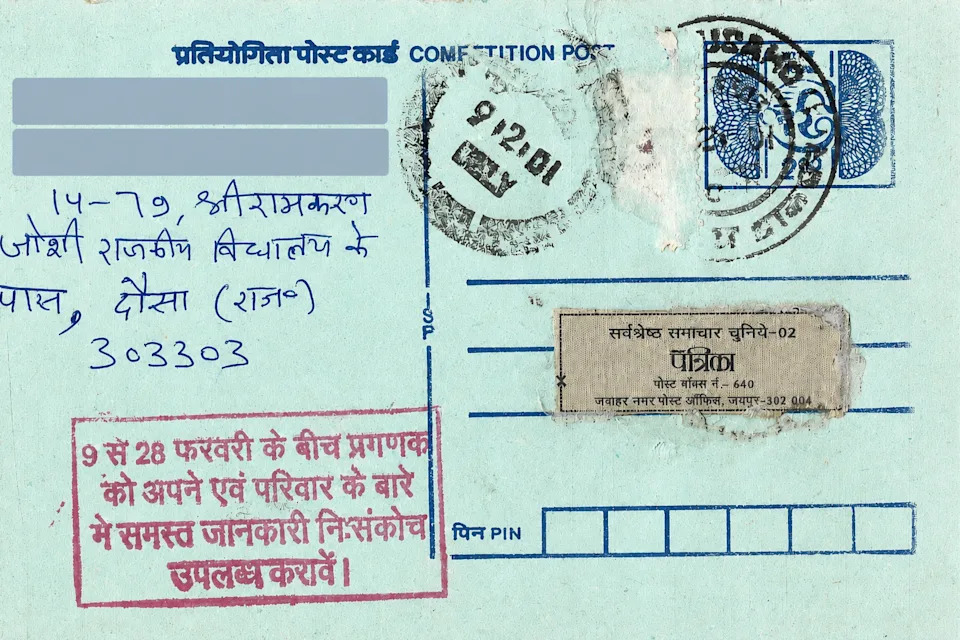
Mailed from Dausa to Jaipur in February 2001, this postcard carried a Hindi census postmark urging Indians to share details about themselves and their families "without any hesitation". It reflected how the census relied not just on counting people, but on persuading them to trust the state with their information. [Vikas Kumar]
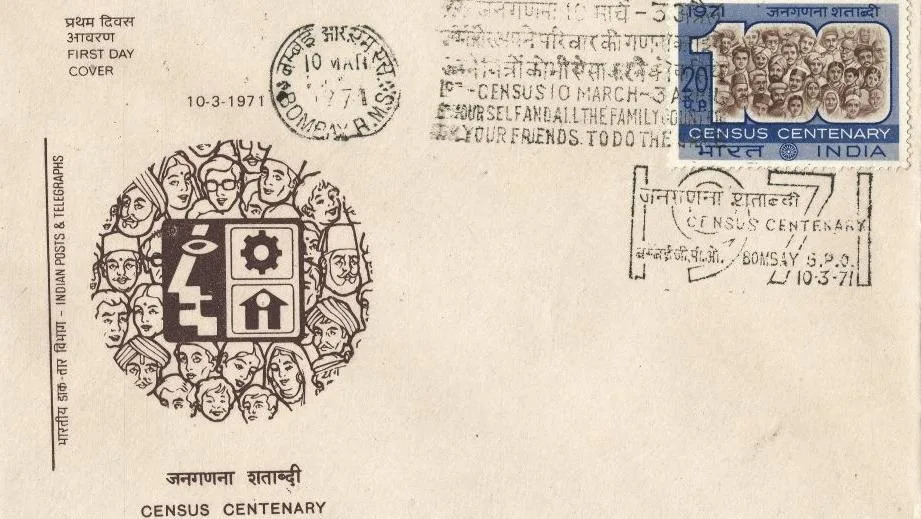
Three million commemorative stamps were issued in 1971 to mark the centenary of the census, celebrating the country's diversity through faces embedded within the number 100. The first day cover paired census imagery with slogan postmarks urging Indians to participate in one of the world's largest counting exercises. [Vikas Kumar]
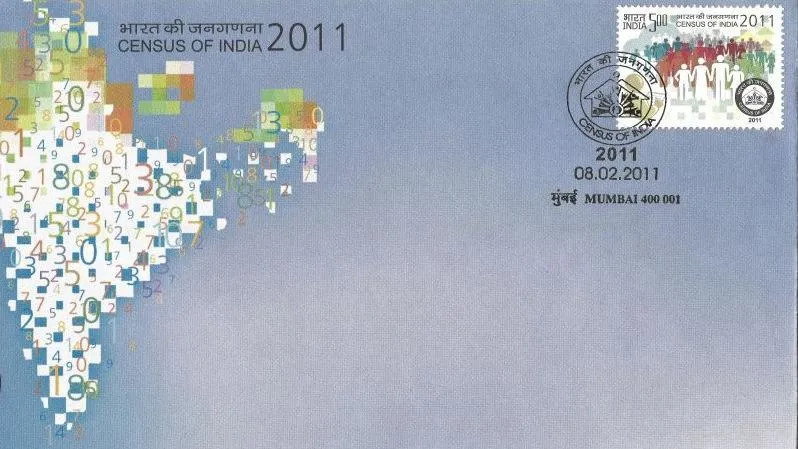
Issued for the 2011 Census, this commemorative stamp showed families holding hands alongside an enumerator and the census emblem. The first day cover paired a pixellated map of India with a cancellation mark carrying the census symbol - reflecting a country entering the digital age of counting. [Vikas Kumar]
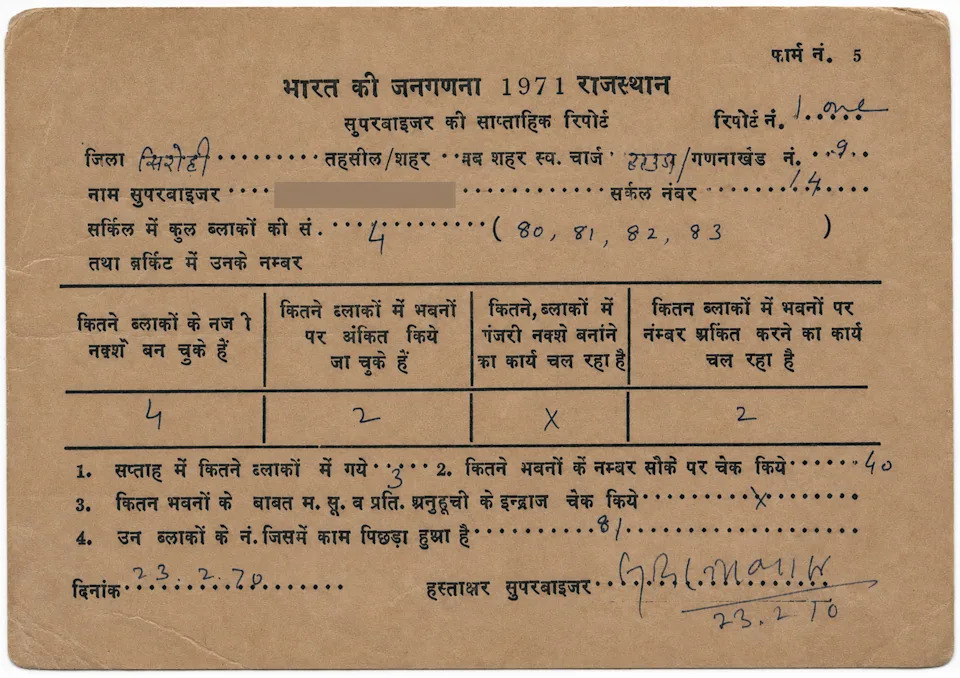
A supervisor in Rajasthan's Bhilwara district mailed this pre-printed postcard on 23 February 1970 to track mapping, house numbering and enumeration work for the 1971 Census. [Vikas Kumar]
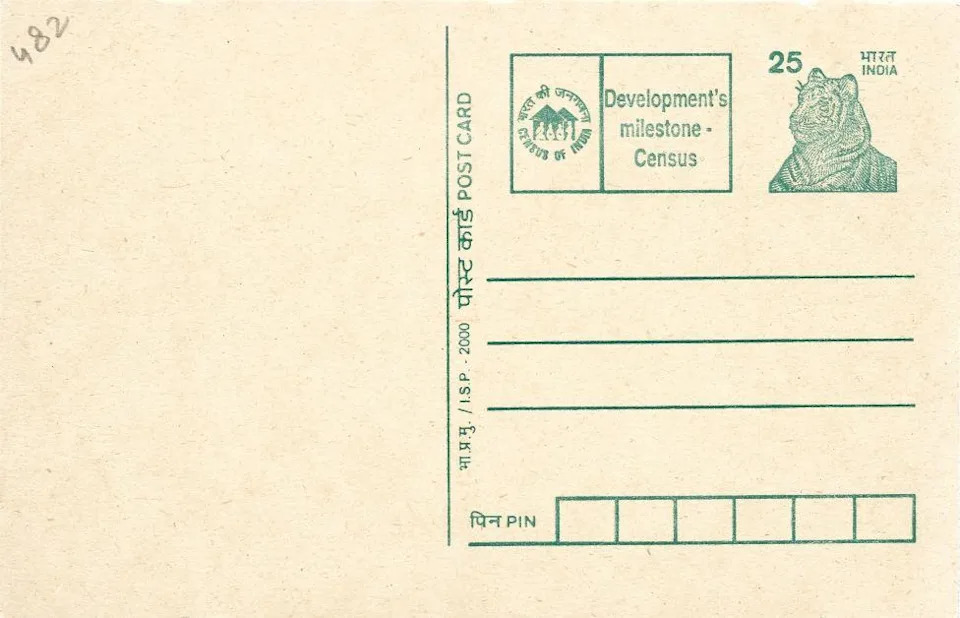
"Development's milestone – Census" read this slogan printed on postcards issued in 13 languages ahead of India's 2001 census, reflecting how the exercise was framed as central to nation-building and progress. [Vikas Kumar]
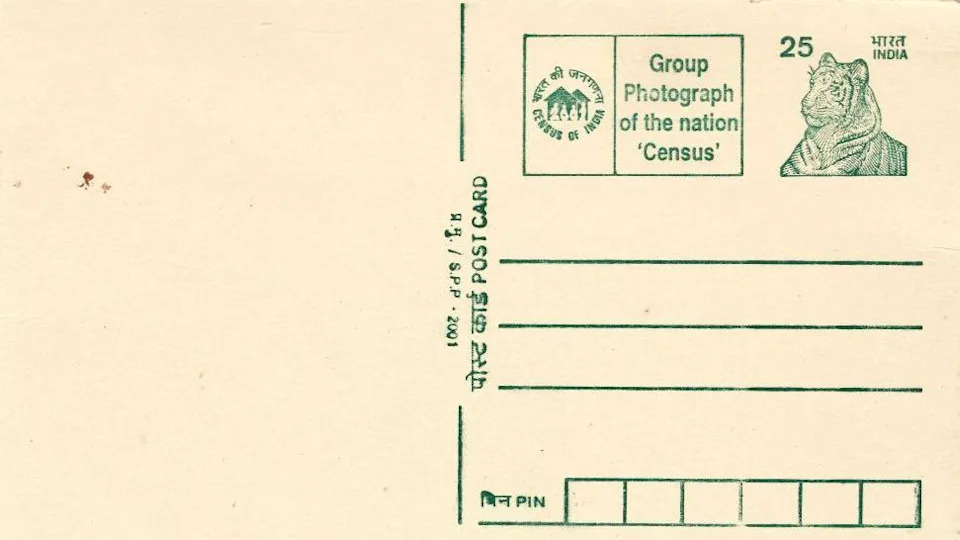
"Group Photograph of the Nation": Issued ahead of the 2001 Census, these multilingual postcard advertisements carried the census message across India. This Hindi-English version dates to January 2001. [Vikas Kumar]
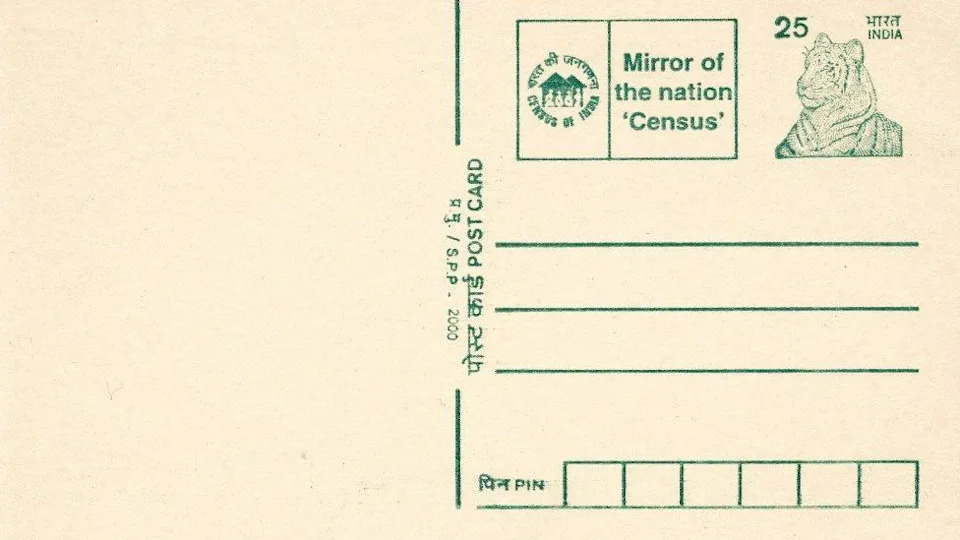
2001/Mirror of the Nation 'Census': This census advert was featured on postcards in October 2000 before the household phase of the 2001 census. These postcards were issued in 13 languages. [Vikas Kumar]
Help us improve.