The Environmental Working Group analyzed CDPR and USGS tests and found widespread contamination of California surface water and sediment by pesticides and PFAS-related compounds. Nearly half of surface water samples and more than half of sediment samples tested positive for bifenthrin, with some counties exceeding 80% detection. EWG supports Assembly Bill 1603 to phase out PFAS pesticides by 2035 and calls for expanded monitoring and stronger regulation as federal rulemaking is reconsidered.
Study Finds Widespread PFAS and Pesticide Contamination in California Surface Water and Sediment
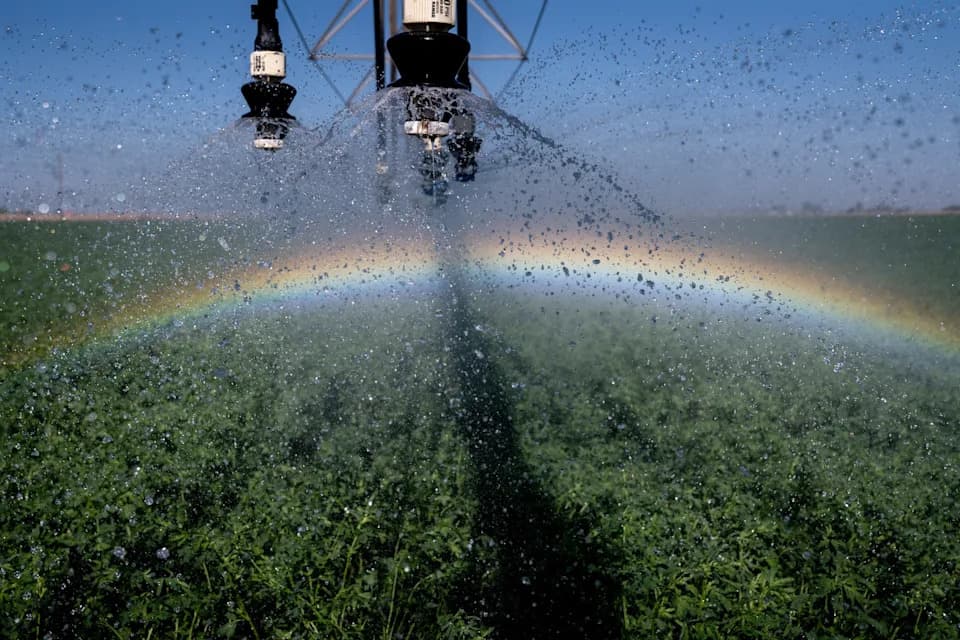
Alfalfa is irrigated on May 18, 2022, in a Leimgruber Farms' field east of Holtville, California. Automated sprinklers help reduce water consumption while increasing production, but at considerable cost.
A new analysis by the Environmental Working Group (EWG) of state and federal testing indicates widespread contamination of California surface water and sediment with pesticides and PFAS-related compounds, potentially exposing millions of residents.
What the Tests Found
EWG reviewed monitoring data compiled by the California Department of Pesticide Regulation (CDPR) and the U.S. Geological Survey (USGS) from 2020–2024. The group reported that nearly half of surface water samples and more than half of sediment samples contained detectable levels of bifenthrin, a commonly used pesticide that some studies have linked to potential cancer risks or other health concerns. In several counties, detection rates were far higher: bifenthrin appeared in over 80% of surface water samples in San Luis Obispo and Stanislaus counties.
PFAS Concerns and Agricultural Use
EWG also flagged the presence of PFAS (per- and polyfluoroalkyl substances), a group of persistent chemicals often called "forever chemicals," which do not readily break down in the environment or the human body. The organization noted that more than 2.5 million pounds of pesticides that may contain PFAS-related compounds are reportedly applied to California farmland each year, and residues are frequently detected on produce.
"If we’re seeing PFAS pesticides show up this often even in limited surface water and sediment tests, the true scale of this contamination is almost certainly even greater. We need to stop deliberately spraying these toxic chemicals on our crops." — Bernadette Del Chiaro, Senior Vice President, EWG
Health, Regulation, and Data Gaps
Scientific and regulatory bodies have raised alarms about PFAS and certain pesticides. A 2024 review cataloged by the National Library of Medicine warned that immunotoxic chemicals such as PFAS can threaten human health and immune function, while studies have detected PFAS in the blood of people and animals.
The U.S. Environmental Protection Agency (EPA) has acknowledged widespread environmental detections of PFAS and said researchers still lack full information on how quickly PFAS components break down. In February, the EPA reported that roughly one in seven Americans may receive drinking water with unsafe PFAS levels; many California water systems were among those recording detections.
EWG analysts and co-author Varun Subramaniam warned that current testing likely underestimates contamination, particularly in sediments. They said broader geographic coverage, more frequent sampling, and testing for a larger variety of PFAS compounds would probably produce higher detection rates.
Policy Responses
In response to the findings, EWG's California legislative director Susan Little urged state leaders to "swiftly phase out PFAS pesticides for agricultural uses." EWG supports California Assembly Bill 1603, which would ban the use, sale, and manufacture of PFAS-containing pesticides on crops statewide by 2035. As of May 29, AB 1603 had its first reading in the California Senate.
At the federal level, the Biden-Harris Administration established drinking water standards in 2024 intended to reduce PFAS exposure for an estimated 100 million people and prevent thousands of deaths and serious illnesses. However, on May 18 the EPA announced plans to "rescind and restart" parts of its PFAS rulemaking process, citing procedural concerns and indicating it will seek new public comment before moving forward. The agency also indicated drinking water systems may be able to request additional time to comply, potentially extending some deadlines to 2031.
What This Means For Californians
Public-health advocates say the new testing results underscore the need for stronger restrictions, clearer labeling, and more comprehensive monitoring to better understand and reduce exposure risks from PFAS-laden pesticides in California's agricultural landscape. Farmers, policymakers, and consumers may face difficult choices in balancing pest control, crop productivity, and long-term public health.
Sample Locations: Butte, Colusa, Imperial, Merced, Monterey, San Luis Obispo, Santa Barbara, Stanislaus, Sutter, and Yolo counties (tests from 2020–2024).
Reporting note: This summary synthesizes the EWG analysis of CDPR and USGS data and incorporates statements from regulatory agencies and public-health advocates.
Help us improve.