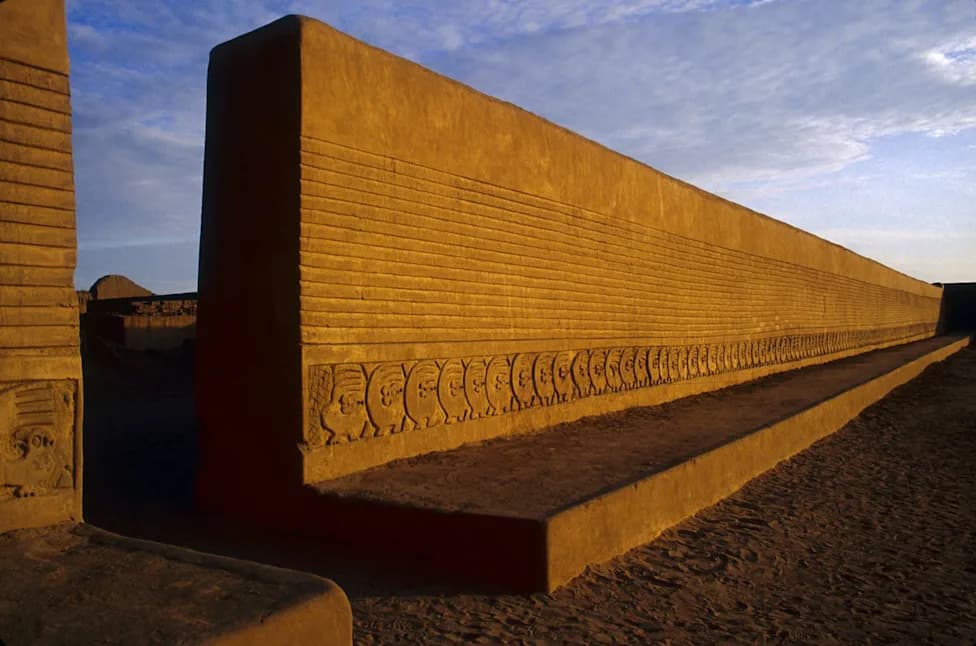
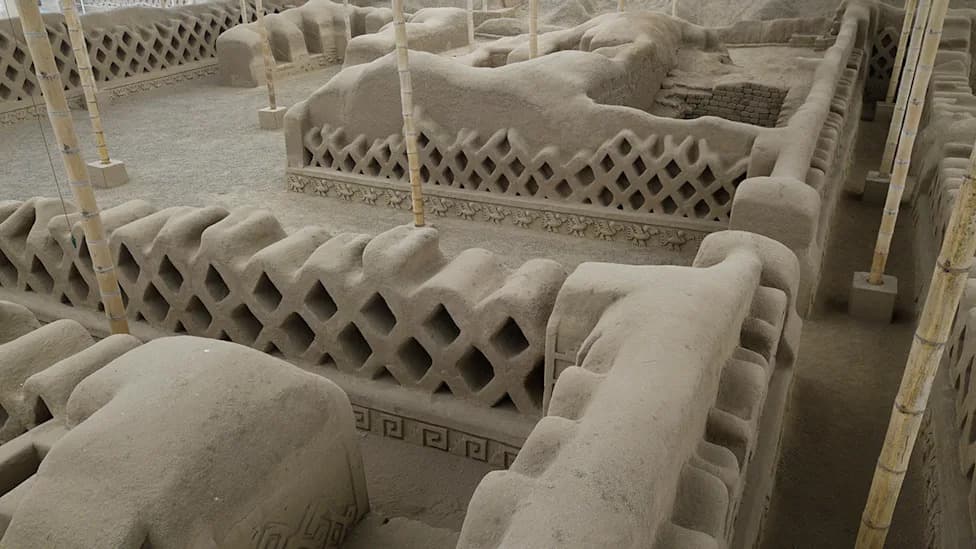
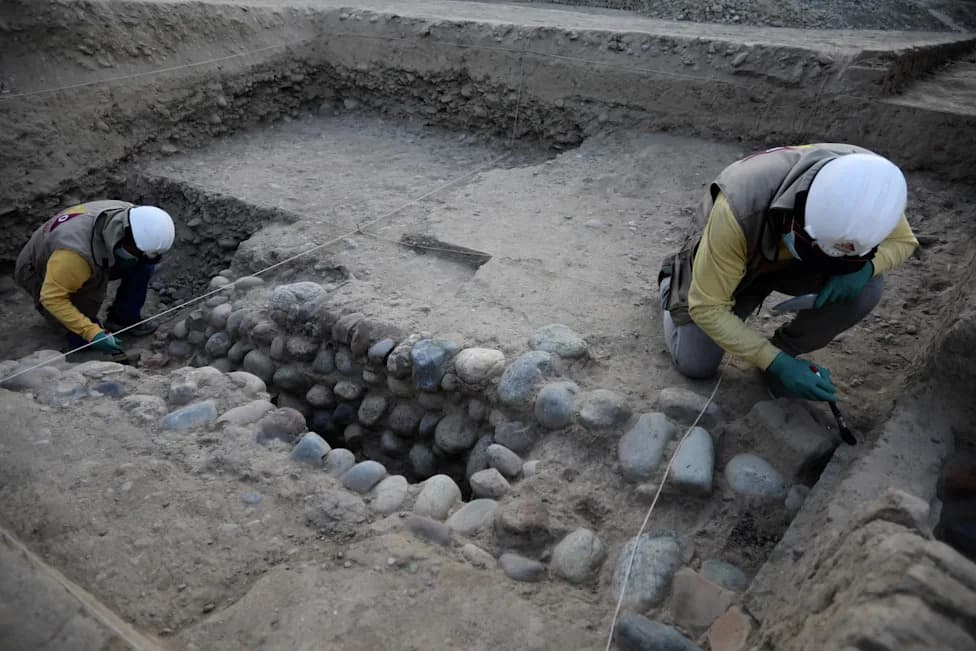
Archaeologists at Peru’s Kuelap fortress discovered a U-shaped stone tomb in Area 12 containing four adults and one infant, together with ritual objects dated to the Late Horizon (A.D. 1470–1532). Key finds include a phytomorphic paccha shaped like the pacay fruit, a carved bone with a Chachapoya-style headdress, metal tweezer fragments, lithic mortars, and a Spondylus shell. PRIAK researchers say the burial shows signs of multiple uses—a seated individual was placed atop earlier remains—and further analysis will be released by the Directorate of Culture of Amazonas.
Rare Five-Person Tomb and Ritual Relics Unearthed at Peru’s Kuelap Fortress
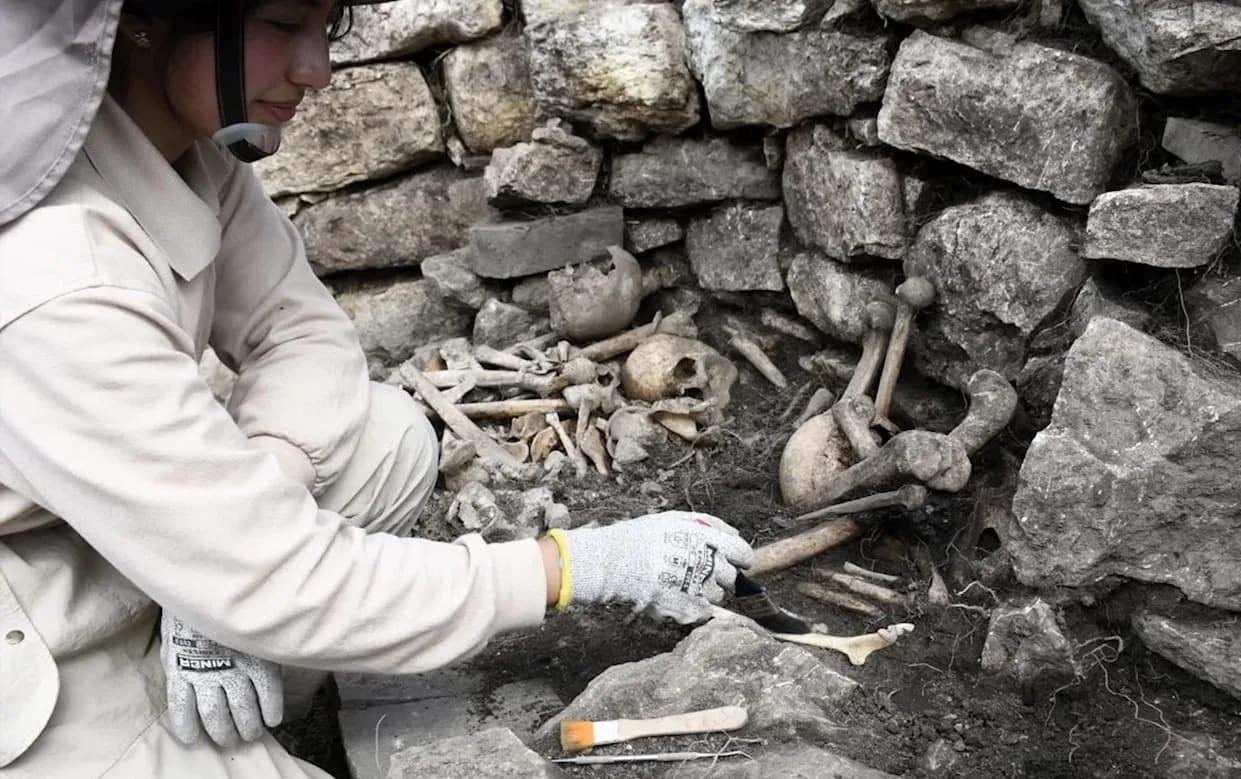
Photo Credit: Peruvian State
Archaeologists working at the ancient Kuelap fortress in northern Peru have uncovered a rare five-person tomb and an assemblage of ceremonial objects that shed new light on funerary practices at this important Andean site.
Peru’s Ministry of Culture reported that the funerary structure was found in Area 12 of the complex—where Access Routes 1 and 2 meet—during excavations led by the Kuelap Archaeological and Interdisciplinary Research Program (PRIAK). The tomb is a U-shaped stone structure set on two steps and connected to a nearby platform south of Access 2, in an area already known for funerary use.
Inside the tomb, specialists documented the skeletal remains of four adults and one infant alongside ritual offerings dated to the Late Horizon (approximately A.D. 1470–1532).
Key artifacts include a phytomorphic paccha—a libation vessel made in a Regional Inca style and modeled on the fruit of Inga feuilleei (commonly called pacay or guaba)—a carved bone object showing a stylized human face with a headdress linked to the Chachapoya cultural sphere, fragments of metal tweezers, lithic mortars, and a piece of Spondylus shell, the latter often associated with high-status ritual exchange in Andean contexts.
PRIAK researchers said the combination of architecture, positioning of remains and the ritual assemblage supports the interpretation that the tomb was used more than once. "Due to the position of the individual—placed in a seated position and deposited on top of other skeletal remains—we believe this funerary structure underwent a second phase of use, during which previously deposited bones were disturbed," the team told Heritage Daily.
Dating the artifacts to the Late Horizon links the find to a period of major political and cultural change in the Andes, and the presence of Regional Inca-style objects and Spondylus shell points to broad networks of influence and exchange at or near the time of Inca expansion.
PRIAK emphasized that the excavation is part of a larger interdisciplinary program to document, conserve and study Kuelap, the massive fortified settlement that continues to yield important archaeological evidence. Officials from the Directorate of Culture of Amazonas said they will release further details as laboratory analyses and contextual studies continue.
"As analysis continues, the tomb is already providing a clearer window into Kuelap's ceremonial past and the ways the fortress was reused across generations," PRIAK researchers said.
The discovery enriches our understanding of mortuary variability at Kuelap, offering direct evidence of ritual practices, reuse of funerary spaces and material connections across the Late Horizon Andes.
Help us improve.