Justice Neil Gorsuch’s description of the U.S. as a "creedal nation" highlights a long tradition of foreign-born individuals who chose to defend American ideals. From Marquis de Lafayette, Baron von Steuben, and Casimir Pulaski in the Revolution to modern veterans like Alfredo Rascon Velasquez, immigrants have volunteered to serve because they embraced the nation’s commitment to individual rights. Today, roughly 50,000 non-U.S. citizens serve in the Armed Forces and about 125,000 non-citizen veterans live in the U.S., exemplifying citizenship as a conscious choice rooted in shared principles.
Foreign-Born Heroes Who Chose America — Immigrants Fighting for American Ideals
The Foreign-Born Heroes Who Chose America
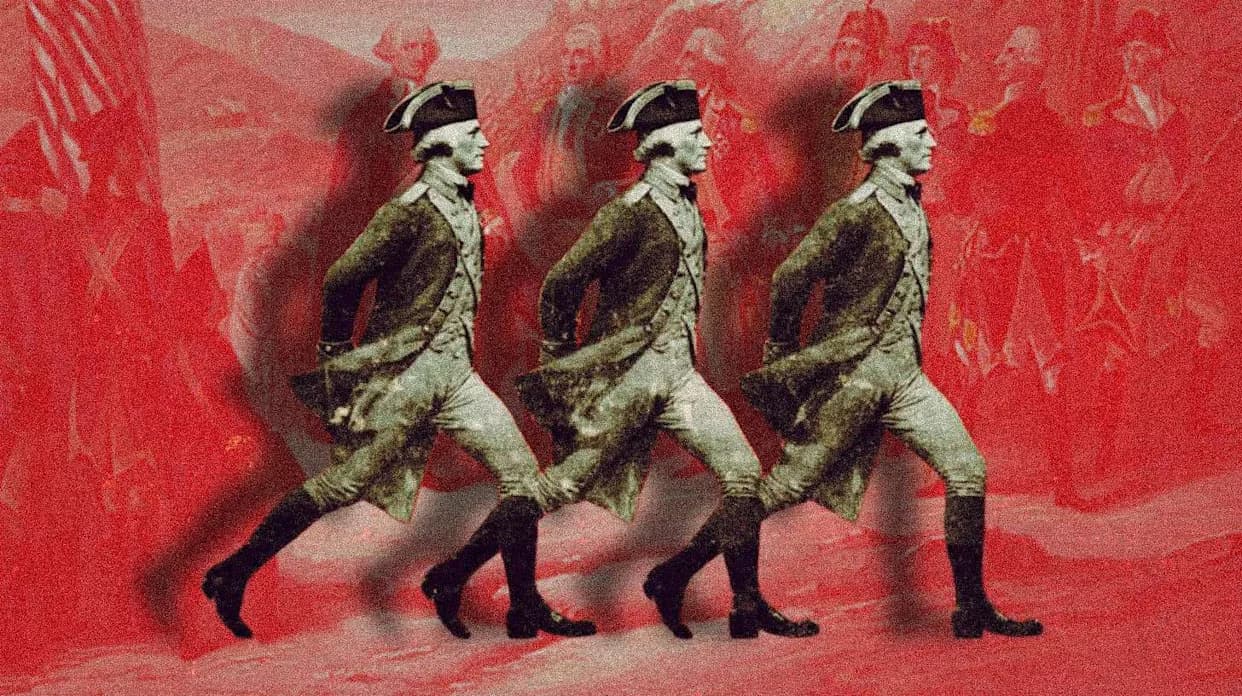
When Supreme Court Justice Neil Gorsuch recently described the United States as a "creedal nation"—a country defined more by ideas than by blood or ancestry—he reignited a long-running conversation about American identity. That formulation captures an essential truth: from the Revolution to today, people born abroad have repeatedly chosen to defend the ideals of the Declaration of Independence rather than any inherited lineage.
A Creedal Nation and Foreign Volunteers
America's capacity to attract and assimilate citizens from around the world is central to that identity. Immigrants have volunteered to fight for the United States not because of family ties with native-born Americans, but because they embraced the country's commitment to individual rights and self-government.
Revolutionary-Era Examples
Marquis de Lafayette sailed to North America at 19 after being inspired by accounts of the Revolution. He fought in multiple campaigns and played a key role at the Siege of Yorktown in 1781. As he put it:
"My heart was enlisted and I thought only of joining my colors to those of the revolutionaries."
"The moment I heard of America I loved her; the moment I knew she was fighting for freedom I burnt with a desire of bleeding for her."
Baron Friedrich von Steuben, a Prussian officer recruited through Benjamin Franklin, professionalized the Continental Army by developing training drills and regulations that greatly improved battlefield performance. Appointed temporary inspector general, von Steuben later became a naturalized U.S. citizen in 1784. He explained his motive plainly:
"The honor of serving a respectable Nation, engaged in the noble enterprise of defending its rights and Liberty, is the only motive that brought me over to this Continent."
Casimir Pulaski, a Polish cavalry commander, led the Pulaski Legion and was mortally wounded at the Siege of Savannah. Pulaski wrote that he had come "where freedom is being defended, to serve it, and to live or die for it." He is remembered as the "Father of the American Cavalry."
Service Continues in Modern Times
The pattern of foreign-born service did not end with the Revolution. Immigrants have served in every American conflict since, and they continue to do so today. According to a recent congressional report, about 50,000 non-U.S. citizens were serving in the Armed Forces as of February 2026, and roughly 125,000 non-citizen veterans who previously served on active duty live in the United States (excluding foreign-born veterans who later became citizens).
Alfredo Rascon Velasquez—born in Mexico—entered the United States unlawfully, enlisted in the U.S. Army, and earned the Medal of Honor for actions in the Vietnam War before becoming a naturalized citizen. Explaining his choice to serve, he said:
"I was always an American in my heart... Mexican by birth, American by choice."
What These Stories Mean
These examples share a common thread: deliberate, principle-driven allegiance. The men and women highlighted here chose American ideals because they believed in individual rights and the political principles embodied in the Declaration of Independence—not because of ethnicity or inherited duty. Their service is a form of civic adoption: choosing a country because of its ideas.
Memorial Day and other remembrances honor this tradition. The foreign-born service members commemorated on those days exemplify the choice millions of immigrants make daily—to belong to a nation defined by rights and principles rather than by bloodlines.
This column was first published in the Orange County Register and originally appeared on Reason.com.
Help us improve.