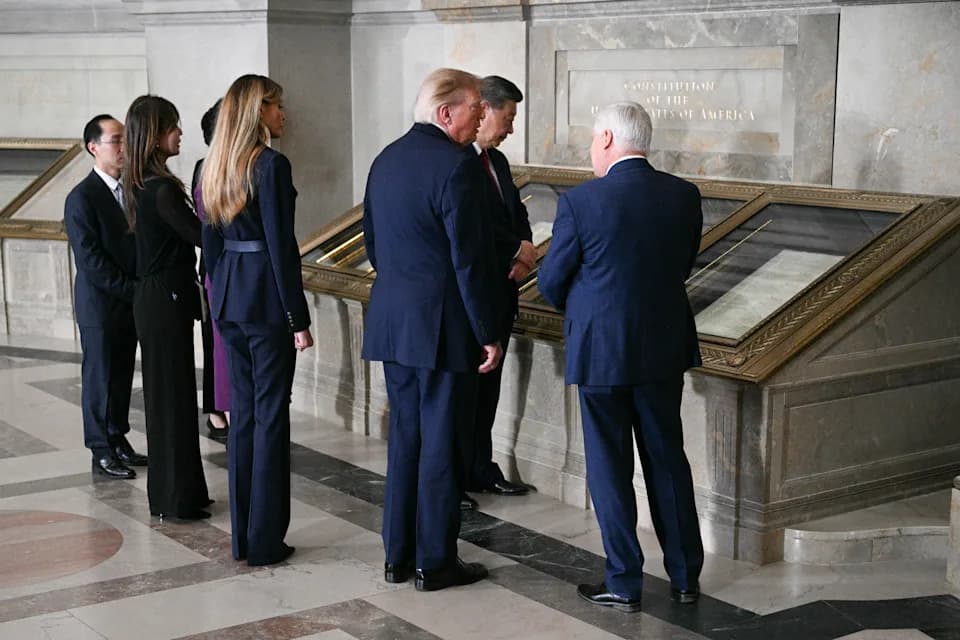
Putin’s Beijing visit produced a nearly 10,000-word joint statement that deepens Russia–China cooperation but yields few headline wins for Moscow. The declaration reaffirms alignment on sovereignty issues such as Taiwan, broadens security and energy cooperation, and names concrete projects—from nuclear plants to lunar research and AI. Despite stronger rhetoric and more detailed commitments, major accords such as Power of Siberia 2 were not finalized.
Putin’s China Visit: A Lengthy Joint Statement, Few Big Wins for Moscow
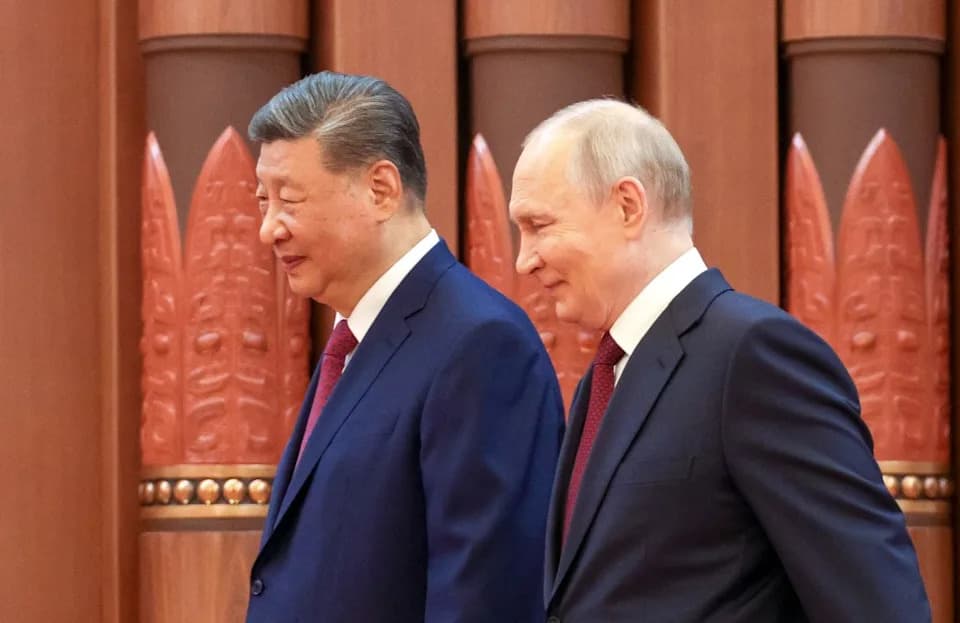
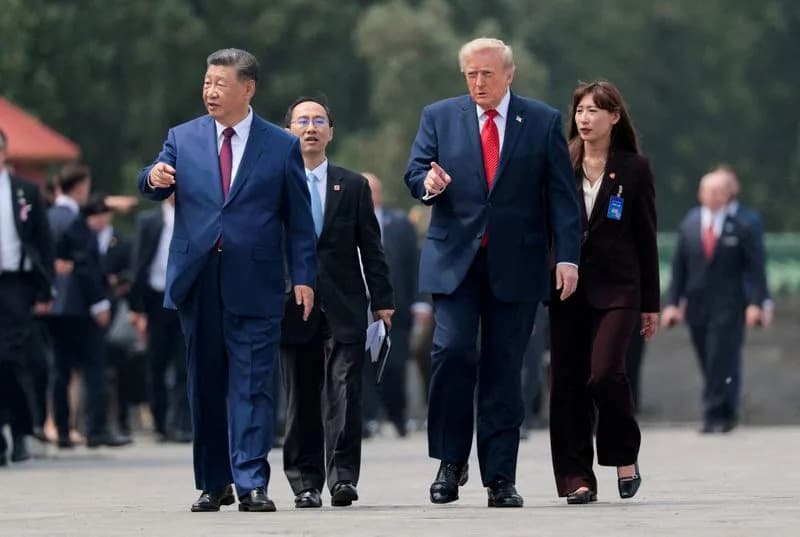
Russian President Vladimir Putin, right, walks with Chinese President Xi Jinping as they meet in Beijing on May 20, 2026.
The nearly 10,000-word joint statement issued after this week’s Russia–China summit signaled a broader, deeper partnership—but analysts say President Vladimir Putin left Beijing with few major new, concrete victories.
A Strong Signal, Not a Breakthrough
Putin’s 25th visit to China as Russia’s leader came days after U.S. President Donald Trump met with Chinese President Xi Jinping in a bid to steady ties. The long declaration reaffirms alignment on core sovereignty and security issues—most prominently Taiwan—and expands language on cooperation across energy, defense, law enforcement, artificial intelligence and space technology.
Treaty Extension and Sharper Rhetoric
Both capitals agreed to extend the 2001 Treaty of Good-Neighborliness and Friendly Cooperation, reinforcing the legal and political basis of the relationship. Compared with the 2021 joint statement, the new text is longer, more detailed and sharper in its geopolitical rhetoric, explicitly condemning what it described as destabilizing U.S. initiatives such as the "Golden Dome" missile-defense project.
Security and Military Cooperation
The document pledges expanded joint exercises and more frequent air and maritime patrols, and calls for jointly "safeguarding global and regional security." China and Russia have already stepped up joint Pacific patrols in recent years—an operational trend the statement formalizes and seeks to deepen.
Energy, Trade and Technology
Energy cooperation features prominently: the two sides committed to "consolidate and develop a comprehensive energy partnership" across oil, gas, coal, civilian nuclear and renewables, and reaffirmed collaboration on nuclear projects such as China’s Tianwan and Xudapu plants. The statement also names specific initiatives—AI cooperation and the International Lunar Research Station—moving beyond the broader language of 2021.
Official text notes bilateral trade exceeded $200 billion for a third consecutive year. Chinese exports to Russia—about $110 billion in consumer goods last year—have helped fill gaps left by Western companies' withdrawals, strengthening Moscow’s economic leverage somewhat, though analysts stress the relationship remains tilted toward China.
What Moscow Did Not Get
Despite the symbolism, Moscow did not secure certain high-profile deliverables. No final agreement was announced on Power of Siberia 2, the long-delayed pipeline that would materially boost Russian gas revenues from expanded flows to China. Analysts say momentum toward deeper integration continues—new pipeline links and a Sakhalin–China gas connection are expected to come online—but a major breakthrough was absent.
"Russia is in a worse position than in 2021 but in a better position than this time last year," said Christopher Weafer, CEO of Macro Advisory, reflecting a nuanced shift in bargaining dynamics after Europe moved away from Russian energy.
Bottom Line
The joint statement deepens and specifies existing areas of cooperation rather than creating a fundamentally new strategic framework. It marks a diplomatic win in signaling unity and aligning policy language, but stops short of delivering the headline economic or security deals many in Moscow had hoped for.
Help us improve.